
Global Ocean Heat Shatters Millennial Records Amid El Niño Surge
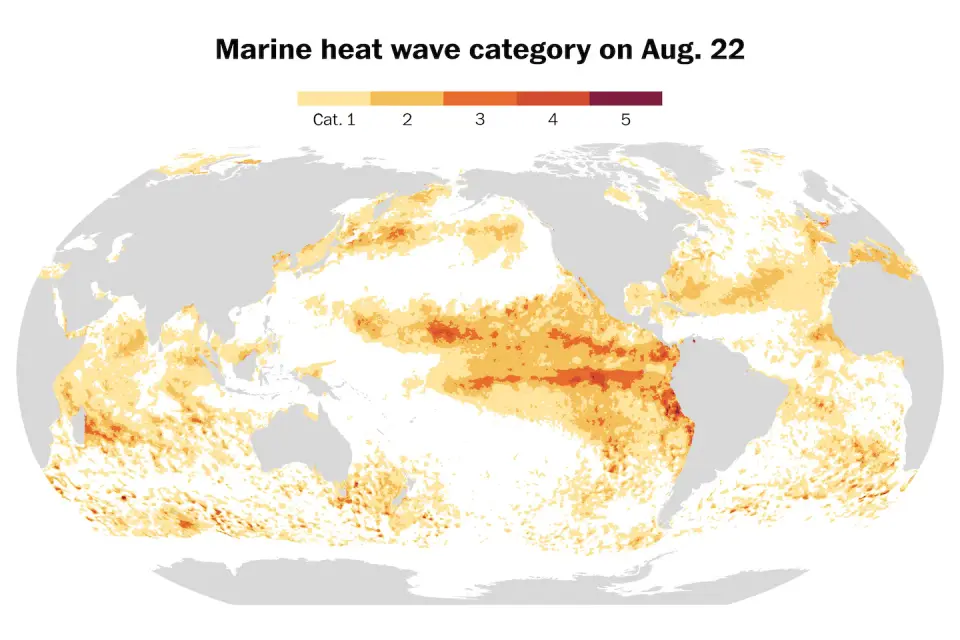
Global average sea surface temperatures reached a new all-time high of 21.1°C (70°F) in late August 2026, surpassing the previous record from March 2024. According to the Copernicus Climate Change Service, this peak may represent the warmest ocean conditions in at least 12,000 years, potentially matching levels from the last interglacial period 125,000 years ago. The record was driven by a rapidly intensifying El Niño and widespread marine heatwaves, with 42% of the global ocean currently affected. This extreme warmth is exacerbating storms, droughts, and wildfires across multiple continents.
Key points
- Global sea surface temperatures hit a record 21.1°C on August 21, 2026, according to Copernicus data.
- Scientists suggest this may be the warmest ocean temperature in the entire Holocene epoch, or possibly since 125,000 years ago.
- A strong El Niño event is amplifying baseline warming, with marine heatwaves covering an area nine times the size of the contiguous US in the Pacific alone.
- 42% of the world’s oceans are currently experiencing marine heatwaves, a significant increase from previous decades.
- The heat is contributing to extreme weather, including Hurricane Lala in the Pacific, intense rainfall in the US, and severe heatwaves in Europe.
Background
This record follows a series of unprecedented ocean heat milestones in 2026. In July, global sea temperatures reached 20.96°C, with severe marine heatwaves already impacting the Atlantic and Mediterranean. Earlier in August, reports indicated oceans were approaching record levels as El Niño intensified. The current August peak represents a further escalation of these trends, occurring despite global sea temperatures typically peaking in March or April due to Southern Hemisphere ocean dominance.
How outlets are covering it
The Washington Post emphasizes the historical significance of the record, noting it may be the warmest in millennia based on sediment core data. The Guardian highlights the human-driven aspect, stating that over 90% of heat from fossil fuels enters the oceans and that El Niño is adding heat to decades of human-caused warming. Futura focuses on the Mediterranean, which is warming at twice the global average rate, leading to ecosystem collapse and invasive species migration. New Scientist links ocean changes to atmospheric patterns, suggesting Greenland meltwater is altering the jet stream to intensify European heatwaves, a mechanism not fully captured by current climate models.
Why it matters
The ocean absorbs the majority of excess heat from greenhouse gas emissions, but warmer waters reduce its capacity to absorb CO2, potentially accelerating atmospheric warming. Extreme ocean heat drives sea-level rise through thermal expansion and supercharges storms and rainfall. The unprecedented nature of this record, occurring outside the typical seasonal peak, signals a shift in baseline climate conditions that may lead to more frequent and intense extreme weather events globally.
What to watch
Scientists warn that as El Niño continues to build, further temperature records are likely. The persistence of marine heatwaves is already causing biological stress, including hypoxia and toxic algae blooms. Future projections suggest that if warming continues, current heatwaves may become the new normal, with increased frequency of extreme weather events in regions like the Mediterranean and Europe.
- The ocean just broke a temperature record that may have stood for millennia The Washington Post
- World’s oceans hit hottest temperature on record in August The Guardian
- Earth’s oceans just broke a heat record. The implications will be massive San Francisco Chronicle
- Why the Mediterranean Is Experiencing the World’s Most Alarming Climate Anomaly Futura, le média qui explore le monde
- Greenland meltwater is intensifying European heatwaves New Scientist
Want the full story? Read the original reporting
Read on The Washington Post