Tag

Marine Heatwaves

All articles tagged with #marine heatwaves

Oceans Absorb Record Heat, Accelerating Sea Level Rise and Ecosystem Collapse
environment19 days ago

Oceans Absorb Record Heat, Accelerating Sea Level Rise and Ecosystem Collapse

The 10th Copernicus Ocean State Report reveals that global oceans absorbed a record 23 zettajoules of heat in 2025, equivalent to 40 times humanity's annual energy use. This thermal surge has accelerated sea level rise to 4.2mm per year since 2012 and increased ocean acidity by 17% since 1985. The report highlights severe ecosystem damage, including 84% of coral reefs experiencing bleaching stress and breeding failures for emperor penguins in Antarctica. While Europe faces intensified marine heatwaves and coastal erosion, a record-breaking El Niño is expected to further exacerbate these trends in 2026.


Record Heat and Acidification Mark Tenth Copernicus Ocean Report
climate20 days ago

Record Heat and Acidification Mark Tenth Copernicus Ocean Report

The tenth Copernicus Ocean State Report, released on September 30, 2026, warns that global oceans are transforming at an alarming rate. Data from over 40 years of satellites and buoys show that oceans absorbed a record 23 zettajoules of heat in 2025, equivalent to 40 times global energy consumption. Sea levels have risen by nearly 4 inches since 1999, with rates accelerating since 2012. Ocean acidity has increased by 17% since 1985, damaging marine ecosystems. A record-breaking El Niño is intensifying these trends, while European seas face extreme marine heatwaves and coastal erosion.

August 2026 Ocean Heat Shatters Records, Potentially Surpassing 12,000-Year Highs
environment1 month ago

August 2026 Ocean Heat Shatters Records, Potentially Surpassing 12,000-Year Highs

Global sea surface temperatures reached a new all-time high of 21.1C in August 2026, driven by a strengthening El Nino and long-term fossil fuel emissions. This record, set in the northern hemisphere summer, is unusual as oceans typically peak in March or April. The heat is linked to intensified storms, marine heatwaves, and reduced carbon absorption capacity.

Global Ocean Heat Shatters Millennial Records Amid El Niño Surge
climate1 month ago

Global Ocean Heat Shatters Millennial Records Amid El Niño Surge

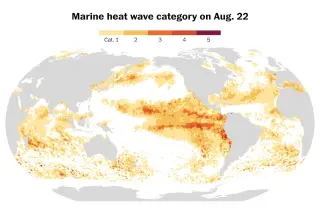
Global average sea surface temperatures reached a new all-time high of 21.1°C (70°F) in late August 2026, surpassing the previous record from March 2024. According to the Copernicus Climate Change Service, this peak may represent the warmest ocean conditions in at least 12,000 years, potentially matching levels from the last interglacial period 125,000 years ago. The record was driven by a rapidly intensifying El Niño and widespread marine heatwaves, with 42% of the global ocean currently affected. This extreme warmth is exacerbating storms, droughts, and wildfires across multiple continents.

Fossil fuels drive record European marine heatwaves, study confirms
climate2 months ago

Fossil fuels drive record European marine heatwaves, study confirms

A new study by World Weather Attribution confirms that fossil fuel emissions are the primary driver of record-breaking ocean temperatures in Europe this summer. Climate change added approximately 2°C to Mediterranean waters and 1.3-1.4°C to Atlantic regions. This warming has expanded marine heatwaves to cover 90% of the Bay of Biscay and 80% of the Western Mediterranean, causing severe ecological shifts, including species migration and mass die-offs of heat-sensitive organisms like corals.

Europe’s seas hit record highs as climate change drives massive marine heatwave expansion
climate-and-environment2 months ago

Europe’s seas hit record highs as climate change drives massive marine heatwave expansion

Scientists from the World Weather Attribution consortium confirmed that global warming is the primary driver behind record-breaking ocean temperatures in Europe this summer. The Mediterranean and Atlantic waters reached up to 6 degrees Celsius above normal, with the Mediterranean averaging over 27C in July. This extreme heat has expanded marine heatwaves to cover 90 percent of the Bay of Biscay and 80 percent of the Western Mediterranean, areas that would have been only half as affected without climate change. The warming is causing severe ecological shifts, including the northward migration of octopuses in the UK and increased jellyfish populations in France, while also intensifying coastal humidity and storm risks.

Record July Ocean Heat Signals Climate Crisis in Action
environment2 months ago

Record July Ocean Heat Signals Climate Crisis in Action

Copernicus data show July global sea temperatures reached a record 20.96C, with severe marine heatwaves across the Atlantic, Pacific and western Mediterranean, driven by El Niño and human-caused warming. Western Europe saw its hottest July on record as droughts worsened; scientists warn that rising ocean heat amplifies extreme heat and drought, underscoring the need for rapid greenhouse gas emissions cuts.

UK heat spikes may be arriving faster as summers warm
environment4 months ago

UK heat spikes may be arriving faster as summers warm

Scientists observe heat spikes and the rapid onset of UK heatwaves, driven by a warmer baseline, drier soils and shifting wind patterns, with marine heatwaves around the UK boosting land temperatures. While these factors help explain sharper heat increases, experts caution it isn’t yet proven that spikes are becoming more frequent, though the potential for hotter, faster heatwaves raises health risks and underscores a warming climate.

Scientists Warn of Potential Permanent Shift in Earth's Oceans Due to Rising Heat
science1 year ago

Scientists Warn of Potential Permanent Shift in Earth's Oceans Due to Rising Heat

In 2023, unprecedented marine heatwaves affected 96% of the ocean surface, potentially pushing the world's oceans into a new, hotter state with serious consequences for climate regulation, marine life, and weather patterns, driven by factors like reduced cloud cover and weaker winds, raising concerns about a fundamental shift in ocean dynamics and the need for urgent research and mitigation efforts.

Ocean currents offer hope for survival of coral reefs during El Niño events.
environment3 years ago

Ocean currents offer hope for survival of coral reefs during El Niño events.

Researchers have identified localized ocean processes during the 2015-16 El Niño that provided much-needed sustenance to the coral reefs on the Central Pacific island of Palmyra, allowing them not only to survive, but to thrive. The eastward-flowing North Equatorial Counter Current, which hits Palmyra's western shores, was significantly strengthened during the 2015-16 El Niño, driving an upward movement of cooler plankton-rich waters to the island's coral reefs. Identifying coral reefs that have a greater chance of survival during extreme events is critical to understanding the future of coral reef ecosystems.

The Alarming Discovery of Heatwaves at the Bottom of the Ocean.
environment3 years ago

The Alarming Discovery of Heatwaves at the Bottom of the Ocean.

Scientists at NOAA have found evidence of marine heatwaves at the bottom of the ocean, which last longer, can cause more drastic heating, and sometimes occur with little or no evidence of warming at the surface. The world’s oceans are responsible for absorbing about 90 percent of the excess heat generated by man-made carbon emissions, and as such, it’s warming faster than the planet average, increasing in temperature by about 1.5°C (2.7°F) over the past century – with marine heatwaves becoming around 50 percent more frequent in the last decade alone. Increased temperatures at the bottom of the ocean have been linked to a whole host of ecological problems, and with these new data collection methods, the researchers hope to develop real-time monitoring capabilities that can alert marine resource managers to deep ocean conditions.