
Record-Breaking El Niño Arrives, Triggering Global Heat and Coastal Flood Risks
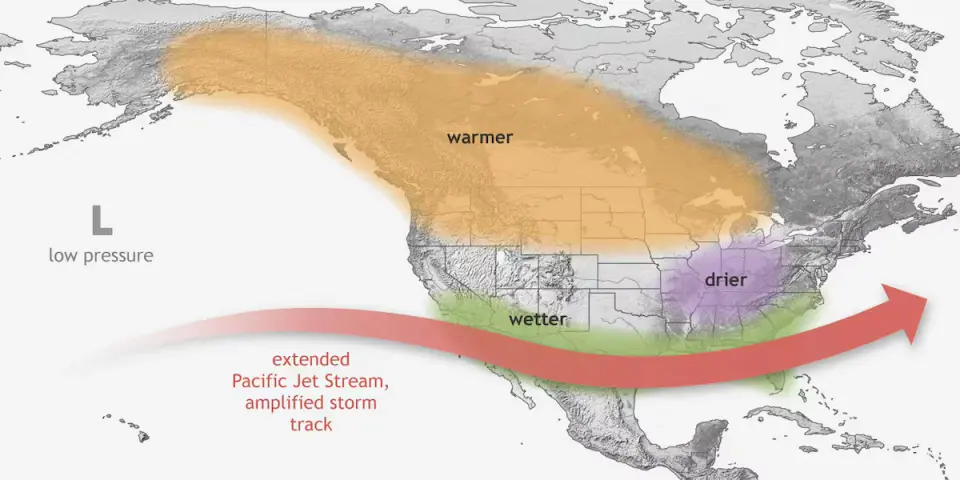
A 'super' El Niño is intensifying in late 2026, marking the strongest event in over a millennium. This extreme warming of the tropical Pacific is expected to drive record global temperatures, alter hurricane patterns, and cause severe coastal flooding, particularly in California, while bringing wetter, milder winters to the Carolinas.
Key points
- The current El Niño is defined by a 3 to 4-degree Fahrenheit warming of the Pacific, a threshold rarely reached in history.
- NOAA's new Relative Oceanic Niño Index (RONI) shows the event is tied with 1997-1998 for the strongest late-August reading on record.
- The 2026 Atlantic hurricane season has produced eight tropical storms but zero hurricanes, a pattern consistent with El Niño-induced wind shear.
- California faces a near-certain risk of record coastal flooding in November and December due to temporary sea level rise doubling overnight.
- Global temperatures are projected to approach 1.7 degrees Celsius above pre-industrial levels in 2027 due to the heat discharge from the ocean.
Background
Previous coverage in August 2026 noted that this El Niño was on track to become the strongest on record, with NOAA forecasts predicting a split-flow winter across North America. Earlier reports also highlighted economic risks and multi-trillion-dollar potential losses from infrastructure damage, while noting that August 2026 was among the hottest months on record due to the event's rapid strengthening.
How outlets are covering it
WBTV emphasizes the regional impacts for North Carolina, noting higher odds of coastal flooding and milder winters, while clarifying that El Niño does not cause specific storms but shifts large-scale patterns. CNN highlights the potential for 450,000 heat deaths by February, focusing on the global temperature spike. Inside Climate News provides a scientific perspective, explaining that the event is so extreme it lacks a standard scientific category, and details the 'battery' discharge of the Pacific Ocean. New Scientist offers a broader overview of global impacts, though its specific details are limited in the provided source.
Why it matters
This event represents a fundamental shift in global weather patterns, moving from a natural cycle to an extreme outlier amplified by climate change. The combination of record heat, altered hurricane basins, and unprecedented sea level rise poses immediate risks to infrastructure, public health, and economic stability across multiple continents.
What to watch
Forecasters expect the El Niño to strengthen further through late autumn, potentially breaking all records by any metric. Residents in coastal California and the Carolinas should prepare for increased flooding and storm activity, while global monitors will track whether 2027 temperatures exceed 1.7 degrees Celsius above pre-industrial levels.
- Super El Nino: What it is, why it matters, and how it can impact North Carolina weather WBTV
- Super-sized El Niño could cause more than 450,000 heat deaths by February, study suggests CNN
- Opinion | The Super El Niño Is About to Unleash Weather Chaos. Get Ready Now. The New York Times
- Incoming El Niño Is so Extreme It Doesn’t Have a Scientific Name Inside Climate News
- How will El Niño affect the world? New Scientist
Want the full story? Read the original reporting
Read on WBTV