
Swiss Glaciers Shed Record 5.5% of Ice in 2026, Threatening Alpine Water Security
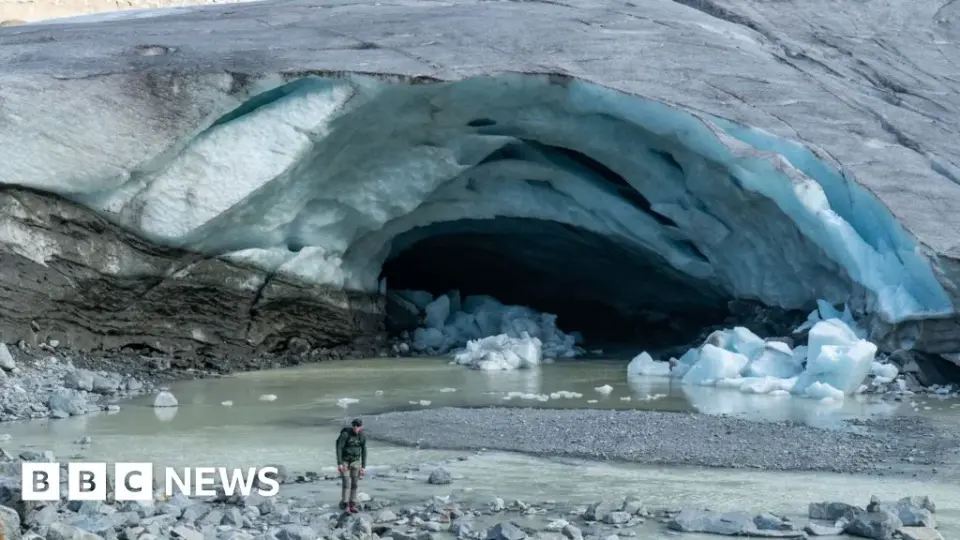
Swiss glaciers lost a record 5.5% of their ice in 2026, a rate described as 'disastrous' by scientists. This rapid melting, driven by intense heatwaves and low snow cover, has accelerated the loss of approximately 20% of Swiss glacial ice since 2021. The depletion threatens long-term water supplies for agriculture, hydropower, and shipping, while increasing the risk of landslides and flash floods in the Alps.
Key points
- Swiss glaciers lost 5.5% of their ice in 2026, exceeding the previous 'extreme' threshold of 2%.
- Approximately 20% of Swiss glacial ice has vanished since 2021, with 2026 eclipsing the previous record year of 2022.
- Mild winters and intense heatwaves in May and June exposed dark ice, which absorbed more solar energy and melted faster.
- No snow remained at some high-altitude measurement sites (3,500m) by the end of summer, preventing ice replenishment.
- Glacier meltwater released 2.2 trillion litres between July and September, temporarily easing shortages but depleting long-term reserves.
Background
This event follows a broader pattern of global ice loss, including the massive calving of Petermann Glacier in Greenland in August 2026 and the discovery of remains on the melting Trift Glacier in Switzerland in August 2026. These incidents highlight the accelerating pace of glacial retreat across different regions due to climate change.
How outlets are covering it
BBC and The Washington Post agree on the severity of the 2026 losses, with BBC citing a 5.5% annual loss and The Post noting a 20% cumulative loss since 2021. Both outlets emphasize that while the pace is 'disastrous' and 'astonishing,' it is expected given current climate trends. The Post highlights that 2026 eclipsed 2022 as the worst meltdown year on record. BBC notes that while Alpine glaciers are at risk, sharp carbon cuts can still save ice in the Himalayas and polar regions, a nuance not emphasized in the Post's brief summary. The Yahoo source title suggests a 'catastrophic' loss of a fifth of mass in five years, aligning with the Post's 20% figure but using more alarmist language than the scientific reports cited by BBC and Post.
Why it matters
The rapid loss of Swiss glacier ice undermines the long-term reliability of water sources for agriculture, hydropower, and shipping in the Rhine basin. The absence of snow at high altitudes indicates that glaciers can no longer replenish their mass, leading to permanent shrinkage. This instability increases the risk of landslides and flash floods, posing direct threats to infrastructure and communities in the Alps. The depletion of 'old water' reserves means future heatwaves will face less natural buffering, exacerbating water scarcity across Europe.
What to watch
Scientists expect continued rapid melting as the climate warms, with some Swiss glaciers, such as Plattalva, already disappearing. Long-term water management strategies will need to adapt to reduced glacier contributions. Global efforts to cut carbon emissions remain critical to preserving ice in more resilient regions like the Himalayas and polar areas, which could limit sea-level rise impacts for coastal populations.
- Swiss glaciers suffer 'disastrous' year of ice loss, threatening water supplies bbc.com
- Switzerland’s glaciers are losing an astonishing amount of ice. See the meltdown. The Washington Post
- Swiss glaciers suffer another year of record ice loss NPR
- Swiss glaciers lose more than 5% of ice after record heatwave reuters.com
- 'Catastrophic': Swiss glaciers lose fifth of mass in five years Yahoo
Want the full story? Read the original reporting
Read on bbc.com