
Russia Demands Denmark Halt 'Reckless' Flights After Baltic Flare Incident
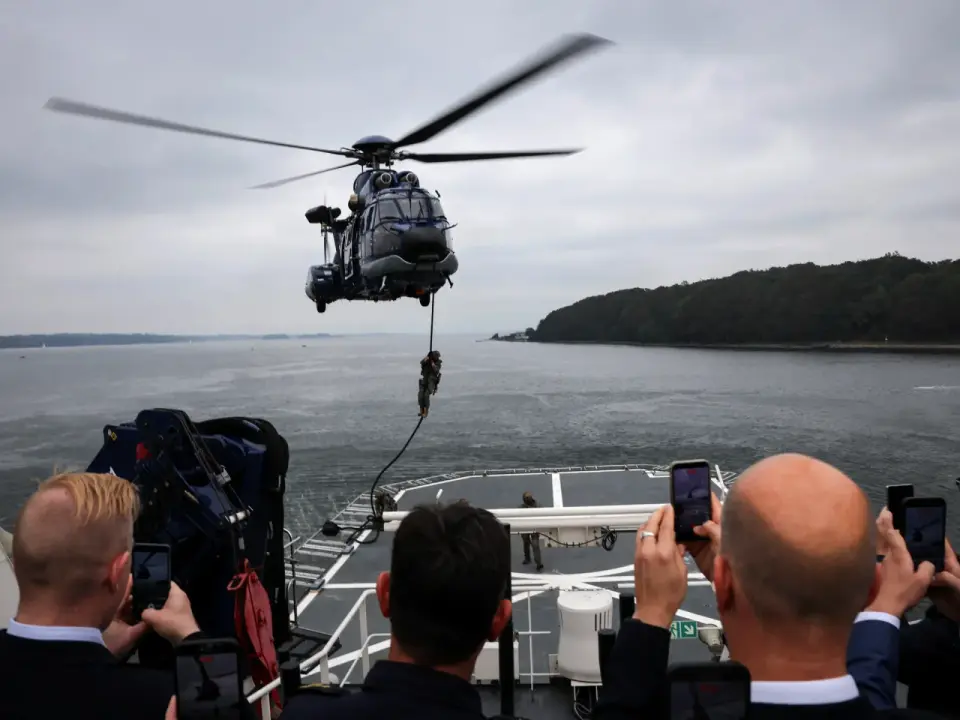
Moscow has formally warned Copenhagen to cease 'reckless' maneuvers after a Russian frigate fired flares that narrowly missed a Danish military helicopter in the Baltic Sea. While Denmark describes the incident as a serious but non-NATO-level provocation, Russian diplomats blame the Danish aircraft for dangerous actions. The event highlights rising tensions in the region, with Danish leaders framing it as part of a broader pattern of Russian hybrid warfare aimed at sowing discord among European allies.
Key points
- Russian Ambassador Vladimir Barbin delivered a formal note to Denmark demanding steps to prevent a repeat of the incident, blaming the Danish helicopter for 'dangerous manoeuvres' and 'recklessness'.
- Denmark’s Defence Minister Jeppe Bruus stated that one flare passed within a 'matter of metres' of the Fennec helicopter, which was on a routine photography mission in international waters.
- Bruus accused Russia of 'deeply unprofessional seamanship' but confirmed Denmark would not invoke Article 5 NATO consultations, stating the incident was serious but not at the level of an attack on the bloc.
- Danish Prime Minister Mette Frederiksen characterized the event as part of a pattern of intensifying Russian hybrid warfare designed to sow fear and discord, calling for stronger European defenses.
- The incident occurred in the Danish Straits, a critical shipping gateway and oil route, amidst a backdrop of other recent escalations including drone strikes near Poland and Ukraine.
Background
This incident follows a series of escalating tensions in the Baltic region, including a Ukrainian drone attack on Russia's Ust-Luga oil terminal in August 2026 and recent NATO electronic warfare drills near Kaliningrad. Denmark has previously accused Russia of widening the line of acceptable behavior, citing incidents involving drones over Lithuania and airspace violations. The current flare incident adds to a growing list of hybrid warfare actions that European leaders are linking to Moscow's broader strategy to destabilize NATO cohesion.
Why it matters
The flare incident underscores the fragility of security in the Baltic Sea, a vital corridor for European energy and trade. While Denmark chose not to escalate the incident to a NATO collective defense level, the formal diplomatic warning from Moscow and the framing of the event as hybrid warfare signal a continued strategy of pressure. This could influence future defense postures and diplomatic relations between Russia and Nordic NATO members, potentially accelerating calls for enhanced military readiness in the region.
What to watch
Denmark is expected to monitor Russian naval activity closely in the Baltic Straits, while Moscow may continue to assert its right to defensive maneuvers. The incident may lead to further diplomatic exchanges or increased NATO surveillance in the area, though no immediate military escalation is anticipated. Observers will watch for any subsequent incidents that might push the situation closer to a NATO Article 5 threshold.
Want the full story? Read the original reporting
Read on Al Jazeera