
Beijing’s Strategic Pivot: Insulating from Iran War’s Economic and Military Shockwaves
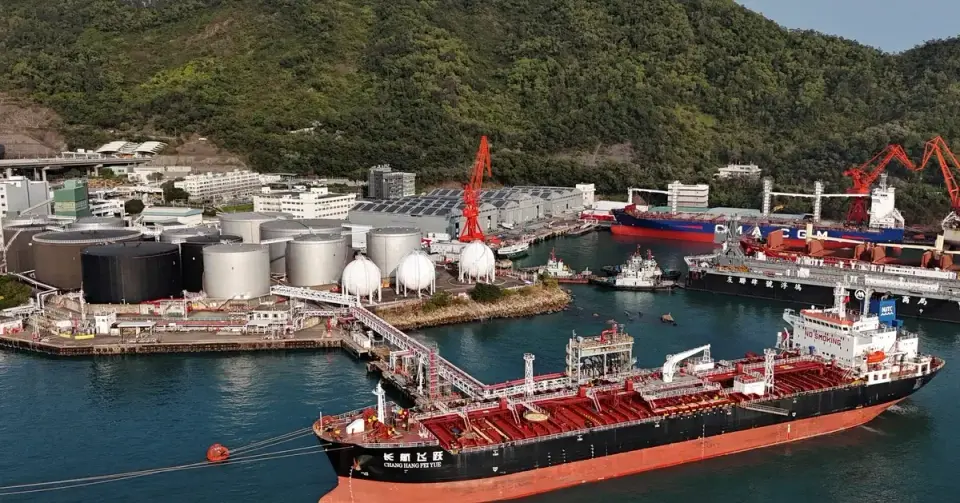
As the U.S. prepares 'Economic D-Day' sanctions against Iran, China is aggressively insulating its economy from the fallout while extracting military lessons from the conflict. Beijing has slashed crude imports by nearly 50% and diversified energy sources to mitigate supply chain risks, rejecting the role of a regional security guarantor. Simultaneously, Chinese military analysts are using the war to validate their modernization strategies, focusing on AI-enabled 'kill webs,' distributed command structures, and the cost-effectiveness of drone warfare against advanced missile defenses.
Key points
- China hosted Iran’s deputy foreign minister for talks on the U.S.-Iran war, a meeting disclosed by Beijing just before Washington announced 'the toughest sanctions in history' against Tehran.
- To mitigate economic risks, China reduced crude oil imports by nearly 50% since the conflict began, dropping to 7.12 million barrels per day in June 2026, the lowest level in a decade, while bolstering domestic energy and alternative suppliers like Russia.
- Beijing is prioritizing 'risk reduction' over strategic entanglement, avoiding the role of a Middle East security guarantor and instead focusing on diplomatic de-escalation and preserving open maritime routes like the Strait of Hormuz.
- Chinese military researchers are analyzing the conflict to validate their 'intelligentized' warfare concepts, emphasizing AI integration, distributed command nodes, and the economic imbalance between cheap Iranian drones and expensive U.S. interceptors.
- Analysts note that while China seeks to avoid direct confrontation, it recognizes potential areas of overlap with U.S. interests, such as preventing nuclear proliferation and maintaining global trade stability, which could facilitate future cooperation.
Background
This situation follows a broader trend of U.S. scrutiny regarding Chinese economic espionage, exemplified by the recent sentencing of a former Federal Reserve adviser for lying about sharing monetary policy information with Chinese intelligence. The current geopolitical tension reflects a wider shift in global power dynamics, where China is increasingly focused on protecting its economic interests from external shocks while modernizing its military capabilities in response to observed conflicts.
How outlets are covering it
Semafor emphasizes the immediate economic impact, highlighting China’s drastic reduction in oil imports and its strategy to insulate itself from U.S. sanctions, which it describes as 'Economic D-Day.' In contrast, Brookings, through analyst Zhao Long, frames China’s approach as a broader strategic effort to manage fallout rather than exploit the war, focusing on diversifying dependencies and avoiding entanglement. Breaking Defense offers a military perspective, detailing how the PLA is using the conflict to refine its modernization efforts, particularly regarding AI, drone warfare, and the economics of air defense. While Semafor and Brookings focus on economic and diplomatic resilience, Breaking Defense highlights the technical and doctrinal lessons China is drawing from the battlefield, illustrating a multi-faceted response to the crisis.
Why it matters
China’s ability to withstand U.S. sanctions and economic pressure without a crisis could significantly complicate Washington’s strategy to isolate Iran. Furthermore, the military lessons China is extracting from the conflict may accelerate its modernization, potentially altering the balance of power in the Indo-Pacific. The interplay between economic resilience and military adaptation underscores the complex nature of great power competition in the 2020s.
What to watch
The next phase will likely involve continued diplomatic maneuvering by China to prevent escalation while quietly diversifying its energy and trade dependencies. Militarily, expect China to accelerate investments in AI, drone technology, and distributed command systems, using the Iran conflict as a benchmark for future high-end warfare. The outcome of U.S. sanctions and the potential for post-war reconstruction in Iran will also determine the extent of China’s economic engagement in the region.
- China prepares for ‘Economic D-Day’ Semafor
- China ‘Actively Committed’ to Iran Talks With Tensions Rising Bloomberg
- Beyond winning and losing: What Beijing wants from the Iran war Brookings
- What China’s PLA says it is learning from the Iran war Breaking Defense
- China’s Quiet Advantage: How the Hormuz Crisis Supercharges the Belt and Road Anas Alhajji | Substack
Want the full story? Read the original reporting
Read on Semafor