
France Urges Germany to Define Missile Doctrine to Prevent Nuclear Escalation
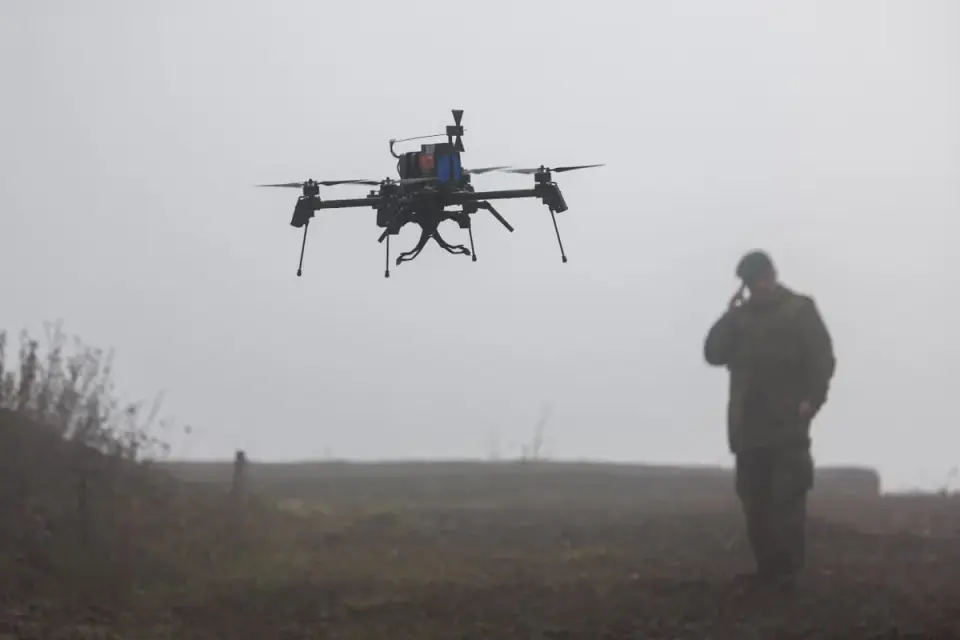
French officials have warned Germany that its new long-range missile program could accidentally trigger a nuclear war with Russia if usage protocols are not clearly defined. Paris is pushing for a joint doctrine to ensure conventional strikes are not misinterpreted by Moscow as nuclear threats, particularly given France's 'forward deterrence' policy. While Berlin agrees on the need for shared escalation rules, some allies argue the risks are currently overstated.
Key points
- France is concerned that German deep precision strikes (DPS) could be misread by Russia as a nuclear-backed attack, potentially triggering a nuclear response.
- Germany is acquiring ground-launched missiles with ranges between 500km and 2,000km, part of a €780bn defense budget through 2030.
- Macron's 'forward deterrence' policy means France could be held accountable by Moscow for actions taken by its European partners.
- A senior German official confirmed Berlin agrees on the need for a joint doctrine and common understanding of the escalation ladder.
- A British official suggested the fears may be overestimated, noting Germany's strategic culture is evolving rapidly.
Background
This diplomatic friction occurs amid broader European efforts to bolster defenses against Russia, following recent tensions including Russian missile tests and debates over US security commitments. In March 2026, Macron and German Chancellor Friedrich Merz established a high-level nuclear steering group to coordinate strategic cooperation, including conventional capabilities and missile defense. The current discussions aim to align these new conventional capabilities with France's existing nuclear strategy to prevent accidental escalation.
How outlets are covering it
The Independent and The Times of India highlight the urgency of France's warning, emphasizing the risk of misinterpreted signals leading to nuclear conflict. The Financial Times, while behind a paywall, is cited as the primary source for the six individuals familiar with the talks. Mezha.net provides a similar summary but adds context about other European nations like Denmark and the UK also developing long-range capabilities. A key divergence appears in the assessment of risk: while French and German officials agree on the need for a joint doctrine, a British official expressed skepticism, arguing that Germany's strategic culture is changing quickly and the fears may be exaggerated. General Ingo Gerhartz of NATO emphasized that deep-strike decisions must be coordinated with allies, as Russia would likely attribute any single member's attack to the entire alliance.
Why it matters
The outcome of these talks could define the future of European deterrence strategy. Without a clear, public doctrine, conventional strikes by Germany or other allies could be misinterpreted by Russia as a precursor to nuclear action, potentially drawing France into a conflict it did not initiate. This underscores the complexity of integrating new conventional weapons into a nuclear-armed alliance and the need for transparent communication to avoid accidental escalation.
What to watch
France and Germany are expected to continue discussions to align their defense programs and establish a joint doctrine for deep precision strikes. The outcome of these talks will influence how other European nations, including the UK and Poland, integrate their long-range capabilities into NATO's collective defense strategy. The clarity of this doctrine will be crucial in ensuring that conventional operations do not trigger a nuclear crisis with Russia.
- France warns Germany its missile programme ‘could accidentally provoke nuclear war with Russia’ The Independent
- France pressures Germany over nuclear risks of long-range missiles Financial Times
- France fears German long-range missiles could trigger nuclear escalation with Russia The Times of India
- Fears missile acquisition might spark Russian nuclear war by accident The Independent
- An open area caught fire in the Holosiivskyi district after a drone crashed Mezha.net
Want the full story? Read the original reporting
Read on The Independent