
Beyond Hormuz: The Race to Build Eurasian Energy Corridors
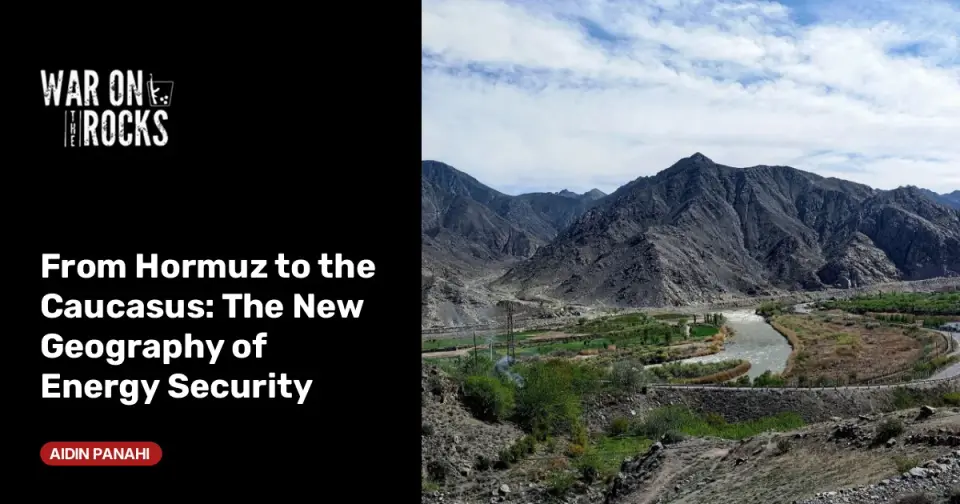
The 2026 closure of the Strait of Hormuz has accelerated a global shift toward overland energy routes. While maritime chokepoints remain critical for Asian demand, Western and Central Asian powers are investing in pipelines and railways to diversify supply chains, reduce reliance on Iran and Russia, and enhance geopolitical leverage.
Key points
- Oil flows through the Strait of Hormuz dropped to 4.9 million barrels per day in Q2 2026, down from 21.6 million, due to US-Iran tensions.
- The UAE is expanding the Abu Dhabi Crude Oil Pipeline to 3.6 million barrels per day by 2027 to bypass Hormuz entirely.
- The Baku-Tbilisi-Ceyhan pipeline operates at less than half capacity, moving 565,000 barrels daily against a 1.2 million limit.
- The proposed 'Trump Route' through southern Armenia aims to displace Russian influence but remains unsigned and under construction.
- Central Asian nations like Kazakhstan and Turkmenistan are seeking alternative routes to avoid dependence on Russian territory and Iranian transit.
Background
Previous coverage highlighted the record 10.1 million barrel per day supply shock caused by the March 2026 Hormuz closure. Recent incidents, including Iranian attacks on UAE tankers and stalled mediation efforts, underscore the fragility of maritime security. These events have intensified calls for alternative infrastructure, moving beyond immediate crisis management to long-term strategic diversification.
How outlets are covering it
War on the Rocks argues that while new corridors like the Middle Corridor provide redundancy for Europe, they cannot replace Hormuz’s volume for Asian markets, leaving global dependence on the strait unchanged. Le Monde emphasizes the urgent, tangible actions by Gulf states, such as the UAE’s pipeline expansion, to secure immediate export routes. The Astana Times highlights a broader geopolitical shift where Central Asian nations leverage their geographic position to attract Chinese and Western investment, seeking to avoid being locked into Russian or Iranian networks. Daily Cargo News focuses on the operational and legal impacts on shipping, noting how the crisis has forced the industry to adapt to prolonged uncertainty and rerouting.
Why it matters
The inability to fully replace maritime routes means that while Europe gains some resilience, global energy security remains vulnerable to single-point failures. The construction of new corridors is not just an economic project but a geopolitical realignment, shifting power dynamics away from traditional chokepoints and toward transit states like Turkey and Central Asian republics. This diversification reduces the leverage of actors who can block maritime traffic but introduces new risks related to infrastructure sabotage and political instability in transit regions.
What to watch
Watch for the finalization of the Armenia-Azerbaijan settlement, which is a prerequisite for the Trump Route. Monitor the completion of the UAE’s pipeline expansion by 2027 and any further disruptions to the Caspian Pipeline Consortium, which remains vulnerable to drone strikes. Additionally, observe whether Central Asian governments successfully diversify away from Russian and Iranian transit routes, potentially through new connections with Afghanistan or China.
- From Hormuz to the Caucasus: The New Geography of Energy Security War on the Rocks
- Gulf countries seek new routes for 'black gold' to free themselves from the Strait of Hormuz Le Monde.fr
- Maritime trade routes are under threat—and markets still underprice the risks Atlantic Council
- Book examines Hormuz crisis and impact for shipping Daily Cargo News
- Resources Are Not Enough: How Energy Routes Are Becoming Geopolitical Battleground in Eurasia The Astana Times
Want the full story? Read the original reporting
Read on War on the Rocks