
Kim’s Dandong Trip Signals Beijing’s Cold Shoulder to Pyongyang’s Mediation Bid
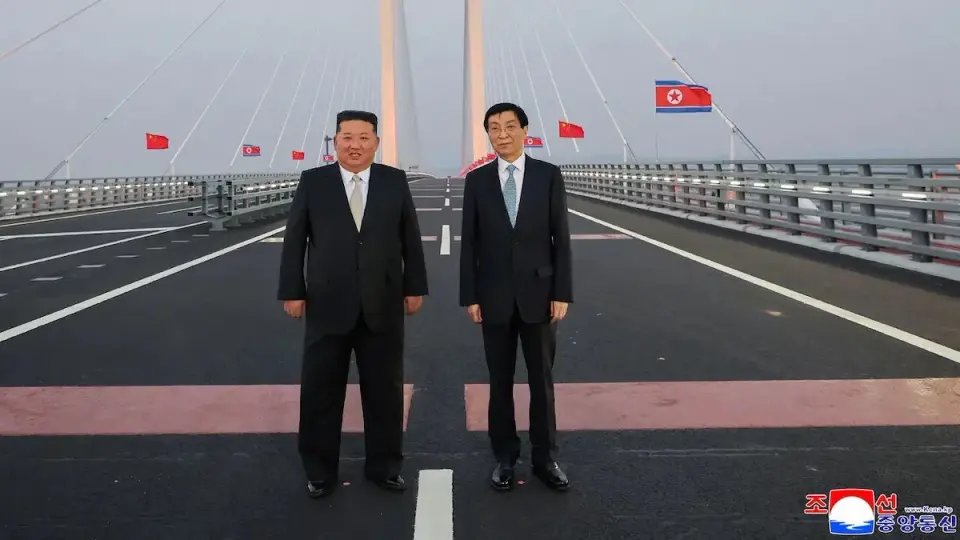
Kim Jong Un’s one-day visit to Dandong, China, on October 24, 2026, marked his first trip abroad in over a year but ended without a meeting with President Xi Jinping. While Pyongyang sought Beijing’s help to broker a new summit with US President Donald Trump, Chinese officials signaled reluctance. The visit, which included a tour of a bus factory and a memorial for the Korean War, was interpreted by some as a diplomatic rebuke, emphasizing economic integration over military alignment with Russia.
Key points
- Kim Jong Un visited Dandong, China, on October 24, 2026, crossing the newly opened New Yalu River Bridge.
- Kim met with Wang Huning, a senior Chinese official, but did not meet with President Xi Jinping, who was occupied with the 5th Plenary Session of the 20th Central Committee.
- Kim’s visit was seen as an attempt to leverage Beijing’s influence to facilitate a new US-North Korea summit, similar to his 2019 meetings with Trump.
- Beijing’s decision to send Wang Huning instead of Premier Li Qiang was interpreted as a sign of displeasure with Pyongyang’s recent military and diplomatic moves.
- The visit included a tour of a bus manufacturing plant, hinting at China’s desire for North Korea to focus on economic development rather than military expansion.
Background
Kim Jong Un’s visit to China follows a period of heightened tensions on the Korean Peninsula, including North Korea’s recent missile launches and border incidents. The trip also comes amid speculation about Kim’s health, with unverified rumors of a brain hemorrhage circulating on social media. Additionally, North Korea’s recent military alliance with Russia has complicated Beijing’s influence over Pyongyang, as Pyongyang has sought to balance its relationships with both Moscow and Beijing.
How outlets are covering it
Asia Times argues that Beijing’s decision to send Wang Huning instead of a higher-ranking official was a deliberate snub, signaling displeasure with Pyongyang’s recent military and diplomatic moves. The outlet also suggests that the tour of a bus factory was a hint for North Korea to focus on economic development rather than military expansion. The New York Times, on the other hand, notes that Kim’s visit was his first in over a year and that the lack of a meeting with Xi was likely due to Xi’s busy schedule rather than a deliberate snub. Asia News Network highlights the diverging views between South Korean and US experts on the possibility of Beijing playing a role in reviving US-North Korea talks, with some experts skeptical of Beijing’s willingness to mediate.
Why it matters
The visit underscores the complex diplomatic dynamics between North Korea, China, and the United States. It highlights the challenges Pyongyang faces in balancing its relationships with Beijing and Moscow, as well as the potential for renewed US-North Korea talks. The visit also raises questions about the future of the Korean Peninsula and the role of China in regional stability.
What to watch
Analysts are watching for any signs of renewed US-North Korea talks, particularly in the lead-up to the Asia-Pacific Economic Cooperation summit in Shenzhen in November. The outcome of Kim’s visit and the subsequent diplomatic maneuvers will likely shape the future of the Korean Peninsula and the broader geopolitical landscape in Asia.
- Beijing gave Kim Jong Un the cold shoulder and here’s why Asia Times
- Kim Jong Un’s curious visit to China The Economist
- Kim Jong Un Makes Surprise Trip to China, Crosses New Bridge WSJ
- Kim Jong-un Makes First Visit to China in Over a Year The New York Times
- Could China’s President Xi broker a US President Trump-North Korean leader Kim summit? Seoul sees opening, US experts skeptical Asia News Network
Want the full story? Read the original reporting
Read on Asia Times