
Kremlin shifts stance, accepts EU delegation in Ukraine peace talks
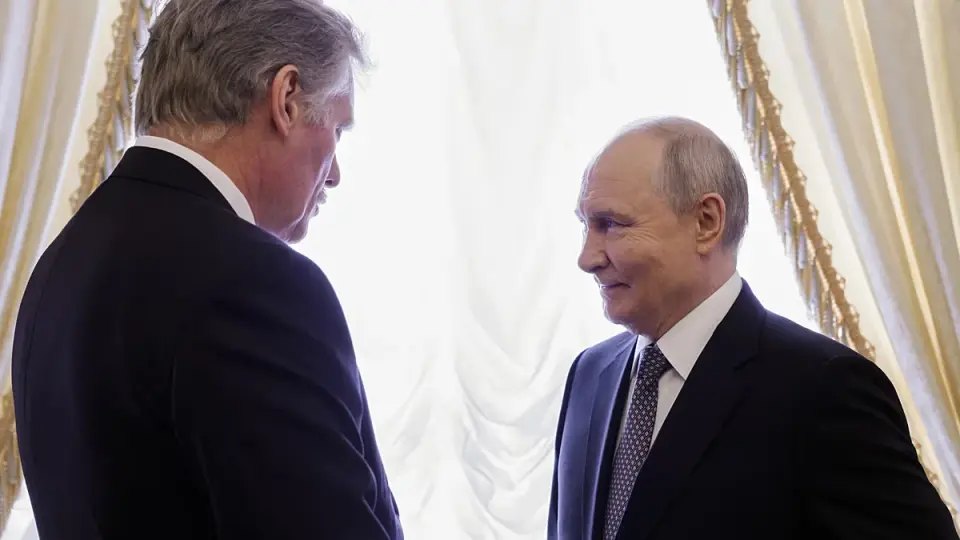
Moscow has signaled it will not block European participation in upcoming Ukraine peace negotiations, marking a significant shift from previous exclusions. Kremlin spokesperson Dmitry Peskov stated that Russia will not dictate who represents the EU, provided their position contributes to peace. European leaders have agreed to send a delegation comprising Britain, France, Germany, Italy, and Poland, alongside EU institutions, for the next round of talks. Ukrainian President Volodymyr Zelenskyy expects Europe to finalize its representative by the end of November, insisting Europe must sit at the same table as the US, Ukraine, and Russia.
Key points
- Kremlin spokesperson Dmitry Peskov stated on November 14 that Moscow will not set conditions for the EU's negotiating team, reversing previous rhetoric that European representatives had 'no business' in the talks.
- Peskov emphasized that Russia must first understand whether the EU's position can potentially contribute to the peace process, describing the previous exclusion as a 'completely wrong' approach.
- European leaders agreed on November 13 that the EU delegation will include representatives from Britain, France, Germany, Italy, and Poland, along with EU institutions.
- Ukrainian President Volodymyr Zelenskyy stated that Europe must be present at the same table as the US, Ukraine, and Russia in the next round, with a deadline for selecting a representative set for the end of November.
- The shift follows trilateral talks in Abu Dhabi on November 10, where European representatives were excluded, and a subsequent announcement by US envoy Jared Kushner that Russia agreed to expand the next round to include Europe.
Background
This development follows a series of diplomatic tensions in late 2026. In October, Moscow proposed a three-way summit in Shenzhen involving Putin, Trump, and Xi, which excluded Ukraine and the EU. Shortly after, the Kremlin explicitly rejected European participation in the Abu Dhabi talks, creating a diplomatic rift. However, by early November, Europe secured a seat in the Abu Dhabi talks, with France confirming participation and Russia upgrading its delegation. The current statement by Peskov marks a further evolution in Moscow's stance, moving from outright exclusion to conditional acceptance, reflecting the ongoing pressure from European capitals to secure direct representation in settlement discussions.
How outlets are covering it
Euronews highlights the shift in Kremlin rhetoric as a clear change in tone towards Brussels, noting that Moscow had previously accused Europe of prolonging the war. Anadolu Ajansı focuses on the procedural aspect, emphasizing that Peskov stated it would be 'wrong' to set conditions for the EU's negotiating group and noting that European capitals are still debating the choice of a high-level envoy, with Finnish President Alexander Stubb and Czech President Petr Pavel mentioned as potential candidates. Both sources agree on the core fact of Moscow's acceptance but differ in emphasis: Euronews frames it as a diplomatic breakthrough, while Anadolu Ajansı frames it as a procedural clarification amid ongoing uncertainty about the EU's unified position and representative.
Why it matters
The Kremlin's acceptance of an EU delegation in peace talks is a significant diplomatic development, as it removes a major obstacle to a unified European role in the peace process. This shift could lead to more inclusive negotiations, potentially influencing the terms of any settlement. It also reflects the growing pressure on Moscow to engage with European powers directly, rather than excluding them, and may impact the dynamics of the ongoing conflict and the broader geopolitical landscape in Europe.
What to watch
European leaders are expected to finalize the choice of a high-level EU representative by the end of November. The next round of peace talks will likely include the agreed EU delegation, with Moscow evaluating whether the EU's position contributes to the peace process. The outcome of these talks will depend on the ability of the EU to present a unified front and the willingness of Moscow to engage constructively with European representatives.
- Moscow says it will not dictate EU delegation's participation in Ukraine talks Euronews.com
- Russia says Europeans can join Ukraine peace talks if they show 'readiness to contribute' Reuters
- Kremlin says Moscow will not set conditions for European negotiating group Anadolu Ajansı
- Russia seeks a new Yalta Conference to end the Ukraine war and reshape Europe's balance of power Escudo Digital
- Peskov: New trilateral talks expected 'fairly soon' Breakingthenews.net
Want the full story? Read the original reporting
Read on Euronews.com