
Mecca Alliance envoys urge Tehran to halt war as oil prices dip
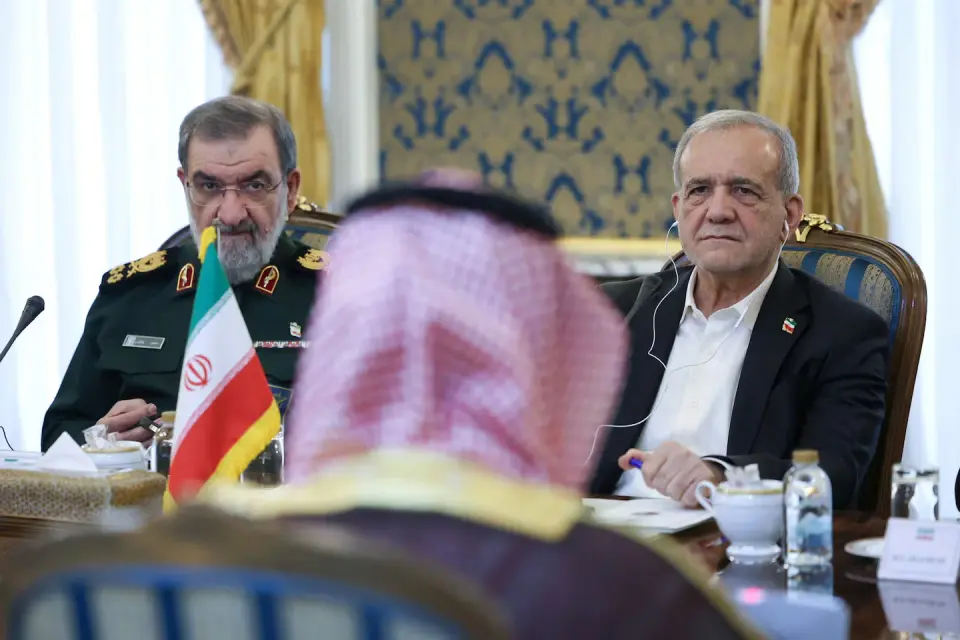
Saudi Arabia, Turkey, and Pakistan dispatched senior security officials to Tehran on October 26 to pressure Iran for de-escalation amid fears of renewed US-Israeli strikes. The talks, involving Prince Khalid bin Salman, Field Marshal Asim Munir, and Ibrahim Kalin, marked the first high-level contact between Riyadh and Tehran since Houthi attacks escalated. While oil prices fell slightly on the news of diplomatic engagement, analysts remain skeptical that the meeting will prevent a new conflict, noting that regional powers lack the leverage to guarantee US restraint.
Key points
- Saudi Defense Minister Prince Khalid bin Salman, Pakistani Army Chief Asim Munir, and Turkish Intelligence Chief Ibrahim Kalin met with Iranian President Masoud Pezeshkian and National Security Chief Mohsen Rezaei in Tehran.
- The visit is the first direct high-level contact between Saudi Arabia and Iran since Houthi attacks on Saudi targets intensified last month, following the Mecca Joint Defense Agreement's activation.
- Iranian Foreign Ministry spokesperson Esmail Baghaei stated the agenda was not pre-set but would address 'pressing threats to regional security,' while noting Tehran remains open to diplomacy but rejects US demands for 'complete surrender.'
- WTI crude oil futures fell 1.2% to $102.05 and Brent fell 0.7% to $115.86, as traders reacted to the diplomatic initiative, though analysts warn a $20 risk premium remains embedded in prices due to geopolitical uncertainty.
- Qatari mediators also traveled to Tehran, coordinating with the US, as part of broader efforts to de-escalate tensions following the collapse of a June agreement regarding the Strait of Hormuz.
Background
The Mecca Joint Defense Agreement, signed in August 2026, formalized a mutual defense alliance between Saudi Arabia, Turkey, and Pakistan, resembling NATO’s Article 5. The pact was activated in October to counter Houthi attacks on Saudi infrastructure. Previous diplomatic efforts, including a June agreement brokered by Pakistan and Qatar to reopen the Strait of Hormuz, had unraveled quickly as hostilities resumed.
How outlets are covering it
CNN and AP News emphasize the diplomatic significance of the first high-level Saudi-Iranian contact since the Houthi escalation, highlighting the involvement of top security officials from the Mecca Alliance. AP News notes that the talks also addressed the Yemen front, where Houthi strikes on Saudi targets have intensified. CNBC focuses on the market impact, reporting that oil prices fell on the news of the talks but remain elevated due to fears of further disruptions to Saudi energy infrastructure. Hamidreza Azizi of the International Crisis Group, cited by CNN, argues that the meeting is unlikely to produce a substantive breakthrough because Saudi Arabia, Turkey, and Pakistan cannot provide credible guarantees against US military action, viewing the visit as a last-minute attempt to prevent war rather than the start of a new diplomatic process.
Why it matters
The outcome of these talks could determine whether the Middle East descends into a new round of all-out war between Iran and the US/Israel, particularly ahead of US midterm elections and Israeli elections. Success could stabilize oil markets and regional security, while failure may lead to renewed strikes and further economic instability.
What to watch
Observers will watch for any substantive agreements or guarantees from the Tehran talks. The US and Israel are expected to assess the diplomatic efforts before deciding on potential military actions. Oil markets will continue to react to developments in the Yemen front and any signs of renewed conflict in the region.
- Saudi Arabia, Turkey and Pakistan send envoys to Iran in push to end war The Washington Post
- Iran hosts Saudi Arabia and regional powers as fears grow of return to war CNN
- Delegations meet in Iran with Mideast region on edge over potential for renewed fighting AP News
- Oil ticks lower as Saudi defense minister meets with Iran's president in Tehran to de-escalate CNBC
- Flurry of Diplomacy in Iran Amid Reports of U.S. and Israeli Plans to Renew War The New York Times
Want the full story? Read the original reporting
Read on The Washington Post