
Romania summons Russian envoy after F-16 downing third drone in 72 hours
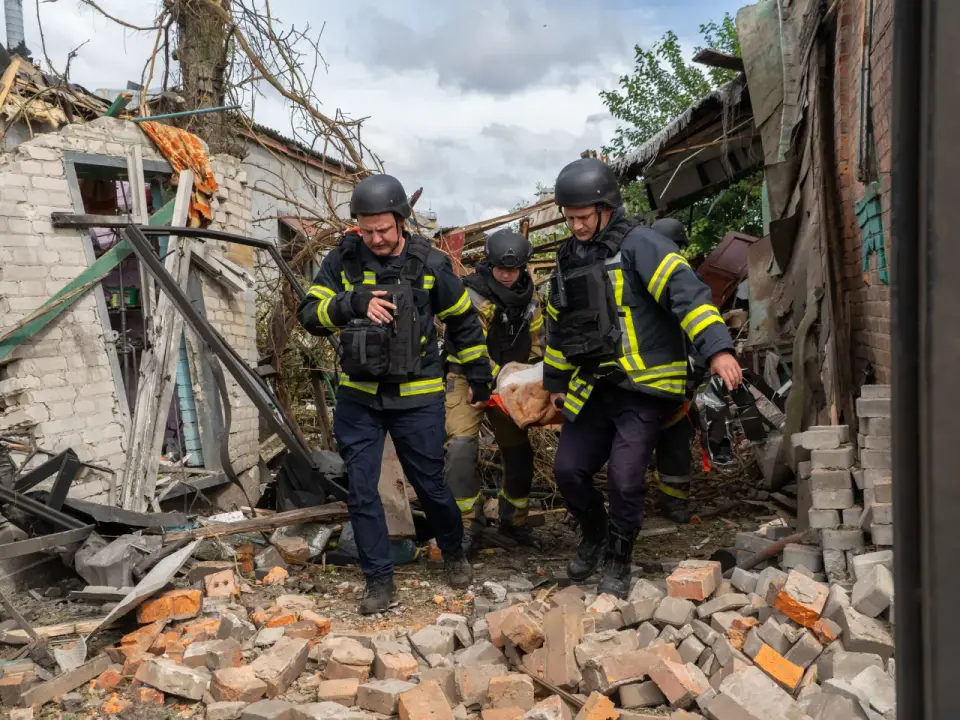
Romania summoned Russia’s ambassador on Sunday after its military shot down a third drone in as many days. President Nicușor Dan confirmed the first intercepted drone was a Russian-made Shahed model. NATO officials condemned the repeated airspace violations, while Bucharest highlighted new defensive acquisitions to secure its eastern border.
Key points
- Romania’s F-16 fighter jet shot down a drone over the Black Sea on Sunday, five minutes after it entered national airspace, marking the third interception in three days.
- Foreign Minister Oana Toiu stated that Bucharest summoned Russia’s ambassador to protest 'repeated violations' of Romanian and NATO airspace.
- President Nicușor Dan confirmed that an investigation identified the Friday drone as a Shahed model used by Russia in its war against Ukraine; investigations for the Saturday and Sunday drones are ongoing.
- NATO spokesperson Martin O’Donnell called the incursions 'unacceptable and intolerable,' noting that the Sunday drone also appeared to be of Russian origin.
- Romania integrated the US-made Merops counter-drone system in late June and is actively acquiring ground-based interceptors to bolster air defense capabilities.
Background
Romania has faced frequent drone incursions since Russia’s 2022 invasion of Ukraine, but had not shot down any until July 24, 2026. In May 2026, a drone struck an apartment building in Galați, injuring two people, and a maritime drone exploded in the port of Constanta in June. Romania’s parliament passed a law in 2025 authorizing the shooting down of drones that breach its airspace. Recent archive coverage highlights escalating tensions along NATO’s eastern flank, with Bucharest vowing a tougher stance on airspace breaches following these incidents.
How outlets are covering it
Al Jazeera, The Guardian, and France 24 all report the core facts of the three-day shootdown sequence and the diplomatic summons. The Guardian and France 24 emphasize the specific timing of the Sunday intercept, noting it occurred five minutes after entry, and highlight the deployment of the Merops system. Al Jazeera provides broader context on the ongoing war, mentioning simultaneous strikes on Kyiv and civilian casualties in Horlivka. All sources agree on the identification of the Friday drone as a Shahed model, while noting investigations for the other two remain open. No significant disagreements exist among the outlets, though Al Jazeera frames the event within the wider context of daily drone warfare between Russia and Ukraine, whereas The Guardian and France 24 focus more narrowly on the defensive response and diplomatic fallout.
Why it matters
The repeated drone incursions into NATO territory signal a potential spillover of the Russia-Ukraine conflict into allied airspace, challenging the alliance’s defensive posture. The diplomatic summons and NATO’s strong condemnation indicate a shift toward a more confrontational stance regarding border security. The acquisition of advanced counter-drone systems like Merops reflects a strategic pivot toward proactive air defense on Europe’s eastern flank, aiming to deter further violations and protect critical infrastructure and energy routes in the Black Sea region.
What to watch
Romania will likely continue to monitor airspace closely and may deploy additional ground-based interceptors. NATO is expected to coordinate further defensive measures with member states facing similar threats. Investigations into the origin of the Saturday and Sunday drones will continue, potentially leading to further diplomatic tensions with Moscow. The alliance may accelerate the integration of AI-powered counter-drone systems across eastern European borders to address the growing threat of low-altitude unmanned aircraft.
- Romania summons Russian envoy as it shoots down third intruding drone Al Jazeera
- Romania scrambles F-16 jets and downs a suspected Russian drone, the third in 3 days AP News
- Romania summons Russia’s ambassador after downing third drone since Friday The Guardian
- Romanian jet shoots down drone entering country's airspace for third day in a row France 24
- Ukraine war live: Russian strikes spark Kyiv fires ahead of Trump-Zelensky meeting The Independent
Want the full story? Read the original reporting
Read on Al Jazeera