
Russian Nuclear Bombers Deploy to Vietnam Ahead of Shenzhen Summit
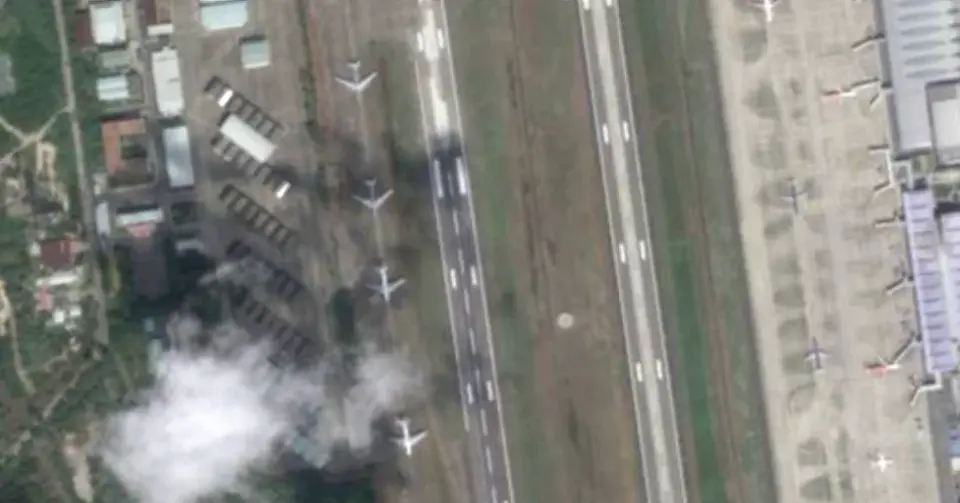
Russian President Vladimir Putin arrived in Shenzhen, China, for the Asia-Pacific Economic Cooperation (APEC) summit and a trilateral meeting with US President Donald Trump and Chinese President Xi Jinping. Ahead of these high-level talks, two Russian Tu-95MS strategic nuclear bombers landed at Da Nang Airport in Vietnam, marking the first such deployment since the Soviet era. The move coincided with a series of airspace incidents in the region, where Japan, South Korea, and Taiwan reported Russian military aircraft entering their respective air defense identification zones or territorial airspace, prompting emergency scrambles of fighter jets. This display of military presence underscores Russia’s global reach and nuclear capabilities just before the leaders convene to discuss nuclear non-proliferation and regional security.
Key points
- Vladimir Putin arrived in Shenzhen on Wednesday for the APEC summit and a trilateral meeting with Donald Trump and Xi Jinping.
- Two Russian Tu-95MS nuclear bombers landed at Da Nang Airport in Vietnam on Tuesday, the first such deployment since the Soviet era.
- Japan reported two Russian aircraft violated its airspace near Okinoshima island, leading to a 'strong' protest and fighter jet scrambles.
- South Korea and Taiwan also scrambled jets after detecting Russian military aircraft in their air defense identification zones.
- The flights occurred just before the summit, which focuses on nuclear non-proliferation, trade, and conflicts in Ukraine and Iran.
Background
This military display occurs against the backdrop of Trump’s broader Asia tour, which includes stops in the Philippines and meetings with Quad leaders. Previous coverage noted that the Shenzhen summit is viewed as a critical moment for US leverage, particularly after recent midterm election losses and domestic scandals. While the agenda includes discussions on AI supply chains and rare earth exports, European leaders have expressed concern that the meeting might legitimize Russian aggression without securing peace in Ukraine. The current airspace incidents add a layer of tension to these diplomatic efforts, highlighting the complex security dynamics in the region.
How outlets are covering it
The New York Times frames the bomber deployment as a 'show of force' and a pointed demonstration of nuclear might ahead of the summit. BBC emphasizes the diplomatic fallout, noting Japan’s 'strong' protest and the 'serious infringement' of sovereignty, while highlighting that Moscow has not yet commented. Focus Taiwan provides a historical context, noting that while such incursions are rare since the Cold War, they are not unprecedented, and urges greater transparency from Taiwan’s defense ministry regarding flight paths. All sources agree on the timing of the events relative to the APEC summit, but they differ in emphasis: The New York Times focuses on the strategic signaling, BBC on the diplomatic friction, and Focus Taiwan on the military monitoring and historical precedent.
Why it matters
The deployment of nuclear bombers and the subsequent airspace violations signal a significant escalation in Russian military posturing in the Asia-Pacific region. This occurs just before a high-stakes trilateral summit involving the US, China, and Russia, where nuclear non-proliferation and regional security are key agenda items. The incidents may complicate diplomatic negotiations, potentially hardening positions among the participating nations and raising concerns about the stability of the region. For the US, this challenges Trump’s efforts to project strength and manage trade tensions, while for China and Russia, it may serve as a demonstration of their strategic capabilities and alliances.
What to watch
The immediate focus will be on the outcomes of the APEC summit and the trilateral meeting between Trump, Xi, and Putin. Analysts will watch for any shifts in the US-Russia or US-China relationship regarding nuclear arms control and the wars in Ukraine and Iran. Additionally, the responses from Japan, South Korea, and Taiwan to the airspace incidents may influence regional security cooperation. There is also speculation about whether the US will pursue further diplomatic engagements, such as a potential meeting with North Korean leader Kim Jong Un, as part of broader efforts to manage regional tensions.
- Putin Arrives in Asia With a Show of Force: Nuclear Bombers The New York Times
- Russian military aircraft deployment sends potent message to Asia Reuters
- Japan sends up jets after alleged Russian incursion of its airspace BBC
- Russian military aircraft enter Taiwan's ADIZ: Defense ministry Focus Taiwan
- Suspected Russian Aircraft Violated Japan’s Airspace, Says Defense Minister USNI News
Want the full story? Read the original reporting
Read on The New York Times