
Shenzhen Summit: Xi and Putin Frame Trump’s Trilateral as Victory for Multipolar Order
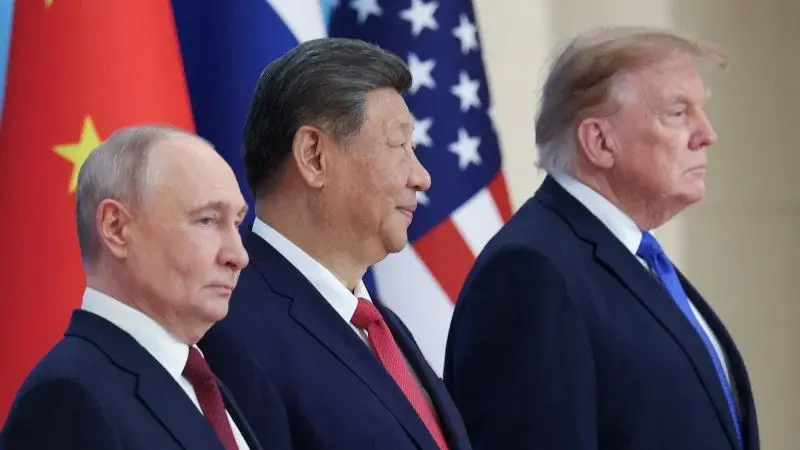
The first trilateral meeting between US President Donald Trump, Chinese President Xi Jinping, and Russian President Vladimir Putin in Shenzhen produced no concrete agreements on nuclear disarmament or the war in Ukraine. While Trump framed the event as a diplomatic success, Xi and Putin leveraged the gathering to advance a 'multipolar' world order that challenges US dominance. The summit resulted in vague commitments to increase energy production and condemn the International Criminal Court, drawing sharp criticism from Ukraine’s allies and US Republicans who argued the meeting failed to address Russian aggression or lower fuel prices.
Key points
- The 80-minute meeting in Shenzhen yielded no breakthroughs on nuclear arms control or the war in Ukraine, despite Trump’s rhetoric about reducing nuclear weapons.
- Xi Jinping emphasized the need for 'mutual respect' and non-interference in internal affairs, particularly regarding Taiwan, while Putin highlighted shared 'civilizational values' that reject universal human rights standards.
- The leaders agreed to increase petroleum production and jointly condemned the International Criminal Court, challenging the 2023 arrest warrant against Putin for alleged war crimes in Ukraine.
- Chinese state media hailed the summit as a 'new starting point' for major power relations, framing it as a vindication of the East’s rise against Western decline.
- Critics, including Texas Senator John Cornyn and Ukraine’s allies, argued the summit was a 'big mistake' that failed to reduce fuel prices or hold Russia accountable for its invasion.
Background
This summit occurred during the Asia-Pacific Economic Cooperation (APEC) forum, following a period of heightened tensions. Recent archive coverage notes that Moscow launched a massive missile strike on Kyiv hours after the talks, killing at least five people, which underscored the gap between diplomatic posturing and on-the-ground realities. Earlier reports also highlighted Trump’s pledge to shield Putin from the ICC, a move that directly challenges international legal mechanisms established to hold leaders accountable for war crimes.
How outlets are covering it
CNN and The New York Times offer divergent assessments of the summit’s impact. CNN argues that while the meeting was a photo-op for Trump, it served as a strategic victory for Xi and Putin, validating their vision of a shifting global power balance where the East rises and the West declines. In contrast, The New York Times emphasizes the lack of substantive outcomes, noting that the leaders failed to agree on nuclear arms control or artificial intelligence governance, leaving the event as a display of camaraderie without policy breakthroughs. Politico highlights the political backlash, reporting that Republicans and Ukraine’s allies viewed the summit as a failure to address Russian aggression, with critics arguing that increased energy exports would only fund the war rather than reduce fuel prices. All sources agree that the meeting produced no concrete agreements on the core issues of nuclear disarmament or the Ukraine conflict, but they differ on whether the symbolic alignment of the three powers represents a significant shift in global order or a hollow diplomatic gesture.
Why it matters
The summit signals a potential realignment in global power dynamics, with China and Russia leveraging US diplomatic engagement to legitimize their 'multipolar' vision. The joint condemnation of the ICC and the lack of pressure on Russia regarding Ukraine suggest a weakening of Western-led international norms. For the US, the event highlights the challenges of balancing strategic interests with domestic political pressures, as the administration seeks to project strength while facing criticism for failing to hold adversaries accountable for illegal actions.
What to watch
The immediate aftermath includes a massive Russian missile strike on Kyiv, suggesting no de-escalation from the talks. Politically, the US faces a new Congress in January and a potential change in administration in 2029, which could alter foreign policy. Xi and Putin are likely to continue promoting their 'multipolar' narrative, using the summit’s symbolic success to counter Western influence, while the US must navigate the fallout from the ICC condemnation and the lack of progress on nuclear arms control.
- For Xi and Putin, the Trump trilateral was a win for a new world order CNN
- Trump Flaunts Camaraderie With Xi and Putin but Has Little to Show for It The New York Times
- Trump's personalized diplomacy hits its limits with 3-way summit Reuters
- Trump’s world stage ‘triumph’ is turning into a domestic disaster The Times
- Trump’s trilateral draws backlash from Republicans and Ukraine allies Politico
Want the full story? Read the original reporting
Read on CNN