
Panama Canal cuts transits to 27 as El Niño drought worsens
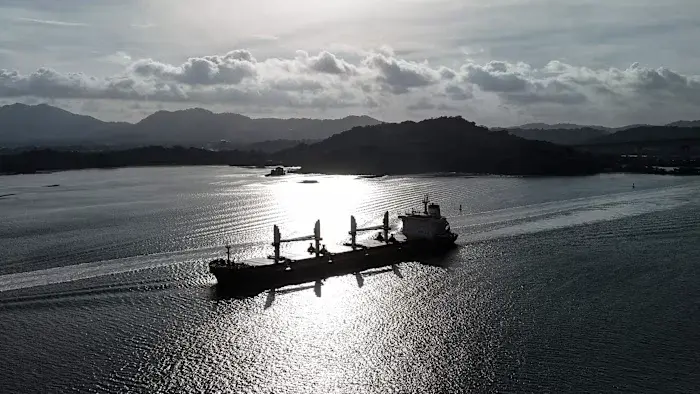
The Panama Canal Authority warned that daily ship transits could drop to 27, down from 32, due to severe water shortages linked to El Niño. This reduction compounds global trade disruptions caused by the Iran war and Houthi attacks, driving up shipping costs and forcing vessels to take longer routes.
Key points
- Daily transits may fall to 27, a 'worst-case scenario' modeled on 1997 rainfall levels, according to new administrator Ilya Espino de Marotta.
- Auction prices for transit slots have surged, with standard lock costs rising from $66,150 to $478,750 and larger locks from $253,180 to $1.25 million.
- The canal handles over 3% of global trade, but demand has risen to 5% due to rerouted cargo from the Strait of Hormuz and Suez Canal disruptions.
- A $1.6 billion reservoir project, Rio Indio, is critical for long-term resilience but faces social challenges, with 70% of 500 affected families now engaged in compensation talks.
- Climate change is making severe droughts a recurring issue every three years, threatening the canal's viability as a key trade route.
Background
Previous coverage in August and September 2026 highlighted El Niño-driven droughts already reducing daily transits from 36 to 32 and spiking auction prices. The canal had previously implemented water-saving measures, including draft limits, to manage falling water levels in Gatun Lake. The current situation extends these restrictions, with the new administrator emphasizing the urgency of infrastructure projects to mitigate recurring climate impacts.
How outlets are covering it
The Financial Times highlights the 'worst-case' scenario of 27 daily transits and the critical importance of the Rio Indio reservoir project, noting social challenges in its construction. The Maritime Executive focuses on the delay of draft reductions for large vessels due to stable water levels in Gatun Lake, despite the broader El Niño threat. Al Jazeera emphasizes the global trade impact, noting that the canal now handles 5% of global sea trade, with US crude exports surging 46% year-on-year. The Tico Times, while largely obscured by technical content, aligns with the narrative of El Niño choking the canal, reinforcing the climate-driven nature of the crisis. All sources agree on the severity of water shortages but differ in emphasis: FT on long-term infrastructure, Maritime Executive on short-term operational adjustments, and Al Jazeera on global trade ripple effects.
Why it matters
The Panama Canal's reduced capacity exacerbates global supply chain disruptions, driving up shipping costs and inflation. With the Iran war and Houthi attacks already straining trade flows, the canal's water crisis forces vessels to take longer, more expensive routes, such as around South Africa or South America. This impacts commodity prices, particularly for hydrocarbons and container goods, and highlights the vulnerability of global trade to climate change and geopolitical conflicts.
What to watch
The Panama Canal Authority will closely monitor water levels and weather projections, potentially implementing further restrictions if conditions worsen. The Rio Indio reservoir project, set for completion by 2032, is a priority, with efforts to accelerate its timeline to mitigate future drought impacts. Auction prices for transit slots are expected to remain high, and shipping companies may continue to reroute around the canal, increasing costs and transit times. The canal's long-term strategy includes expanding its capacity as a logistical hub, including a liquefied petroleum gas pipeline, to reduce dependence on water-sensitive operations.
- Panama Canal warns of possible transit cuts in further blow to shipping Financial Times
- Panama Canal Pushes Back Planned Draft Cut for Big Ships The Maritime Executive
- How El Nino is choking the Panama Canal The Tico Times
- Panama Canal restricts traffic amid Hormuz crisis: Why this matters aljazeera.com
- Korean vessel pays record canal fee as El Niño increases freight rates Korea JoongAng Daily
Want the full story? Read the original reporting
Read on Financial Times