
Trilateral Diplomats Reaffirm Denuclearization Goal Amid Trump-Kim Summit Speculation
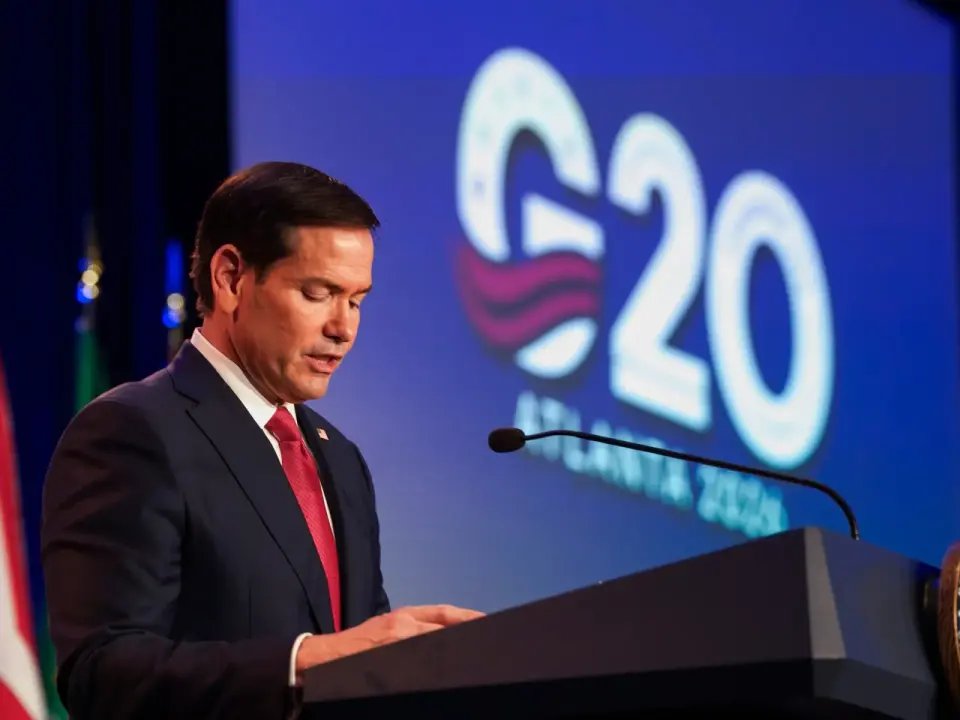
US, South Korean, and Japanese foreign ministers met on the sidelines of the G20 in Atlanta to reaffirm their commitment to the complete denuclearization of North Korea. This diplomatic stance contrasts with President Donald Trump’s recent overtures to Kim Jong Un and his previous concession that North Korea is 'sort of a nuclear power.' While Seoul’s President Lee Jae Myung has suggested a freeze-based approach, critics warn this risks tacitly accepting Pyongyang’s nuclear status. North Korea has rejected the trilateral statement, declaring its arsenal permanent and irreversible.
Key points
- US Secretary of State Marco Rubio, South Korean Foreign Minister Cho Hyun, and Japanese Foreign Minister Toshimitsu Motegi issued a joint statement on October 30, 2026, pledging 'full implementation' of UN Security Council resolutions.
- The statement explicitly calls for the 'complete denuclearization' of North Korea, a position Pyongyang has consistently rejected, maintaining that its nuclear status is permanent and irreversible.
- Speculation is growing that Trump and Kim Jong Un may meet at the upcoming APEC summit in China, following Trump’s recent 'friend' remarks and his decision to scale back joint military drills with South Korea.
- South Korean President Lee Jae Myung proposed in September that Washington seek a freeze of North Korea’s nuclear program in exchange for sanctions relief, a move critics argue tacitly accepts North Korea as a nuclear state.
- North Korea denounced a separate joint statement by nations monitoring sanctions, calling it a 'stereotyped sanctions racket' that cannot influence its position as a nuclear weapons state.
Background
This trilateral meeting occurs amid heightened tensions, including North Korea’s recent tests of AI-enabled intermediate-range missiles and hypersonic glide vehicles, as well as border disputes involving landmine explosions and loudspeaker warfare. Previous archive coverage highlights Pyongyang’s demand for the end of US-led sanctions and joint drills before engaging in talks, while Seoul has advocated for a step-by-step approach. The current diplomatic push by the US, Japan, and South Korea represents a formal reaffirmation of the traditional denuclearization stance, contrasting with Trump’s more conciliatory, deal-oriented approach.
How outlets are covering it
Al Jazeera and The Japan Times both report the core facts of the trilateral meeting and the reaffirmation of the denuclearization goal, but they differ in emphasis. Al Jazeera highlights the contrast between the trilateral statement and Trump’s personal overtures to Kim, noting his previous concession that North Korea is 'sort of a nuclear power.' The Japan Times adds the detail that Trump has scaled back joint military drills with South Korea and notes that China may be moving toward tacit acceptance of North Korea’s nuclear status, citing the omission of denuclearization from statements after Kim and Xi Jinping’s June meeting. Both outlets agree on the criticism of South Korea’s freeze-based approach, but The Japan Times provides more context on the broader regional dynamics, including China’s potential shift. The US State Department source was inaccessible, so its perspective cannot be compared.
Why it matters
The trilateral statement signals a unified front among the US, South Korea, and Japan on the denuclearization issue, despite internal US policy shifts under Trump. This could influence the outcome of any potential Trump-Kim summit, as the trilateral stance sets a formal diplomatic baseline that may constrain Trump’s flexibility. It also highlights the tension between Trump’s transactional approach and the traditional US policy of demanding complete denuclearization, which could affect North Korea’s negotiating position and the stability of the region.
What to watch
The next key event is the APEC summit in China, where a meeting between Trump and Kim Jong Un is speculated. The outcome of this potential meeting will depend on whether Trump prioritizes his personal relationship with Kim or the trilateral denuclearization stance. Additionally, North Korea’s response to the trilateral statement and any further missile tests or border incidents will shape the diplomatic landscape. The US, South Korea, and Japan may need to reconcile their differing approaches to North Korea, particularly if Trump pursues a freeze-based deal while the trilateral partners maintain the denuclearization goal.
- US, South Korea, Japan call for ‘complete denuclearisation’ of North Korea Al Jazeera
- United States-Japan-Republic of Korea (ROK) Trilateral Foreign Ministers’ Meeting U.S. Department of State (.gov)
- North Korea says sanctions don't work to deny its status as nuclear weapons state Reuters
- U.S., South Korea and Japan vow ‘complete’ denuclearization of North Korea The Japan Times
- U.S., UK, Canada and EU turn up pressure on North Korea to surrender nuclear arms; 2 African nations have also condemned Pyongyang Business Insider Africa
Want the full story? Read the original reporting
Read on Al Jazeera