
ROV Footage Uncovers Thriving Marine Life at Greenland Glacier's Edge
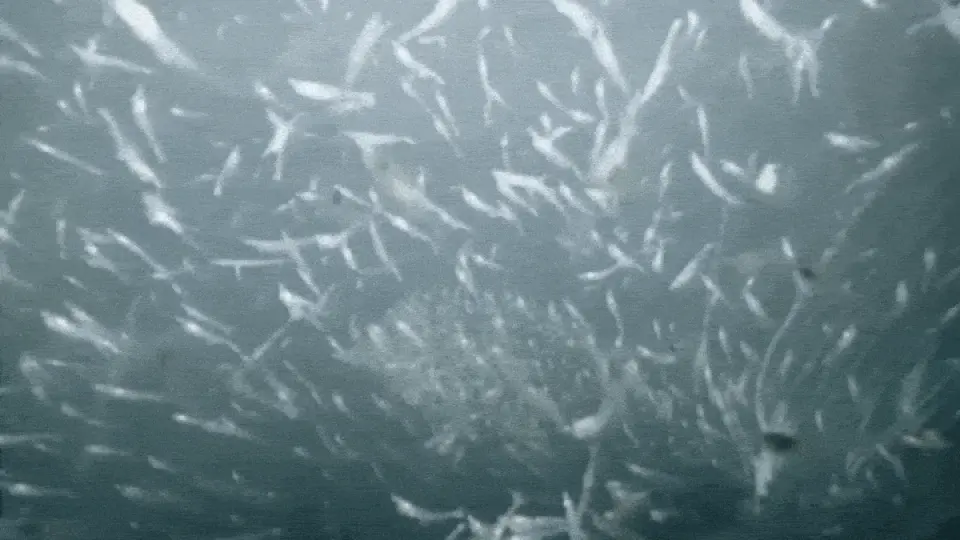
A research team from Aarhus University and the Geological Survey of Denmark and Greenland used a remotely operated vehicle to document a vibrant ecosystem at the marine terminus of the Naajat Sermiat glacier in South Greenland. The footage reveals diverse marine life, including krill and fish, interacting with sediment plumes released by the melting ice. Published in Communications Earth & Environment, the findings highlight how glacier meltwater supports local food webs, raising concerns about ecosystem stability as glaciers retreat due to climate change.
Key points
- Researchers deployed an ROV to safely access the dangerous marine terminus of Naajat Sermiat, avoiding risks from ice calving.
- Footage captured a diverse community of organisms, including krill, fish, worms, crustaceans, and jellyfish, thriving at the glacier-ocean boundary.
- Krill were observed swimming toward sediment plumes, suggesting that material released from the glacier serves as a direct nutritional source.
- The study confirms that meltwater carries nutrients and potentially organisms like snow algae from the glacier into the ocean.
- Scientists warn that as glaciers retreat onto land, these unique ecosystems may disappear, though some upwelling areas may persist.
Background
Recent satellite data and time-lapse photography have documented significant ice loss in Greenland, including a 29-square-mile calving event from Petermann Glacier in August 2026. Additionally, studies on subglacial environments, such as the discovery of ancient marine microbes beneath Taylor Glacier, have expanded understanding of life in extreme polar conditions. The current findings add a new dimension by showing active biological interactions at the immediate edge of retreating glaciers.
Why it matters
This discovery underscores the complex relationship between glacial melt and marine ecosystems. As climate change accelerates glacier retreat, the loss of these nutrient-rich boundaries could disrupt local food webs. Understanding whether the glacier itself provides essential nutrients helps predict the ecological impact of ice loss and informs conservation strategies for Arctic marine life.
What to watch
Further research is needed to determine if material from within the glacier is a significant food source for krill. Scientists will continue monitoring how ecosystems adapt as glaciers retreat onto land, focusing on whether other upwelling areas can sustain similar biological activity.
Want the full story? Read the original reporting
Read on ScienceAlert