
Octopuses Use Distinct Motor Strategies to Squeeze Through Gaps Smaller Than Their Brains
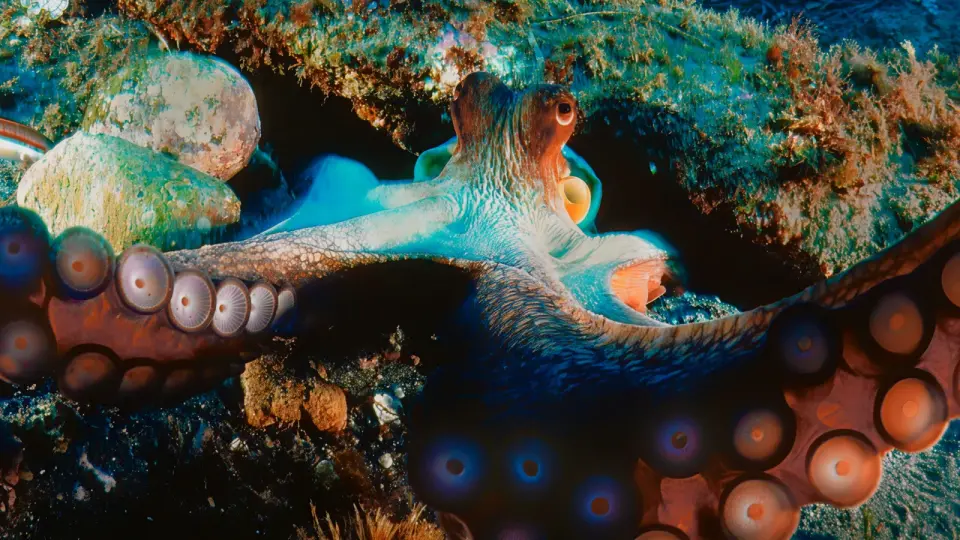
Researchers from Italy, Austria, and Singapore have detailed how octopuses navigate tight spaces, revealing that they switch between three- and four-step movement strategies depending on gap size. The study, published in the Journal of Experimental Biology, suggests these biological mechanisms could inspire new soft robots for search and rescue operations, moving away from traditional snake-like designs toward more flexible, multi-limbed systems.
Key points
- Octopuses can pass through holes smaller than the width of their stiff cranial cartilage, which protects their central nervous system.
- For larger openings, octopuses use a three-step sequence: probing with arms, shifting limbs, and squeezing the body through.
- For tighter gaps, common octopuses use a four-step strategy, separating the movement of remaining arms from the mantle and head.
- The research aims to inform the design of soft robots that can navigate complex, confined environments better than current narrow, snake-like models.
- Mayan octopuses showed different behavior, refusing to attempt narrow holes and preferring larger openings, unlike common octopuses.
Background
This study builds on previous observations of octopuses as escape artists in aquariums and labs. While earlier coverage noted the general ability of octopuses to squeeze through tight gaps, this new research provides a detailed breakdown of the specific motor primitives and strategic variations used by different species, offering concrete data for bio-inspired engineering.
How outlets are covering it
ScienceAlert and Popular Science both highlight the potential for robotics applications, noting that current search-and-rescue robots are often too rigid. However, they differ in their emphasis on species behavior. Popular Science reports that Mayan octopuses (Octopus maya) refused to attempt narrow holes, whereas common octopuses (Octopus vulgaris) successfully navigated them. ScienceAlert focuses primarily on the common octopus and the general principle of motor primitives. The Washington Post frames the story around the specific goal of roboticist Wenci Xin to create squishy, flexible robots for collapsed buildings, emphasizing the practical application over the biological nuance of species differences.
Why it matters
Understanding how octopuses deform their bodies without damaging vital organs provides a blueprint for designing soft robots that can carry more sensors and manipulators while navigating tight spaces. This could significantly improve the effectiveness of search-and-rescue operations in disaster zones where traditional robots cannot fit.
What to watch
Researchers plan to apply these findings to the design of soft-bodied robots, aiming to create machines that can adapt to environmental constraints more effectively than current designs. Further studies may explore how other cephalopod species handle similar challenges to refine these bio-inspired models.
- Octopuses Can Squeeze Their Bodies Through Tiny Holes, And Scientists Are in Awe ScienceAlert
- See how octopuses squeeze through tiny spaces The Washington Post
- Octopuses follow two strategies to squeeze through tiny holes Reuters
- How do octopuses squeeze through tiny holes? Popular Science
- How octopuses squeeze through too-small gaps Phys.org
Want the full story? Read the original reporting
Read on ScienceAlert