
August 12 Eclipse and Perseid Peak Create Rare 'Double-Header' Over Europe
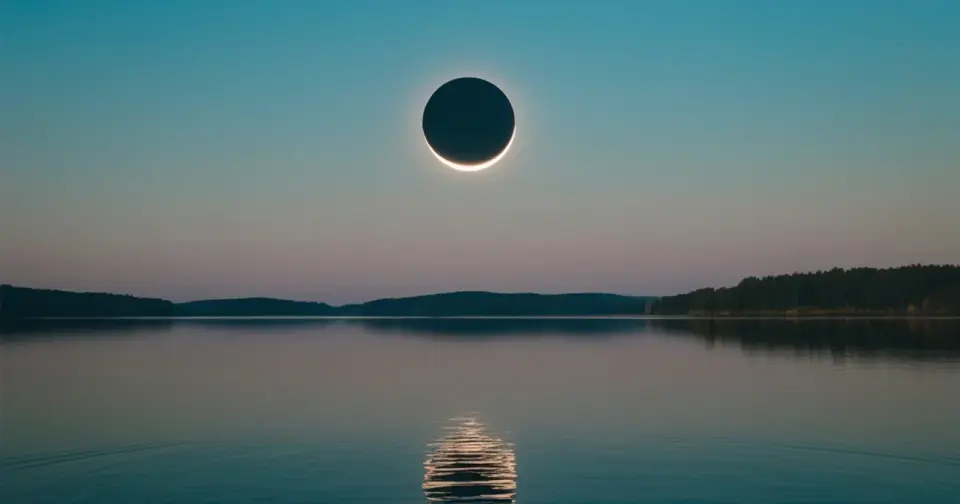
On August 12, 2026, a total solar eclipse will sweep across Greenland, Iceland, and northern Spain, coinciding with the peak of the Perseid meteor shower. This alignment, described by Sky & Telescope as a rare 'double-header,' offers the darkest possible conditions for viewing meteors, as the eclipse occurs during a new moon. The event marks the first total eclipse visible in mainland Europe since 1999 and the first in 28 months. While the path of totality affects approximately 15 million people, nearly one billion will see a partial eclipse. NASA is conducting a high-altitude flight to study solar phenomena like nanoflares, while safety experts warn that certified glasses are mandatory for all partial viewers to prevent retinal damage.
Key points
- The eclipse path begins in northern Siberia, crosses Greenland and Iceland, and ends in the Mediterranean, with maximum totality lasting 2 minutes and 18 seconds over the Atlantic west of Iceland.
- The Perseid meteor shower peaks on the same night, offering up to 100 meteors per hour under the dark skies created by the new moon phase, a combination that will not recur for years.
- Approximately 15 million people in Spain, Iceland, and Greenland are in the path of totality, while nearly 980 million people globally will observe a partial eclipse.
- NASA is flying a WB-57 aircraft at 50,000 feet to capture data on solar prominences and nanoflares, which help explain the temperature of the sun's corona.
- Safety guidelines emphasize that ordinary sunglasses are insufficient; certified eclipse glasses are required for anyone viewing the partial eclipse to avoid instant retinal damage.
Background
Previous coverage noted that August 2026 is a standout month for skywatching, with the Perseids peaking on August 12-13. Earlier reports highlighted that light pollution in urban areas like New York would reduce meteor visibility, whereas dark-sky locations in North America and Europe would offer optimal conditions. The current event is the first total solar eclipse in 28 months, following the April 2024 event, and precedes a longer total eclipse in August 2027.
How outlets are covering it
Space Daily and Sky & Telescope emphasize the rarity of the 'double-header' alignment, noting that the coincidence of a total eclipse and the Perseid peak under a new moon is a one-off event for the current decade. The New York Times focuses on the logistical aspects for European viewers, highlighting that this is the first total eclipse in mainland Europe since 1999. Al Jazeera provides a broader global perspective, noting that while 15 million are in totality, nearly one billion people will see a partial eclipse, with varying coverage percentages across continents. The Guardian highlights the scientific mission, detailing NASA's use of a high-altitude aircraft to study solar physics, contrasting the scientific data collection with the public spectacle.
Why it matters
This event provides a unique opportunity for both public observation and scientific research. The dark skies allow for the maximum visibility of the Perseid meteor shower, potentially exceeding 100 meteors per hour. For scientists, the eclipse offers a rare chance to study the sun's corona and nanoflares without the interference of the sun's bright disc, which is critical for understanding space weather and its impact on satellites and power grids. For the public, it is a significant astronomical event that has not occurred in Europe in nearly 30 years, drawing significant crowds and tourism to the path of totality.
What to watch
The next total solar eclipse is scheduled for August 2, 2027, which will cross southern Spain, North Africa, and the Middle East. This future event is expected to last up to 6.5 minutes but will not coincide with the Perseid meteor shower peak. In the immediate aftermath of August 12, observers are advised to continue monitoring the night sky for meteors, as the dark conditions persist. For those outside the path of totality, the partial eclipse will remain visible for several hours, requiring continued use of protective eyewear.
- On August 12, for the first time in 28 months, the Moon's shadow will sweep across Earth in a total solar eclipse over Greenland, Iceland and Spain — and just hours later, the Perseid meteor shower will peak under a moonless sky, setting up one of the most ex Space Daily
- Get Ready for Europe’s First Total Solar Eclipse in Decades The New York Times
- Solar eclipse tracker: What time will it hit your location on August 12? Al Jazeera
- ‘You’re hit with a slam of shadow’: Nasa’s air mission to capture rare eclipse data theguardian.com
- Solar eclipse: Most of sun to be eclipsed across island of Ireland BBC
Want the full story? Read the original reporting
Read on Space Daily