
Skull Analysis of 131 Ancient Egyptian Cats Reveals Harsh Conditions Behind Sacred Mummification
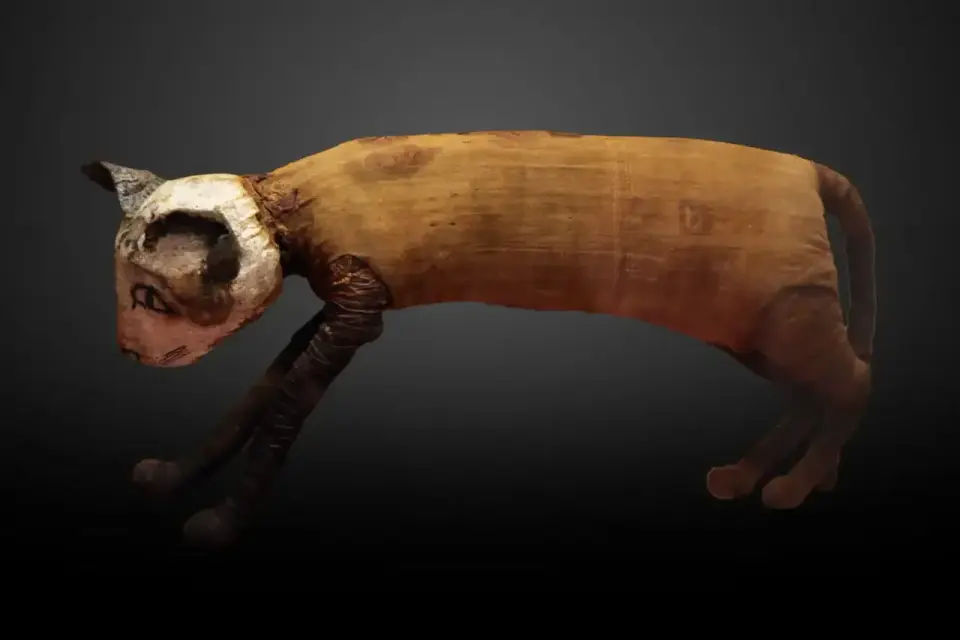
A new study analyzing 131 cat skulls from the Beni Hassan site in Egypt reveals that cats mummified as sacred offerings likely endured poor living conditions, including disease, injury, and violence, contradicting the modern perception of them as pampered pets.
Key points
- Researchers from Belgium and Italy analyzed 131 cat skulls from the 19th-century collection at the Natural History Museum in Vienna, originating from the Beni Hassan burial site.
- 62% of the skulls showed pathological alterations, including periodontitis, missing teeth, and bone pitting, suggesting nutritional stress and infections from crowded conditions.
- 14 skulls exhibited traumatic injuries, such as fractures and puncture wounds, some of which healed, indicating survival after violence, while others likely caused death.
- Radiocarbon dating places most specimens between 380 and 40 BCE, with one outlier dating to the Third Intermediate Period, suggesting earlier mummification practices at the site.
- Chemical analysis indicates that jungle cats in the sample were wild-caught rather than bred in captivity, as their carbon signatures reflected wetland habitats.
Background
This study builds on previous archaeological findings of mass cat mummification in Egypt, where earlier 19th-century excavations often repurposed animal remains as fertilizer or fuel. Recent advancements in non-invasive analysis, such as radiocarbon dating and chemical bone analysis, allow researchers to reconstruct the lives of ancient animals with greater precision, as seen in other recent studies of Egyptian embalming practices and buried complexes.
How outlets are covering it
While ZME Science emphasizes the 'dark cat-farming industry' and deliberate violence, Archaeology News Online provides detailed technical data on the skull collection's provenance and the specific injuries, noting that some wounds may have been disciplinary measures. Gizmodo highlights the contrast between the expected pampered status of sacred cats and the evidence of poor conditions, quoting researchers who stress that the high density of animals led to stress and aggression. All sources agree that the findings challenge the romanticized view of ancient Egyptian cat worship, but they differ in emphasis: ZME focuses on the grim practices, Archaeology News on the scientific methodology, and Gizmodo on the ethical implications for animal welfare.
Why it matters
This research reshapes our understanding of ancient Egyptian religious practices by revealing the harsh realities behind the production of sacred offerings. It highlights the complex relationship between humans and animals in antiquity, where spiritual reverence did not necessarily translate to humane treatment. The findings also underscore the importance of preserving archaeological collections, as the Vienna skulls, once overlooked, now provide critical insights into ancient animal husbandry and welfare.
What to watch
Researchers may expand their analysis to include other mummy collections to determine if these harsh conditions were widespread across Egypt. Further studies could explore the economic and religious motivations behind the mass mummification of cats, as well as the impact of crowded captivity on animal health and behavior in ancient societies.
- Ancient Egyptians Worshipped Cats but Their Skulls Reveal a Much Darker Story ZME Science
- Egyptian cats raised for mummification had hard lives, skull study finds Archaeology News Online Magazine
- Egyptian cats meant for the gods led harsh lives, extensive museum collection reveals Phys.org
- Ancient Egyptian Cat Mummies Reveal Cats Lived Hard Lives Gizmodo
Want the full story? Read the original reporting
Read on ZME Science