
Southeast Asian Snakes Master High-Speed Rolling to Evade Predators
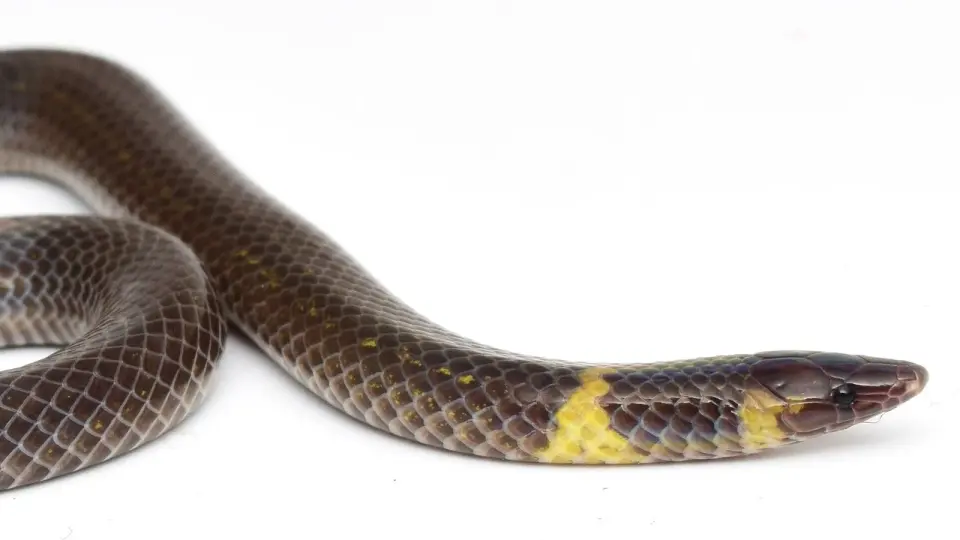
Dwarf reed snakes in Southeast Asia have evolved a unique escape mechanism involving rapid body rolling, achieving speeds four times faster than standard slithering. A new study details how these snakes stabilize their heads during the maneuver to maintain sensory control.
Key points
- Dwarf reed snakes (Pseudorabdion) use a rolling locomotion strategy to escape predators at speeds up to 3.69 meters per second (12.1 feet per second).
- This rolling speed is approximately four times faster than their normal undulating slithering movement.
- The snakes keep their heads relatively stable and elevated while the rest of their body rotates, allowing them to navigate straight paths and avoid obstacles.
- The behavior was formally documented in 2023, but a new study quantifies the mechanics and confirms it across three species in Borneo and Malaysia.
- Researchers note that while the snakes can roll in straight lines, it remains unclear if they can actively steer or if the behavior is effective in cluttered natural environments.
Background
In 2023, researchers first formally documented the rolling behavior in one dwarf reed snake species (P. longiceps) in northwestern Malaysia. Prior to this, the behavior was rarely observed due to the secretive, nocturnal nature of these reptiles. The current study builds on that initial discovery by expanding the scope to multiple species and quantifying the physical mechanics of the movement.
How outlets are covering it
Live Science emphasizes the speed advantage and the novelty of the head-stabilization technique, highlighting that the snakes can move in straight lines on narrow tracks. ZME Science provides a more critical analysis, noting that while the snakes appear stable, it is not yet proven that they can actively steer or that the rolling speed advantage holds up in cluttered forest floors. ZME Science also highlights the rarity of active rolling in nature, comparing it to other animals like wheel spiders, and questions whether energy costs or anatomical limitations prevent other species from adopting this strategy. Both sources agree that the behavior is a significant evolutionary adaptation for predator evasion.
Why it matters
This discovery illustrates how behavioral innovation can overcome physical constraints in animal evolution. It challenges the assumption that slithering is the primary locomotion method for snakes and highlights the importance of studying biodiversity in Southeast Asia to uncover such unique adaptations. Understanding these mechanics could also inform robotics and biomechanics regarding movement control without traditional limbs or axles.
What to watch
Future research will likely focus on testing whether these snakes can steer while rolling and how their performance compares in natural, cluttered environments versus controlled laboratory settings. Researchers may also investigate the energy costs and anatomical differences between rolling and non-rolling species to determine if this behavior is widespread or isolated to specific lineages.
- Secretive snakes have a surprising trick to evade predators — watch their rapid escape Live Science
- This snake cartwheels to escape danger Popular Science
- These Snakes Can Cartwheel Away From Danger. Scientists Just Uncovered How the Slithering Creatures Perform Their Acrobatic Rolls Smithsonian Magazine
- Rolling without wheels: How dwarf reedsnakes coordinate their bodies for high-speed escapes Phys.org
- These Snakes Escape Danger by Spinning Like Wheels ZME Science
Want the full story? Read the original reporting
Read on Live Science