Tag

3d Bioprinting

All articles tagged with #3d bioprinting

On-Demand Bioluminescent Algae Could Light Robots and Rooms
science15 days ago

On-Demand Bioluminescent Algae Could Light Robots and Rooms

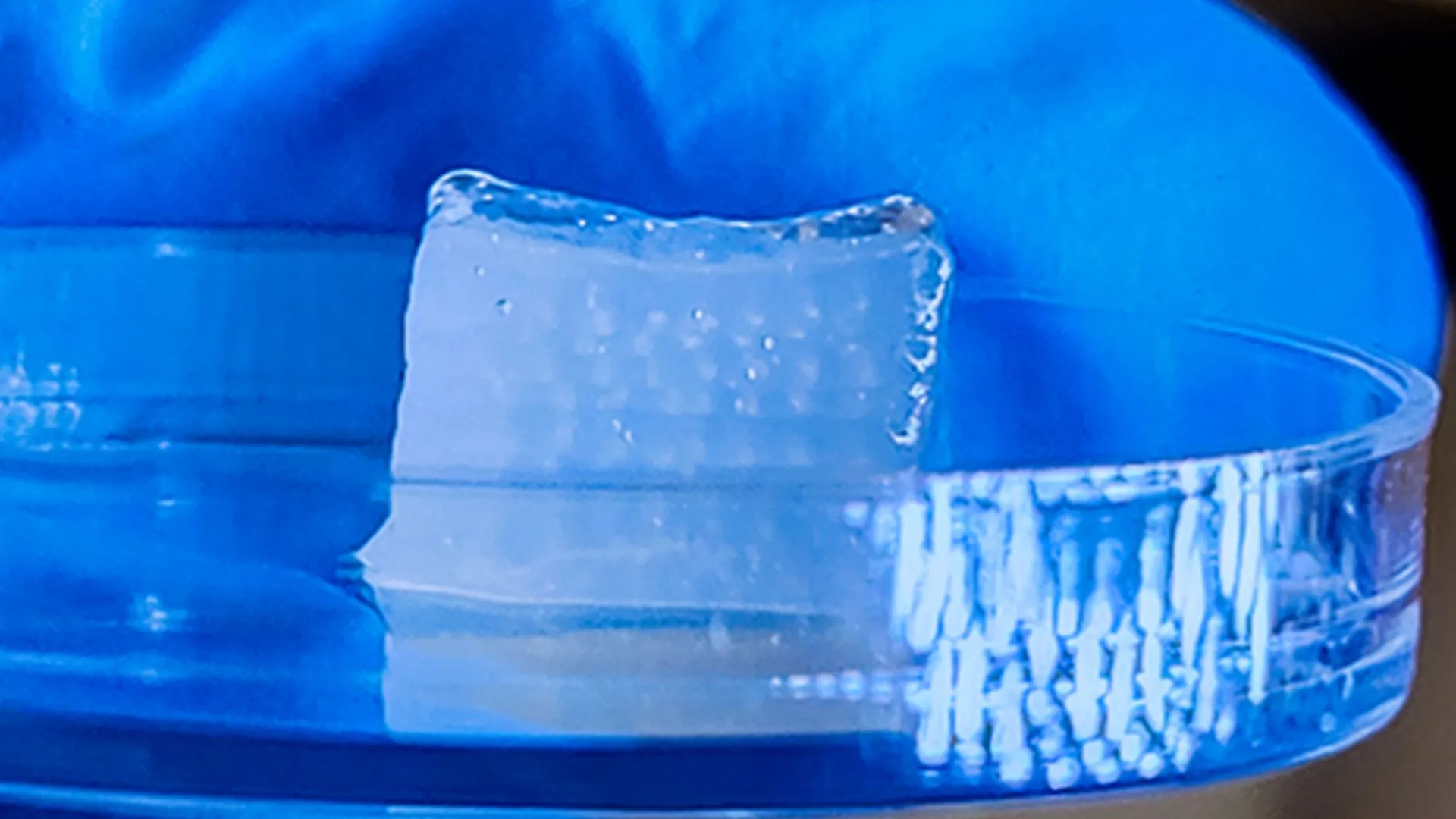
Researchers at CU Boulder developed a method to trigger sustained bioluminescence in the marine alga Pyrocystis lunula using chemical cues (acidic or basic solutions), enabling light output for up to 25 minutes and embedding the cells in sodium alginate hydrogels via 3D printing to form stable shapes that glow for weeks. Acid-triggered light stays localized in scintillons and, when combined with compressive loading, yields more light; acid-conditioned constructs retained about 75% of luminescent activity after four weeks, while base-treated cells declined due to membrane degradation. The team demonstrated glow across printed forms and envisions applications in biosensing and autonomous lighting for soft robots in environments like deep sea or space, with the algae consuming CO2 during operation. The work was published in Science Advances on May 6, 2026.

Revolutionary Bioprinter Produces Human Tissue in Record Time
science1 year ago

Revolutionary Bioprinter Produces Human Tissue in Record Time

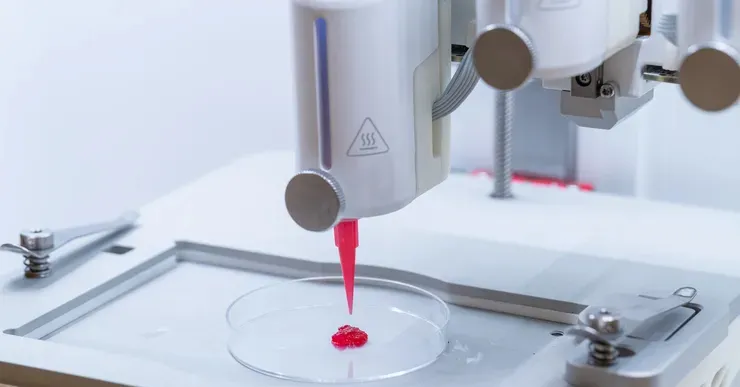
Researchers at Penn State have developed a new 3D bioprinting technique called High-throughput Integrated Tissue Fabrication System for Bioprinting (HITS-Bio), which can rapidly produce complex biological tissues using cell clusters known as spheroids. This method is ten times faster than existing techniques and maintains high cell viability, enabling the creation of functional tissues and potentially accelerating organ replacement and disease modeling. The technique has shown promising results in rat models, significantly speeding up bone repair.

"Breakthrough: 3D-Printed Brain Tissue Functions Like Human Brain"
science-and-technology2 years ago

"Breakthrough: 3D-Printed Brain Tissue Functions Like Human Brain"

Researchers at the University of Wisconsin-Madison have developed a new 3D-printing approach for creating brain tissue cultures that mimic the functions of human brain tissue. By printing horizontally and using a bio-ink gel made with fibrinogen and thrombin, the team successfully created resilient yet malleable tissue that allowed neurons to grow and communicate with each other. The new structures formed connections across layers, produced neurotransmitters, and created support cell networks. This innovative technique could potentially be used to study various brain disorders and test new drugs, offering a deeper understanding of how healthy and affected parts of the brain interact.