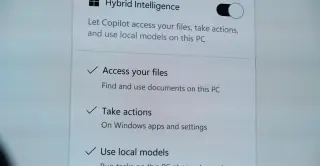
Microsoft announced 'Hybrid Intelligence' and a rebuilt Windows 11 Search at its October 7 event, enabling Copilot to access local files and execute system actions via local and cloud AI models.
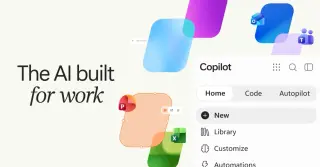
Microsoft has officially launched its redesigned Copilot 'super app,' consolidating AI chat, coding, and autonomous agents into a single interface for enterprise users. The new app features three primary tabs: Home, which merges chat and delegated tasks; Code, which allows non-technical users to build applications using natural language; and Autopilot, a persistent agent that handles recurring workflows. This move follows months of consolidation efforts and aims to compete with rivals like Anthropic by offering a unified, usage-based pricing model.
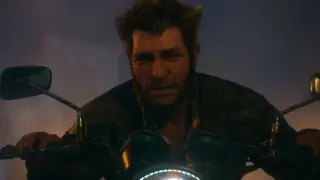
Marvel's Wolverine features numerous quick-time events that often progress without player input, and a viral motorcycle-chase clip shows Wolverine steering himself to the finish with minimal control, prompting discussion about whether the game undermines player agency and leans toward movie-like pacing even as its combat remains challenging.
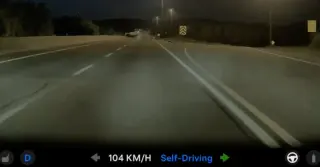
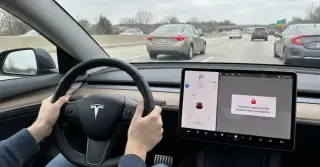
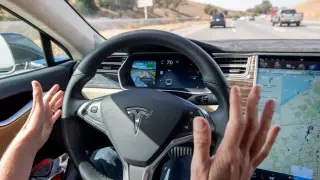
A Tesla FSD v14.3.6 on a dry, empty Quebec highway attempted to take an exit at 110 km/h, veering toward the shoulder and almost driving the car into a ditch before the driver intervened; the piece argues that even with impressive improvements, FSD fosters dangerous complacency and is not ready for unsupervised driving, despite optimistic statements from Elon Musk and the enhancements noted in the release notes.
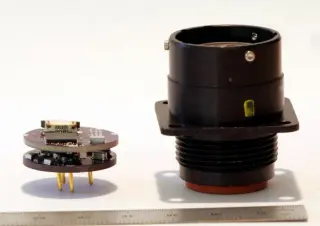
Researchers show a ground-access PoC that taps ARINC 429 avionics with an ESP32 plugged into a Boeing 737’s maintenance port, able to freeze or overwrite the MCDU display and alter FMC data, potentially reprogramming autopilot. While pilots still retain control, the proof-of-concept highlights serious security risks in airliner avionics and the need for tighter physical access controls.
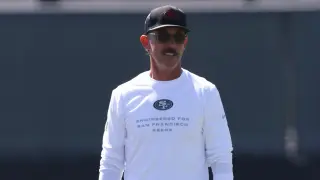
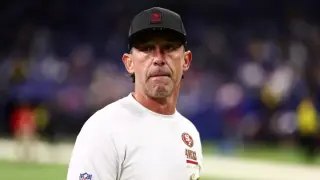
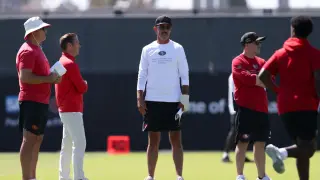
49ers coach Kyle Shanahan revealed he crashed his Tesla Model S on Autopilot after reaching for a dropped iPhone, injuring himself and a nearby driver but not severely; he accepted responsibility and stressed that you can’t take your eyes off the road, even with Autopilot. The incident underscores the risk of Level 2 driver-assistance systems, which require a ready human driver at all times, a point echoed by safety discussions and related Tesla data on crashes.
San Francisco 49ers coach Kyle Shanahan says he briefly looked away from the road to pick up a dropped phone and that his car’s autopilot was engaged at the time of a July crash; he emphasizes driving remains a partnership with the technology and that the incident shows how quickly things can go wrong. He suffered non-life-threatening injuries including broken ribs, a broken nose, bumps and bruises, and a concussion.
49ers coach Kyle Shanahan revealed that his Tesla’s Autopilot was engaged at the time of a Palo Alto crash, but he reiterates that the fault lies with the driver regardless of Autopilot status and stresses driving is a partnership with the computer.
A Parker, Colorado driver pulled over for speeding claims his Tesla’s Full Self-Driving (Supervised) was driving, but Tesla’s disclaimer states FSD requires active driver supervision and that the driver is responsible for all traffic violations, effectively upholding the cop’s decision.
Shanahan says his Tesla was on autopilot at the time of the July crash after he dropped his phone and looked away. He’s dealing with a concussion, three broken ribs, and a broken left hand but expects to coach in the preseason, and he’s unsure whether autopilot malfunctioned or he turned it off, stressing that driving is a partnership between the driver and the computer.
Four weeks after his crash, 49ers coach Kyle Shanahan said in a press conference that his Tesla was on autopilot during the accident, but he still takes responsibility for it and stressed that driving is a partnership with the car. He’s unsure whether autopilot malfunctioned or he reached for his phone, and he's currently dealing with headaches and fatigue while preparing to coach the preseason opener against the Titans.
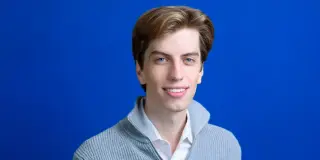
Autopilot has more than 5,000 investors continuing to copy Leopold Aschenbrenner’s disclosed stock holdings, with about $28 million still invested after withdrawals and roughly $32 million total since March. The platform tracks 13F disclosures and estimates option exposure, avoids leverage and shorting, and has yielded about 53% since launch but was down over 30% in July. AI‑infrastructure plays such as Nebius, CoreWeave, and Bloom Energy dominate the portfolio. Autopilot plans to keep copying Aschenbrenner’s trades as long as they remain public and may adapt if notable investments (like Anthropic) go public.
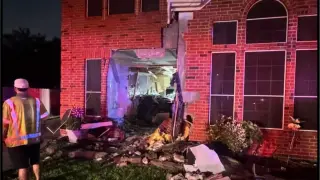
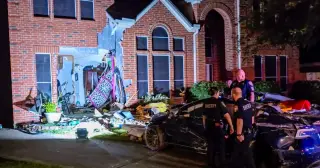
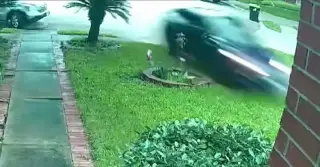
Preliminary NTSB findings confirm the Tesla involved in a fatal Texas crash had Full Self-Driving engaged and that the driver manually overridden it by flooring the accelerator to 100%, steering away from the autopilot route and into a home. The car allegedly reached high speeds in a residential area, the driver has been charged with manslaughter, and investigations by the NTSB and NHTSA continue.
A Texas man, Michael David Butler, 44, has been charged with manslaughter after his Tesla Model 3, allegedly in Full Self-Driving mode, crashed into Martha Avila’s Katy home, killing a 76-year-old grandmother. Butler told investigators he was delivering with DoorDash, had the music on, and later passed out; the car reached 73 mph with no brake applied. Tesla disputes his account, noting Autopilot requires driver attentiveness, while the NHTSA is investigating; bail was set at $150,000 with an ankle monitor, and Avila’s family has filed a wrongful-death suit against Tesla alleging defective self-driving systems.
Prosecutors charged 44-year-old Michael Butler with manslaughter after his Tesla Model 3, operating under Full Self-Driving, sped through a Katy, Texas neighborhood at about 73 mph and crashed into a home, killing a 76-year-old woman. The charging document alleges Butler overrode FSD to floor the accelerator; investigators also found Google searches suggesting he believed FSD was not aggressive enough. The case, built from vehicle telemetry, dashcam, and phone records, highlights the ongoing tension between driver control and autonomous features, with potential civil liability for Tesla alongside the criminal charge.