Former Estonian president Toomas Hendrik Ilves says CIA Director Ratcliffe’s Moscow visit was likely about Iran rather than warning the Baltic states, doubting a change in US threat assessments for Estonia, Latvia, and Lithuania, and arguing Europe bears much of Ukraine support while Washington’s leverage there remains unclear.
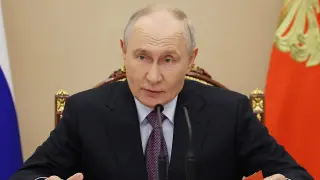
U.S. intelligence reportedly assesses that President Putin could launch a limited attack on a NATO member—ranging from a cyberstrike to a small land incursion—between this fall and 2029, aimed at fracturing the alliance and testing Article 5, with the Baltics or Poland as likely targets; the reports cite recent Russian actions such as a drone in Romania and missiles in Poland, though U.S. officials say they possess the means to respond and deter aggression.
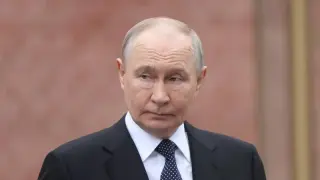
U.S. intelligence says Putin could launch a limited attack on a NATO ally in the coming years to test NATO’s unity, with Baltic states or Poland highlighted as likely targets; potential actions range from cyberattacks to small incursions, and NATO officials stress they are prepared to deter and defend as security planning intensifies amid border incidents and munitions concerns.
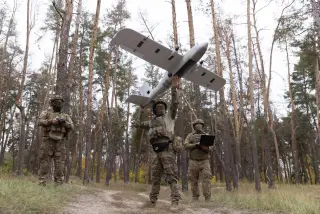
Lithuania’s defence minister warns Moscow could use recovered Ukrainian drone parts to stage a false-flag attack on Baltic infrastructure to undermine NATO support for Kyiv; while there’s no sign of imminence, Russia is weighing scenarios, prompting Lithuania to bolster security around key sites such as the Klaipėda LNG terminal and the LitPol Link interconnector; past drone incidents heighten concerns about escalation and Western unity, though officials say such an attack will not happen.
NATO's military chief warned Moscow would pay a heavy price if it attacks Poland or the Baltic states as Russia escalates missile and drone strikes on Ukraine; Kyiv seeks more air defense amid Western efforts to sustain support, including Patriot interceptor production, while Ukraine reports significant strikes inside Russia on energy facilities and allied countries brace for potential wider escalation.
Europe’s eastern flank is hardening its defenses as US guarantees grow uncertain: Finland maintains a 'total defense' posture and aims to fight largely on its own while expanding reserves and defense spending; Poland pursues the massive Eastern Shield with barriers, sensors and a continental-scale drone defense system (SAN), though some sections remain incomplete; the Baltic states rely on allied forces and a planned German brigade to slow and channel a potential Russian assault toward NATO reinforcements. With Washington reevaluating its role, European leaders are debating whether they can defend themselves without full US leadership, a reality underscored by forward defense concepts and war-game scenarios suggesting Europe may need to lead in the event of a crisis.
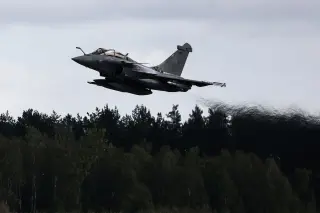
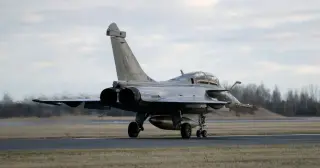
NATO aircraft, including French fighters, shot down a drone that entered Latvian airspace during the Baltic Air Policing mission—the first such interception in Latvia. Latvian authorities said the drone was diverted by Russian electronic warfare systems, prompting air raid alerts as NATO scrambled jets to neutralize the threat amid a rise in Baltic drone incursions tied to Russia. The incident follows multiple similar incursions since May and a prior Ukrainian drone incident in Latvia, fueling security debates about the region’s air defenses.
European officials warn Moscow could broaden the war beyond Ukraine, with threats to NATO Baltic members, ongoing strikes on Kyiv, and signals of possible mobilization or hybrid actions as NATO contemplates rapid-deployment plans amid rising tensions.
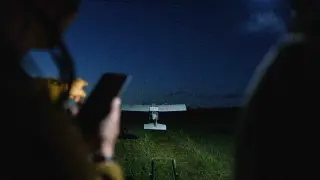
Ukraine’s expanding long-range drone raids into Russia are triggering Russia to jam and redirect some drones into NATO territory, hitting the Baltics and Finland and sparking political tensions and questions about public support for Kyiv in Latvia and Estonia. Kyiv has sought to reassure allies and push for tighter drone controls, while Baltic leaders and EU officials stress that Russia is the aggressor and advocate deeper defense measures to prevent further incidents and protect Western support for Ukraine.
At a NATO ministerial in Sweden ahead of the Ankara leaders’ summit, Rubio warns that Russia’s Baltic campaign could escalate into a larger conflict, notes ongoing US force-posture adjustments and potential NATO force-model changes, reiterates US readiness to assist Ukraine, and references the controversial deployment of 5,000 troops to Poland amid broader European realignments.
Estonia, Latvia and Lithuania faced a new wave of drone incursions linked to Kyiv's long-range drone campaign against Russia, prompting NATO fighter jets to scramble, leaders to seek shelter, and disruptions to air traffic; the Baltic states are urging a comprehensive air-defense mission amid mutual accusations with Russia and Belarus over drone routing and jamming, with some incidents possibly caused by AI navigation errors.
EU leaders condemn Russia’s threats against the Baltic states as completely unacceptable and warn that a threat to one member is a threat to the entire Union, with Ursula von der Leyen pledging unity and stronger defence on Europe’s eastern flank; the live roundup also covers Lithuania’s drone alert and bunker drills, Finland’s sanctions-related truck exports to Russia, and broader Europe-wide security, sanctions and energy developments including UK/Russia oil sanctions and Hungary–Ukraine talks.
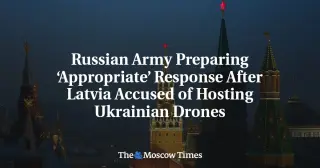
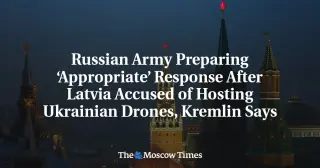
Russia says it is preparing an 'appropriate' response after Latvia was accused of letting Ukrainian drones launch from its territory, as Baltic states report drone incidents; Estonia shot down a Ukrainian drone, Lithuania issued a nationwide alert, and Latvia’s foreign minister denounces the SVR’s accusations as disinformation while the US and NATO vow to uphold commitments.
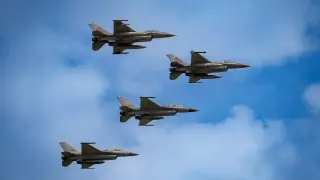
An F-16 from NATO’s Baltic air-policing shot down what appeared to be a stray Ukrainian drone over southern Estonia; Tallinn said the drone’s trajectory suggested it was headed toward Russian targets, while Kyiv apologized and said it would work with partners to prevent similar incidents. Russia blamed Ukraine and Baltic states for the incident and threatened retaliation, a claim Latvia denied, stating it never allowed strikes from its airspace.
Lithuania activated Baltic air policing after a stray drone crossed from Belarus, prompting an air alert, the closure of Vilnius airport, and shelter instructions for students; EU Commission President Ursula von der Leyen blamed Russia and Belarus for endangering European security as drone incursions continue in the Baltics, with NATO jets already intercepting drones in the region amid the broader war in Ukraine.