Mosquitoes Target Humans With Combined Visual and CO2 Cues, Study Finds
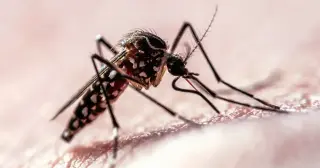
Researchers used Bayesian inference to build a dynamic, ~30-parameter model of Aedes aegypti flight from 53 million data points collected in 20 experiments, revealing that mosquitoes integrate visual cues and carbon dioxide to locate humans. They identified two flight modes (active exploration and idle/landing prep) and found visual cues alone attract mosquitoes to dark objects but don’t trigger landing without additional cues, while CO2 prompts rapid speed changes and erratic flight. When both cues are present, mosquitoes cluster closer to targets, suggesting multisensory lure designs could improve traps and disease control.