Tag

Neutron Stars

All articles tagged with #neutron stars

Neutron Stars May Harbor the Big Bang’s Quark–Gluon Plasma
astronomy27 days ago

Neutron Stars May Harbor the Big Bang’s Quark–Gluon Plasma

Scientists propose that the ultra-dense interiors of neutron stars could contain quark-gluon plasma—the same state of matter that existed moments after the Big Bang—and by analyzing how tidal forces in binary neutron-star systems imprint oscillation modes on gravitational waves, researchers hope to infer the stars’ interior structure and their equation of state, though current detectors aren’t yet sensitive enough; next‑generation observatories may confirm the presence of this exotic matter.

Mixed black hole–neutron star mergers reveal eccentric orbits and hidden formation paths
astronomy1 month ago

Mixed black hole–neutron star mergers reveal eccentric orbits and hidden formation paths

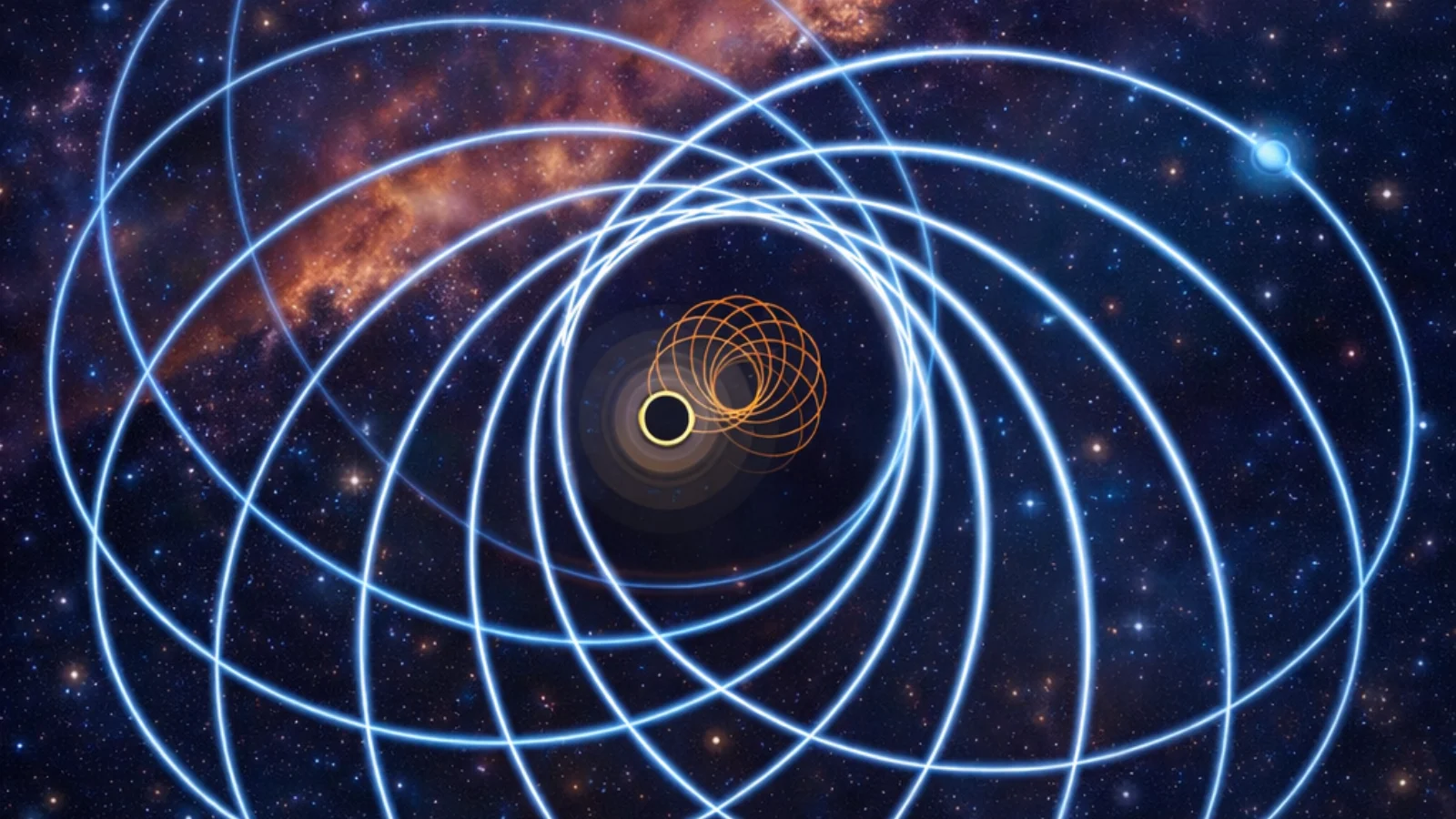
Astronomers analyzing the GW200105 gravitational-wave signal found an eccentric, precession-lacking orbit for a black hole–neutron star binary just before merger, suggesting it was shaped by gravitational interactions with a third body and not by a quiet, isolated inspiral. Using a new model from Birmingham’s Institute of Gravitational Wave Astronomy, the team says there are likely multiple formation channels for such mixed mergers, and the event revised prior mass estimates (BH ~13 solar masses, NS ~2). The finding expands our understanding of how extreme binaries form and evolve and challenges the assumption of circular, isolated mergers.

Gravitational‑wave catalog GWTC-4 doubles the event tally to 128
astronomy1 month ago

Gravitational‑wave catalog GWTC-4 doubles the event tally to 128

The LVK collaboration’s GWTC-4 catalog adds 128 distant gravitational‑wave sources detected from 2023–2024, expanding beyond the previous 90; the data include heavier, faster black‑hole mergers, some lopsided in mass, and two mixed black hole–neutron star mergers, with detections up to 10 billion light‑years away, underscoring general relativity under extreme conditions and expanding our view of black‑hole populations.

New Gravitational-Wave Catalog Expands the Testing Ground for Einstein’s Gravity
science1 month ago

New Gravitational-Wave Catalog Expands the Testing Ground for Einstein’s Gravity

A newly released, expanded catalog of gravitational-wave detections from LIGO, Virgo, and KAGRA more than doubles the known events, revealing a broader population of black holes and neutron-star mergers and enabling stringent tests of Einstein’s general relativity as gravity’s effects on spacetime are probed through mass, spin, and merger dynamics. The dataset deepens our understanding of spacetime warping and paves the way for real-time data releases from the collaboration.

Cosmic Countdown: Universe May Fade Away in 10^78 Years, Study Finds
science2 months ago

Cosmic Countdown: Universe May Fade Away in 10^78 Years, Study Finds

A new theoretical study argues that not only black holes but other ultradense objects will evaporate via Hawking radiation, shortening the universe’s remaining lifetime to about 10^78 years—far sooner than the previously estimated 10^1100 years. White dwarfs and neutron stars, along with black holes, will gradually fade through gravitational pair production, with white dwarfs and massive black holes persisting around 10^78 years and neutron stars around 10^67 years. Earth would survive roughly 5 billion more years until the Sun consumes it, after which all matter and life would ultimately vanish in the cosmic void.

Astronomers Possibly Observe First Double 'Superkilonova' Explosion
science3 months ago

Astronomers Possibly Observe First Double 'Superkilonova' Explosion

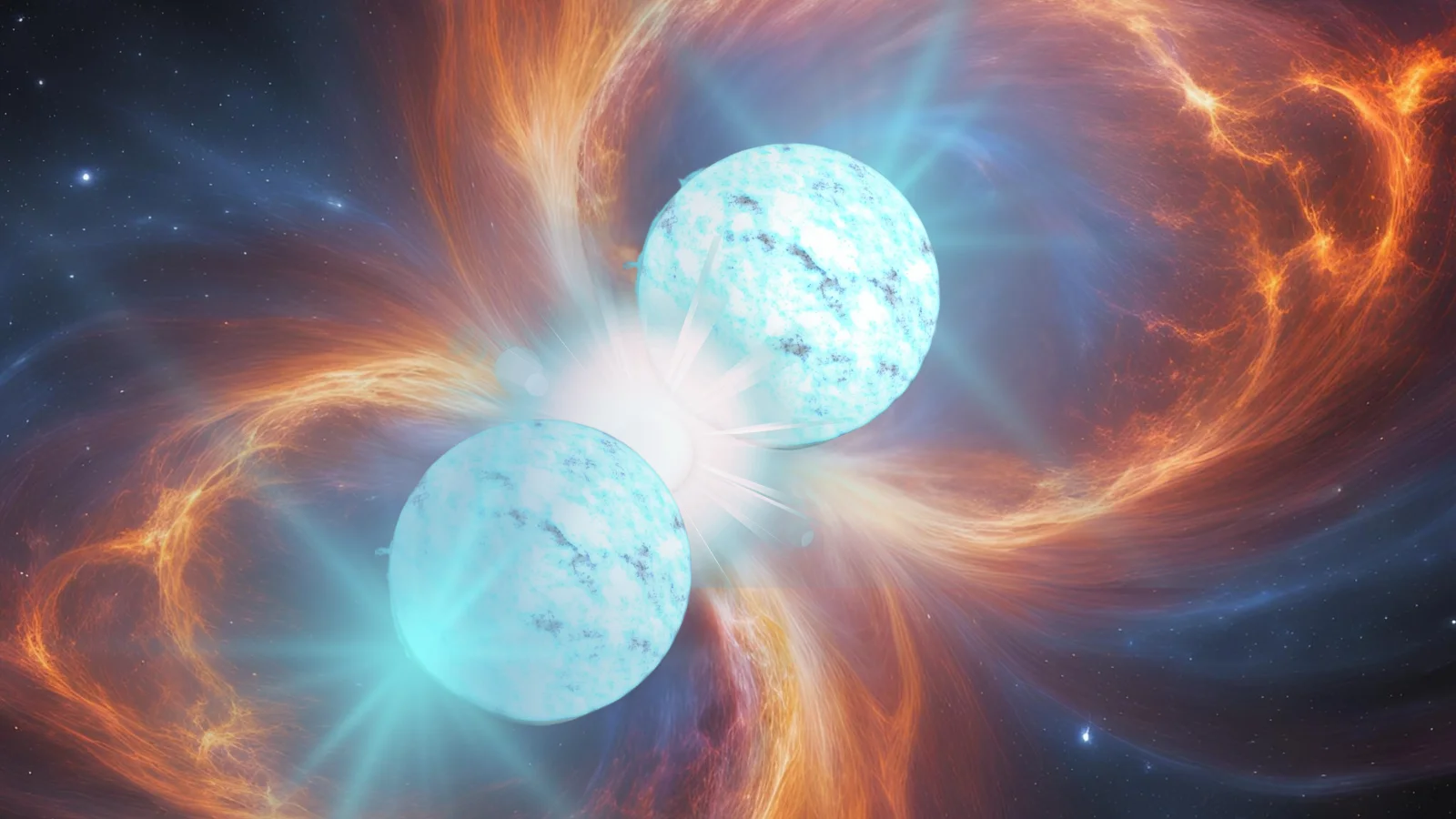
Astronomers may have detected the first superkilonova, a rare cosmic event involving the merger of two neutron stars, evidenced by a gravitational wave signal and unusual electromagnetic observations, suggesting a complex explosion that could involve sub-solar mass neutron stars. More data is needed to confirm this groundbreaking discovery.

Dark Matter's Role in Shaping Electron-Capture Supernovae and Neutron Star Formation
science5 months ago

Dark Matter's Role in Shaping Electron-Capture Supernovae and Neutron Star Formation

Researchers have developed a new model showing that dark matter, specifically asymmetric dark matter, can influence the collapse of stars in the 8-10 solar mass range, potentially leading to the formation of unusually low-mass neutron stars and affecting supernova energetics, offering new insights into dark matter's role in stellar processes.