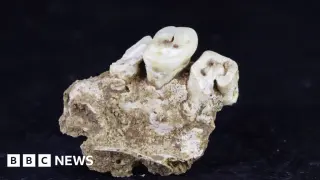
Scientists analyzing two 25,000–16,000 year-old skeletons from Sulawesi found abnormal tooth wear and chemical traces of arecoline, indicating betel nut chewing as far back as 25,000 years ago—well before agriculture—suggesting ancient people used the psychoactive substance (and possibly for pain relief) long before farming.
A study in Science Advances shows ancient Sulawesi hunter-foragers dating to roughly 25,000–16,000 years ago habitually sucked betel nuts, leaving deep tooth grooves and, in at least one case, exposed pulp. Biomolecular tests detected the psychoactive arecoline in their teeth, suggesting betel nut use predates farming and may be the earliest evidence of habitual drug use. The practice likely began with nut-sucking before evolving into the modern betel quid chewing, a tradition that persists today and is linked to significant health effects such as dental damage and mouth cancer.
Analysis of two ancient Sulawesi skeletons reveals deep tooth grooves and traces of arecoline, suggesting early foragers regularly sucked on abrasive betel nuts to get high—potentially the oldest evidence of psychoactive drug use, though the habit damaged their teeth and may have started as a remedy for tooth pain.
Griffith University researchers analyzing two ancient Sulawesi foragers (dated 25,000–16,000 and 7,600–6,300 years ago) found deep, rounded dental grooves caused by sucking whole betel nuts. Published in Science Advances, the study argues this may be the earliest evidence of drug use, suggesting psychoactive behavior predates farming-era alcohol and highlighting forager traditions as roots of some modern drug-taking practices.
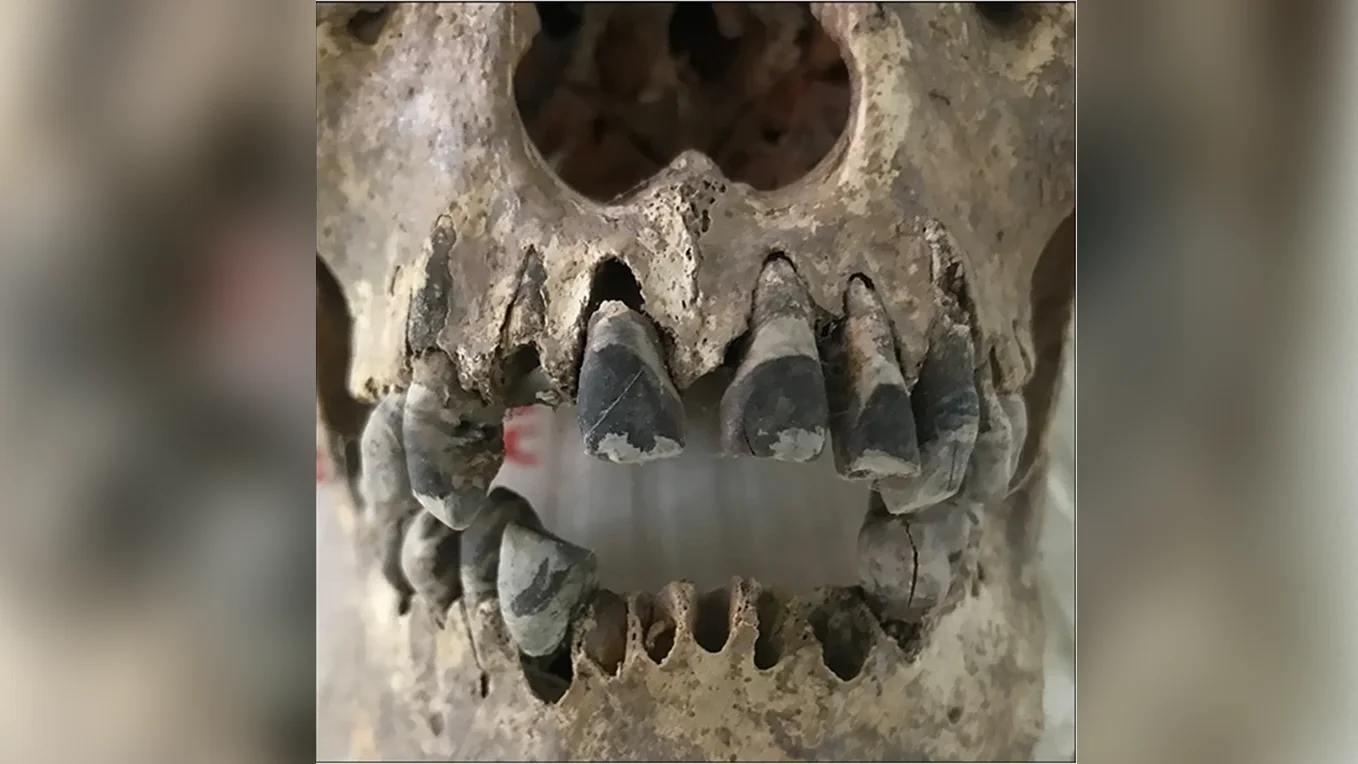
Archaeologists studying 2,000-year-old skulls from Vietnam’s Dong Xa Iron Age site found iron oxide and sulfur in tooth enamel, indicating ancient people dyed their teeth black with an iron–tannin paste—likely using tannins from betel nut. The practice, dating to the Iron Age, was a cosmetic trend that persisted in parts of Southeast Asia and would have required days to weeks of application with periodic touch-ups.
Archaeologists have used advanced biochemical techniques on 4,000-year-old dental plaque from Thailand to confirm the earliest direct evidence of betel nut chewing, a psychoactive practice that predates previous findings by at least 1,000 years, revealing its long-standing cultural significance.
Archaeologists have used advanced biochemical techniques on 4,000-year-old dental plaque from Thailand to confirm the earliest direct evidence of betel nut chewing, a psychoactive practice that predates previous findings by at least 1,000 years, shedding new light on ancient social and cultural behaviors.
The Commonwealth Cancer Association in the CNMI is raising awareness for Oral Cancer Awareness Month, highlighting the prevalence of oral cancer due to betel nut and tobacco use. Survivor Melvin Manahane emphasized the need to address the cultural tradition of chewing betel nut and tobacco, which contributes to addiction and death. Dr. Angelica Sabino stressed the economic, social, and physical impact of oral cancer on the community, calling for aggressive action to decrease its prevalence through education, prevention, and mental health support. The CCA is committed to raising awareness and education about all types of cancer, with a focus on promoting healthy habits and regular screenings. Governor Arnold I. Palacios and Lt. Gov. David M. Apatang urged citizens to unite in the battle against oral cancer, emphasizing the importance of breaking harmful habits and prioritizing regular screenings.
The market for betel nut consumption, an addictive nut regarded as the world's fourth most widely-used psychoactive substance, continues to boom despite its classification as a carcinogen twenty years ago. With over 600 million regular chewers globally, the nut's production has more than doubled in the last two decades. However, studies have shown a clear connection between betel nut consumption and oral cancer, particularly in countries where it is widely consumed. The high rates of oral cancer in Papua New Guinea, where betel nut chewing is prevalent, highlight the urgent need for regulation and awareness of the health risks associated with this habit.