A study of the sea anemone Nematostella vectensis shows it uses a BMP-Chordin shuttling system to shape its embryo, revealing an ancient, shared mechanism for organizing body plans that predates the split between cnidarians and bilaterians.
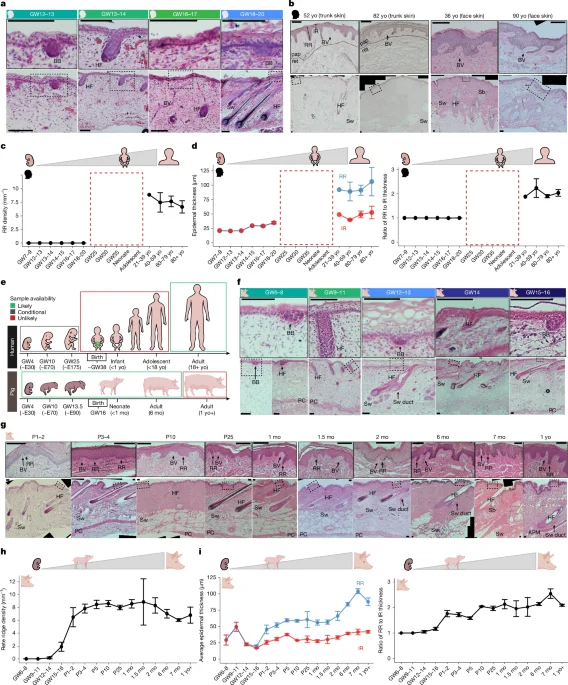
Across mammals, rete ridges form through a BMP-driven epidermal program that is distinct from the development of hair follicles and sweat glands, linking epidermal thickening with dermal pockets. The timing of ridge formation aligns perinatally in humans and pigs, and has been observed in dolphins and bears, while neonatal pig wounds can regenerate rete ridges de novo. The authors also show that mouse fingerpad rete ridges require epidermal BMP signaling, leading to the idea that evolution replaced discrete skin appendage programs with an interconnected epidermal–dermal network. This work has implications for regenerative approaches to restore epidermal structures after injury or disease.
Researchers studying sea anemones (cnidarians) show they use bilaterian-like bone morphogenetic protein (BMP) shuttling to set body axes, suggesting this developmental mechanism predates the cnidarian–bilaterian split 600–700 million years ago and may reflect an ancient shared blueprint for animal body plans.