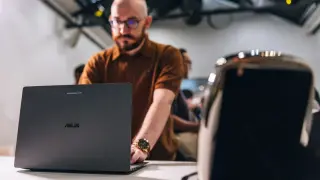
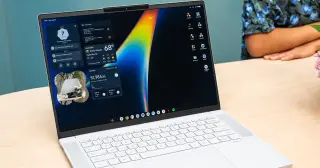
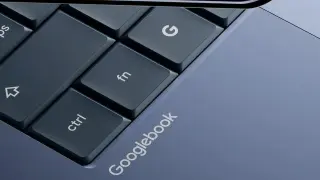
Google launched its new Googlebook laptop line on October 4, 2026, featuring five models from Acer, Asus, Dell, HP, and Lenovo. Starting at $899, these devices run a new Googlebook OS that integrates Android apps and Gemini AI tools, offering a premium alternative to traditional Chromebooks.
Google unveils Googlebooks, a new Android–ChromeOS hybrid laptop platform, with five OEMs (Acer, Asus, Dell, HP, Lenovo) launching devices powered by Snapdragon X Elite or Intel Core Ultra 3. The line features a Glowbar exterior, at least 16GB RAM, 14+ hours of battery life, Gemini-powered AI tools (including Magic Pointer) and Rambler for dictation, and three Android app tiers (Made for Desktop, Optimized for Desktop, Made for Desktop). The Play Store hosts roughly 20,000 desktop-optimized apps, with 1 year of GeForce Now and 10 years of updates. Preorders start now for an October 4 release, with base prices from $899. The platform emphasizes Android–desktop continuity and offers limited iOS integration via Link to iOS.
Google confirms pre-orders for its Googlebooks line of Android-based laptops running a ChromeOS variant, powered by Gemini Intelligence with features like Magic Pointer, and notes that Acer, ASUS, Dell, HP, and Lenovo models will be available; pre-orders start September 21 at 9 AM ET.
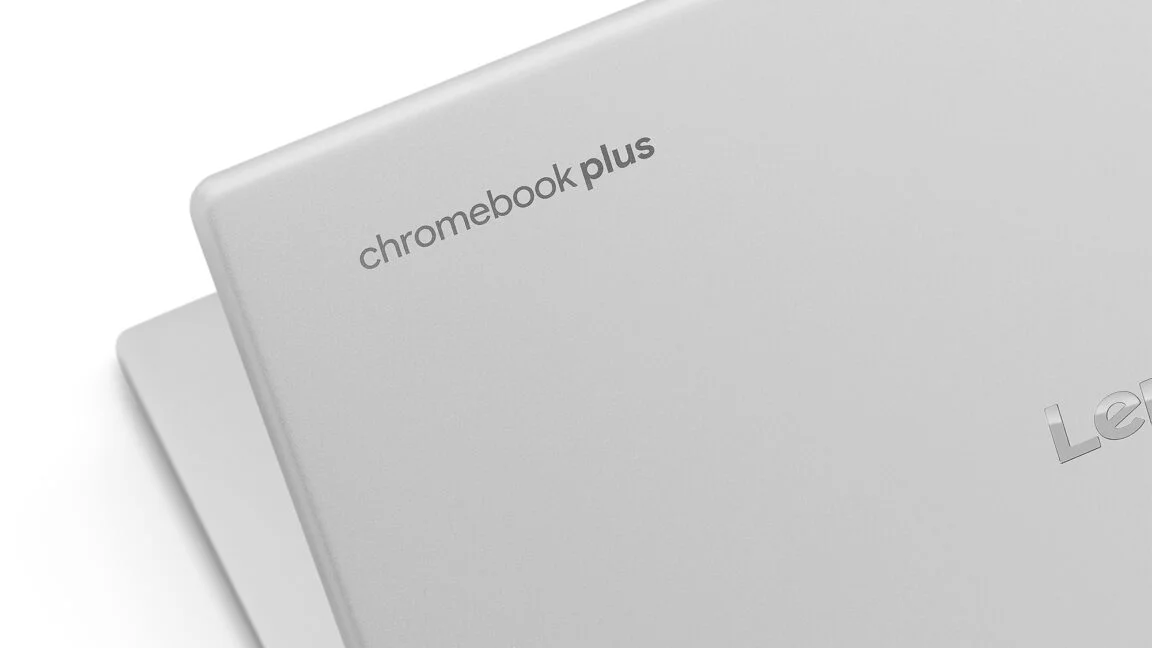
Fresh leaks show Lenovo's first Googlebooks lineup: two clamshell laptops and a detachable 2-in-1 tablet with Googlebook branding and a minimalist white design with blue LEDs. No specs or pricing yet, but Google has outlined a fall launch window for the Android-powered Googlebooks lineup from Lenovo, Acer, ASUS, Dell, and HP.
Across the U.S., lawmakers are weighing limits on classroom screens as districts experiment with analog learning. Resolutions in Los Angeles, New York City, and Washington, D.C. restrict device use for younger students, and Kansas schools report a 70% drop in suspensions after cellphone bans and moving devices to carts. Proponents say tech must be used purposefully, the AFT calls for AI guardrails to balance benefits and risks, and educators emphasize that teachers remain central to learning.
Qualcomm announced Snapdragon C, an entry-level ARM-based SoC for Windows 11 laptops starting around $300, targeting low-cost devices to rival MacBook Neo and Chromebooks with all-day battery life and light productivity. The chip reportedly includes an NPU and is expected to power devices from Acer, HP, and Lenovo later in 2026, potentially with 8GB or even 4GB RAM at sub-$500 prices; official specs are sparse, and it may not meet Copilot+ PC requirements. Details will emerge later this year.
Google confirms the initial Googlebooks will be premium, with cheaper models in the works, suggesting the Googlebooks line could eventually enter affordable price bands and blur the line with Chromebooks. The move could reshape Google's laptop strategy, potentially reducing dependence on Chromebooks in education and budget computing, while Chromebooks will continue to roll out new devices and updates and some may migrate to the Googlebook experience.
Qualcomm officially confirms its Snapdragon-powered Googlebook will launch this fall, signaling a renewed push into premium Chromebooks. Initial devices are expected to use Snapdragon X Plus, with newer boards like Calypso under consideration, and Gemini Intelligence features shaping the performance and efficiency of the Googlebook lineup.
Court filings reveal Google plans to phase out ChromeOS by 2034 as the Aluminium project shifts to an Android-based desktop stack, tying the end of ChromeOS to a 10-year update commitment; a 2026 tester release and a potential 2028 full enterprise/education rollout are discussed, with a gradual migration path for newer Chromebooks.
In court filings from Google’s antitrust case, the company signals a ChromeOS sunset by 2034 as the Aluminium platform shifts toward enterprise and education, with trusted testers by late 2026 and a full retail launch around 2028, while current ChromeOS devices stay supported through the existing hardware-based window (through 2033).
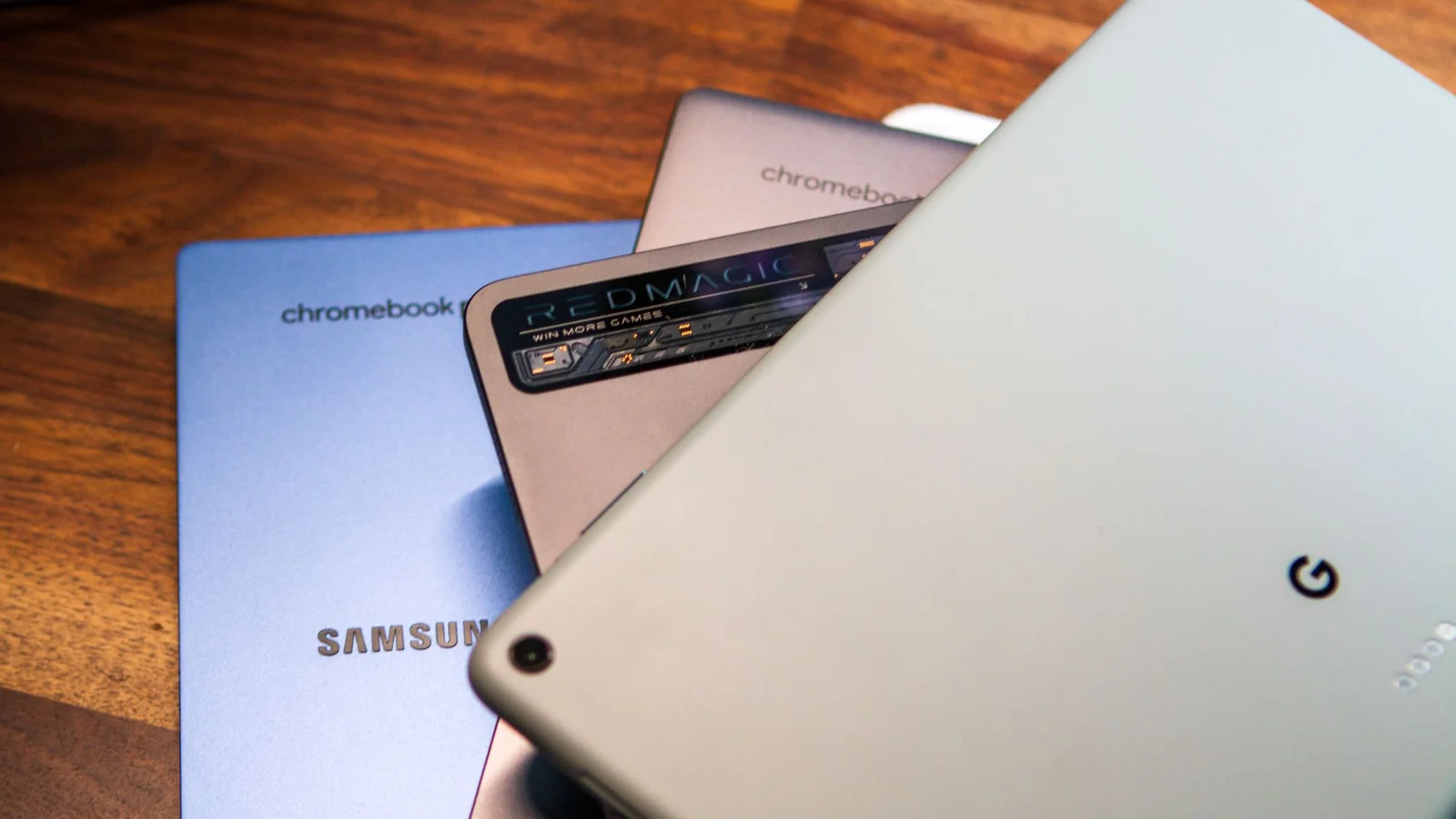
The article discusses the evolution of Chromebooks and Android tablets in 2024, highlighting advancements like ARM chips with x86 power, improved battery life, and local AI capabilities, alongside the emergence of smaller flagship tablets and the potential convergence of Chromebooks and tablets into a single device in 2026. It also raises concerns about storage limitations and rising prices due to AI and memory shortages.
Apple is planning to release more affordable MacBooks, potentially as low as $599, by 2026 to compete with Chromebooks and budget Windows laptops. The new models may use lower-end screens and iPhone chips to reduce costs, targeting students, casual users, and the education market, marking a significant shift in Apple's pricing strategy.
Apple is developing an affordable MacBook targeted at students and casual users, aiming to compete with Chromebooks and entry-level Windows laptops by using an iPhone processor and a smaller display, with plans to launch in the first half of 2026.
The article discusses free and easy alternatives to Windows for users with incompatible hardware, highlighting Linux Mint and Chrome OS Flex as practical options, and explores the possibility of replacing traditional PCs with smartphones or Apple devices, emphasizing that switching OS can be straightforward and beneficial.
Amazon's Prime Big Deal Days offers significant discounts on a wide range of laptops from brands like Apple, Lenovo, HP, and more, with deals on MacBooks, gaming laptops, Chromebooks, and ultraportables, making it an ideal time to purchase a new computer at a reduced price.