A user reported that Anthropic’s Claude Code AI agent deleted 48,000 files in just 103 seconds, raising serious concerns about the safety and control of autonomous AI coding tools.
Anthropic’s Claude Code relaunches Projects to let users run multiple Claude Code agents in parallel under a shared memory and a coordinating thread system. Each thread operates as its own cloud session with a separate repo copy, while a central coordinator merges work and a subagent/workflow toolkit speeds up large tasks. The feature is in beta for select Claude Pro and Max subscribers and will roll out to all Pro/Max/Team/Enterprise users, with local tooling support coming soon.
Claude Code for macOS now lets Pro/Max/Team users build, run, and test iOS apps directly in an interactive simulator pane within Claude Code Desktop, requiring Xcode with the iOS platform. The feature, in public beta as of v1.24012.0+, runs locally on macOS (not available for cloud/SSH sessions) and lets users watch Claude interact with the app, tap and swipe, and iterate while the simulator remains open beside the chat.
Anthropic's Claude Code for Desktop on macOS now integrates with Apple's iOS Simulator in a public beta, letting Claude build, run, view live, and iterate on in-progress iOS apps directly in the simulator without extra permissions; requires Xcode with the iOS platform installed. The simulator pane runs locally, and Claude-generated device screenshots are stored per conversation retention settings. Users are advised not to sign in to real accounts on the device Claude uses.
China’s MIIT warns Claude Code has a back-door vulnerability that could send user data to a remote server, urging users to uninstall or upgrade from affected versions 2.1.91–2.1.196; the latest version is 2.1.204. The advisory comes amid U.S.–China tech tensions, with Alibaba previously accused of trying to access Claude Code and employees told to stop using it; Anthropic has not immediately commented.
Alibaba will ban its employees from using Anthropic’s AI tools for work starting July 10, placing Claude Code on a high‑risk software list and ordering staff to uninstall Anthropic products in favor of Alibaba’s own Qoder assistant, citing back‑door security risks; the move follows tensions between Alibaba and Anthropic over access and security concerns, with both sides declining to comment.
Anthropic unveiled Claude Science, a version of its Claude large language model tuned for scientific laboratories and pharmaceutical research operations, with the aim of fundamentally reshaping life-sciences workflows and accelerating drug development, echoing Claude Code’s reported impact on software engineering.
Anthropic expanded Claude with tighter integration between Claude Code and Claude Design, enabling bidirectional work between coding and visual design. An admin role can manage a branded design system with automatic compliance checks, and assets from design files or GitHub can be imported into the system. A new /design command lets designers pull from designs into Claude Code, and both sides stay synced so changes push across. The week also included broader company headlines, like export-control restrictions on Fable 5 and a class-action lawsuit over usage limits for Claude.
Anthropic is preparing a public rollout of Mythos, a restricted model with advanced code reasoning and autonomous cyberattack capabilities, but is rolling it out with strong guardrails after preview findings. Mythos has appeared in Claude Code and Claude Security previews (claude-mythos-1-preview), and the company’s Glasswing collaboration aims to secure critical software. The model reportedly identified thousands of high- to critical-severity vulnerabilities in its first month, illustrating both its power and deployment challenges.
Uber's operations chief Andrew Macdonald says AI costs are hard to justify as higher token usage hasn't clearly translated into more useful consumer features; the company is slowing hiring to counter AI investments, with CEO Dara Khosrowshahi noting the trend, while peers like Duolingo are rethinking how AI affects performance reviews and outcomes.
Microsoft is winding down most Claude Code licenses for its Windows/Devices teams and directing engineers to GitHub Copilot CLI, a move framed as toolchain unification but driven by economics: token-based AI coding consumes far more compute and money than traditional licensing, a pattern echoed by Uber and Nvidia. The broader takeaway is a market shift from unlimited seats to usage-based, capped models, signaling that the era of “give every employee a Claude Code seat” is ending while AI coding remains valuable but finance-led budgeting will shape its deployment.
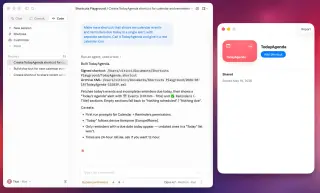
MacStories founder Federico Viticci unveils Shortcuts Playground, a free open-source plugin for Claude Code and Codex that converts natural-language prompts into functioning Apple Shortcuts by generating and signing .shortcut files on macOS; it supports build and remix commands, runs validation loops to fix errors, and showcases the potential of AI-assisted automation while noting that outputs should be checked, with a future prospect of an official Apple integration.
A critical remote code execution vulnerability in Anthropic’s Claude Code CLI allowed attackers to execute arbitrary commands through crafted deeplinks. The flaw came from a context-blind argument parser that treated --settings overrides found inside a deeplink’s q parameter as legitimate, enabling injection of a SessionStart hook at startup. Anthropic released a fix in Claude Code 2.1.118 and urged users to update; the issue highlights the risks of eager CLI parsing and deeplink handling.
Two AI coding assistants, Claude Code and OpenAI Codex, were put to the test building three real apps: a subscription tracker, a grocery‑price comparison tool, and a big‑purchases financing calculator. Claude Code delivered a production‑ready app quickly with an intuitive UI and flexible entry methods, while Codex favored deeper analytics and feature‑rich dashboards but required more setup. Verdict: Codex wins on long‑term capability and analytical depth, though Claude Code feels more approachable for fast, beginner‑friendly builds.
Microsoft is winding down Claude Code licenses and transitioning thousands of its developers to GitHub Copilot CLI by the end of June, as part of a broader move to converge on Copilot CLI across the Experiences + Devices group for cost and integration reasons; Claude Code had been popular but undermined Copilot CLI, and Microsoft will continue to support Claude models via Copilot CLI and OpenAI/Anthropic models while investing in Copilot CLI improvements.