Tag

Computational Pathology

All articles tagged with #computational pathology

PRISM2 Foundation Model Achieves Clinical-Grade Pathology Diagnosis via Multimodal Slide Analysis
science-and-technology3 months ago

PRISM2 Foundation Model Achieves Clinical-Grade Pathology Diagnosis via Multimodal Slide Analysis

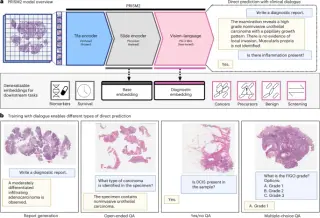
Researchers have introduced PRISM2, a multimodal foundation model designed to interpret whole-slide pathology images. Trained on 2.3 million slides and 14 million question-answer pairs derived from 700,000 reports, the system aligns histological images with diagnostic reasoning. PRISM2 supports both prompt-based inference and transferable embeddings, achieving performance levels that match or exceed existing clinical-grade AI products in detecting invasive cancer and subtyping tumors. The model utilizes a dual-objective training approach, combining contrastive learning for image-text alignment with autoregressive next-token prediction to generate diagnostic reports. This advancement moves computational pathology beyond simple image patch encoding toward comprehensive slide-level understanding, offering a tool for downstream tasks such as survival prediction and biomarker analysis.
"Integrating Multi-Omic Data to Predict Pancreatic Adenocarcinoma Outcomes"
health-and-medicine2 years ago

"Integrating Multi-Omic Data to Predict Pancreatic Adenocarcinoma Outcomes"

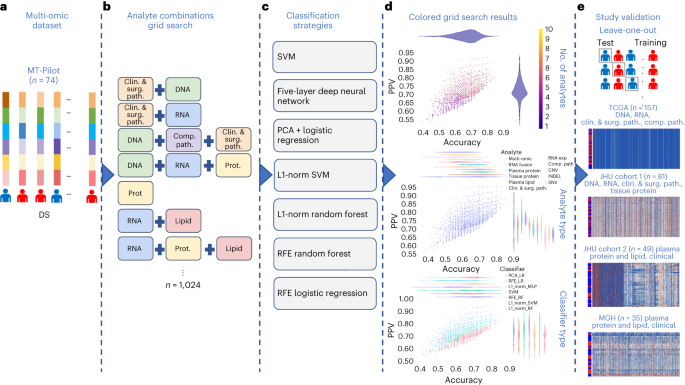
A new multi-omic analytic platform called Molecular Twin Pilot (MT-Pilot) integrates advanced molecular profiling to predict disease survival (DS) in patients with resectable pancreatic ductal adenocarcinoma (PDAC). The platform incorporates data from tumor and host samples, including computational pathology features, and utilizes machine learning models to develop predictive biomarker panels. The study reveals that plasma proteins are critical biomarkers for predicting survival, outperforming the commonly used CA 19-9 biomarker. The multi-omic models provide insights into potential pathways and therapeutic targets for PDAC, demonstrating the platform's potential to impact clinical care and scientific discovery across various cancers.