A New York Times investigation reveals that Israeli intelligence services abducted, interrogated, and in one instance killed senior Iranian generals in a decades-long effort to locate missing airman Ron Arad. The report indicates that Mossad operations targeting Iranian figures in Istanbul and Damascus failed to yield information, leading Israeli officials to conclude that Arad was likely never held in Iran. Current intelligence suggests Arad died in the Lebanese village of Nabi Chit in 1988, a theory previously dismissed by Israeli leadership.
Germany’s parliament approved a major overhaul of intelligence laws, granting the BND and BfV unprecedented powers to conduct covert operations, sabotage, and cyber interventions abroad and at home. The reform, backed by the governing coalition, aims to counter rising threats from Russia, China, and Iran, but faces sharp criticism from opposition parties who warn it blurs the line between espionage and policing.
Ukraine’s military intelligence service, the GUR, has confirmed that two Russian men, referred to as Ivan and Foma, are actively working for Kyiv to conduct sabotage and surveillance operations within Russia. Ivan, a former political opposition member, claims to have hidden drone components near military airfields and participated in strikes on strategic assets, including a drone factory in Yelabuga. Foma, living in exile in Poland, manages a network of undercover volunteers who surveil high-ranking Russian officers, such as Lt Gen Fanil Sarvarov, who was assassinated in December 2025. While the GUR acknowledges it cannot fully verify the men’s activities due to operational secrecy, it confirms their employment. The operations rely on decentralized, cell-based structures to avoid detection by Russian security services, with operatives often unaware of each other’s identities. Ivan notes that ideological recruits are scarce, as many have fled or been imprisoned, while Foma estimates his network includes 300 to 500 individuals across Europe and Russia. Both men emphasize that their actions aim to accelerate the fall of Vladimir Putin’s regime by targeting military infrastructure and personnel, though they stress that civilians are not the intended targets. The GUR maintains strict caution, noting that trust in agents is limited, with one handler stating, 'I'm not sure of anyone, except myself.'
A Wall Street Journal report indicates that Iran is supplying Yemen’s Houthis with critical targeting intelligence, training, and tactical guidance, enabling the group to launch sophisticated drone and missile attacks against Saudi Arabia. This support has allowed the Houthis to secure rapid territorial gains in Yemen and strike key Saudi infrastructure, including Riyadh’s King Khalid International Airport and the presidential palace in Aden, despite Tehran’s official denials of direct involvement.
Ukraine faces a dual crisis as SpaceX restricts Starlink speeds, hampering drone operations, while U.S. intelligence warnings for Russian missile strikes fail to arrive. These disruptions coincide with a diplomatic rift over U.S. sanctions on Russian oil, raising fears of deliberate U.S. pressure.
Former German intelligence chief August Hanning was arrested on suspicion of attempted treason and espionage. Prosecutors allege he paid for classified documents to produce analyses for a foreign spy service, with some reports suggesting a link to Azerbaijan rather than Russia. The scandal has triggered internal BND investigations and raised concerns among allies about the credibility of German intelligence sharing.
A former head of Germany's foreign intelligence service is facing espionage allegations, sparking a major scandal within the European intelligence community. While The Bulwark highlights the reaction from a former CIA officer, AP News provides the factual basis of the charges against the former BND chief.
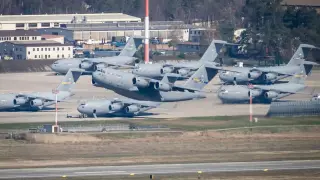
German outlet WirtschaftsWoche reports that Iranian intelligence services are targeting US military bases in Germany, specifically Ramstein and Spangdahlem. The report cites unnamed Western officials who claim Israel warned US and German partners of this threat three weeks ago. While the intelligence assessments raised concerns about potential drone attacks, they did not specify a timeline or exact target. Neither the German defense ministry nor US forces in Germany immediately commented on the allegations.
German intelligence chiefs warned parliament on October 5 that Moscow’s escalating 'shadow war' risks drawing Berlin into direct conflict with Russia. BND chief Martin Jäger cited the August Leipzig drone attack and warned of potential 'little green men' provocations in the Baltics, while domestic intelligence chief Sinan Selen noted Russia is targeting European infrastructure and defense industries. These warnings followed Chancellor Friedrich Merz’s visit to Kyiv, aimed at projecting resolve after his party suffered losses to the pro-Kremlin AfD in recent regional elections.
The CIA has restored a Soviet-era Mi-17 helicopter used to insert the first U.S. intelligence team into Afghanistan in September 2001. The aircraft, which flew over 300 missions until 2012, is now displayed at Langley, Virginia, marking the 25th anniversary of the post-9/11 intervention.
A new investigation by The Atlantic claims that Egyptian intelligence chief Abbas Kamel secretly visited Israel 11 days before the October 7 attack to warn that Hamas was preparing a major operation. The report states Kamel urged economic concessions to Gaza but provided no specific date or plan. Israeli officials, including the Prime Minister's Office and former National Security Council head Tzachi Hanegbi, have rejected the claims, calling them recycled lies used to manipulate the public. The Atlantic notes that while the warning lacked concrete details, the high-level nature of the visit should have alerted Israeli leadership.
Ukraine has obtained two detailed Russian documents outlining planned winter strikes on its energy, heating, and water infrastructure. The plans specify weapon types and quantities for each target. In response, Kyiv has built over 200 protective structures and is mobilizing international partners for rapid repair capabilities.
A US military analyst used AI to generate a false intelligence report claiming a Chinese ship in the Middle East was carrying nuclear components. This error nearly led to a US military operation against the vessel, potentially sparking a conflict with China. The incident highlights risks of AI integration in military targeting.
Twenty-five years after the September 11 attacks, Western intelligence agencies have improved information sharing but face new challenges from strategic miscalculations and shifting threats. While the US and UK have reorganized their systems to prevent silos, experts warn that complacency, budget cuts, and political interference are eroding counter-terrorism capabilities. The focus has shifted from non-state terrorism to state actors like China and Russia, raising concerns about whether the West is adequately prepared for future strategic failures.
A long-running scientific and philosophical dispute over whether slime moulds possess intelligence has intensified, challenging traditional views of simple organisms and potentially reshaping our understanding of life and human cognition.