Tag

Decagon

All articles tagged with #decagon

Decagon Enters Early Acquisition Talks with ServiceNow Amid AI M&A Surge
technology11 hours ago

Decagon Enters Early Acquisition Talks with ServiceNow Amid AI M&A Surge

AI customer support startup Decagon has engaged in preliminary merger and acquisition discussions with ServiceNow and other firms, despite recently securing a $4.5 billion valuation. The talks reflect a broader shift in the tech sector, where established software giants are acquiring AI startups to rapidly integrate agentic capabilities rather than building them in-house. While Decagon has no financial need to sell, the interest signals growing consolidation in the enterprise AI market.
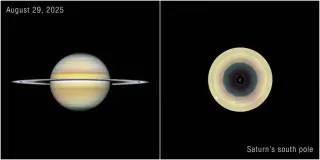
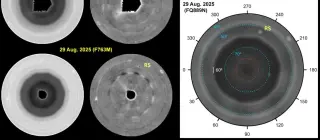
Saturn’s South Pole Hosts a Ten-Sided Storm, Echoing the Northern Hexagon
science1 month ago

Saturn’s South Pole Hosts a Ten-Sided Storm, Echoing the Northern Hexagon

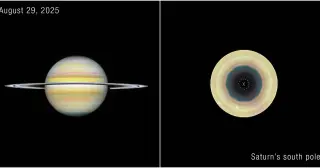
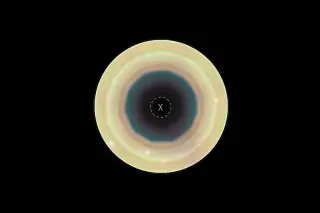
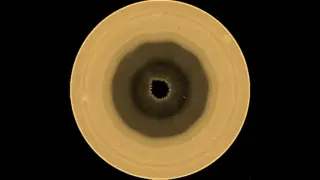
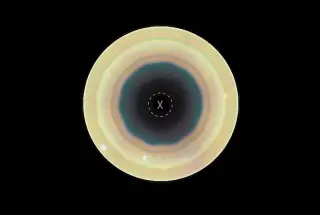
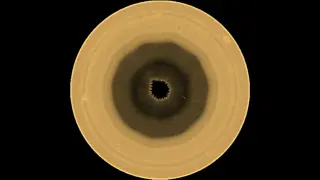
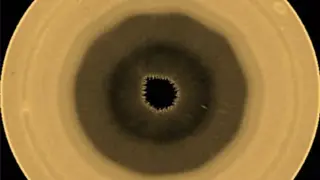
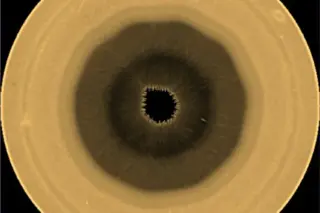
NASA/ESA's Hubble observations reveal a roughly 104,000-mile-wide decagon circling Saturn's south pole, a geometric counterpart to the long-running north polar hexagon. The polygon appears as a deep, vertically extended atmospheric wave tied to a fast circumpolar jet and tracked across multiple years by the OPAL program, implying that Saturn's atmosphere can form polygonal jets at both poles under the right conditions. Ongoing monitoring with Hubble, JWST, and atmospheric models will determine its longevity and what it reveals about Saturn's winds and vertical structure.

Saturn Unveils a New 10-Sided Polar Polygon
space1 month ago

Saturn Unveils a New 10-Sided Polar Polygon

Astronomers using the Hubble Space Telescope have detected a new 10-sided polygon (a decagon) at Saturn’s south pole, adding to the planet’s famous north-pole hexagon. The pattern is a cloud-formed atmospheric feature, not a solid surface, likely shaped by waves and jet streams; researchers will continue monitoring with Hubble and JWST to understand its origin, duration, and how deep these structures extend.

Saturn's South Pole Unveils a New Decagon Storm Cassini Didn't See
space1 month ago

Saturn's South Pole Unveils a New Decagon Storm Cassini Didn't See

A newly formed ten-sided jet around Saturn’s south pole has been confirmed by Hubble, a decagon Cassini never captured during its 13-year mission. The polygon appears to have formed after 2017 as Saturn’s long seasons brought the pole into view, and it strengthens near a southern anticyclone, suggesting the shape is actively forming rather than a long-lived relic.

Saturn’s South Pole Reveals a Rare Ten-Sided Storm
science1 month ago

Saturn’s South Pole Reveals a Rare Ten-Sided Storm

Astronomers using the Hubble Space Telescope have spotted a rare 10-sided decagonal storm encircling Saturn’s south pole, a newly formed atmospheric pattern not seen before in the planet’s southern hemisphere. The feature appears distinct from the famous northern hexagon and seems to be developing, with traces dating back to observations starting in 2023. Researchers plan further study with Hubble, the James Webb Space Telescope, and computer models to understand how it formed, how long it will last, and how it compares to Saturn’s north-pole pattern.

Saturn's South Pole Unveils a Ten-Sided Polar Wave
science1 month ago

Saturn's South Pole Unveils a Ten-Sided Polar Wave

Scientists have spotted a ten-sided decagon around Saturn’s south pole, the planet’s second polygonal weather feature after the north-pole hexagon. Using 2023–2025 observations from the Hubble Space Telescope and amateur astronomers, the decagon appears as a vast atmospheric wave riding on a strong eastward jet near 60°S, migrating about 10 km/h while the jet runs about 420 km/h. The feature spans multiple altitudes and could not be reproduced by current simulations, leaving its formation mechanism and relation to a nearby anticyclone (the “Red Spot”) open to further study. The finding, published in Science Advances (Sánchez-Lavega et al., 2026), offers a real-time window into how Saturn builds polygonal weather patterns.

Saturn’s South Pole Unveils a Rare Ten-Sided Atmospheric Wave
science1 month ago

Saturn’s South Pole Unveils a Rare Ten-Sided Atmospheric Wave

Astronomers using the Hubble Space Telescope, alongside amateur observers and researchers from the University of Leicester, have documented a decagonal (10-sided) atmospheric wave around Saturn’s south pole—the first large, regular polygon observed in the planet’s southern hemisphere. The feature mirrors Saturn’s well-known north-p pole hexagon and has emerged as the southern hemisphere becomes more visible from Earth, with data from 2023–2025 and earlier observations published in Science Advances. Scientists say this discovery raises fundamental questions about atmospheric dynamics on gas giants and how long this decagon might persist, warranting further observations.

Saturn's south pole reveals a colossal decagonal cloud pattern
space1 month ago

Saturn's south pole reveals a colossal decagonal cloud pattern

Astronomers using the Hubble Space Telescope have detected a giant ten‑sided cloud pattern circling Saturn's south pole—a rare decagonal feature about 167,820 kilometers across that likely formed from a meandering atmospheric jet and waves. Its rotation takes about 800 days, and scientists are studying its evolution and 3D structure to understand how it compares with Saturn's long‑standing north‑polar hexagon.

Skeleton editing yields giant chiral decagon nanocarbon and twisted nanographene
science2 months ago

Skeleton editing yields giant chiral decagon nanocarbon and twisted nanographene

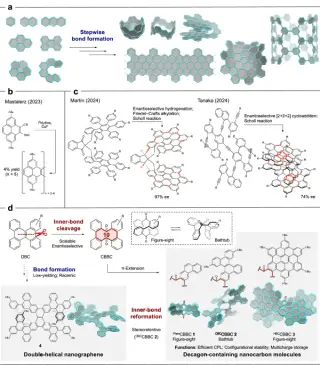
Researchers demonstrate a skeletal-transformation strategy that cleaves inner double bonds in π‑conjugated hydrocarbons to create all‑sp2 10‑membered rings, enabling the enantioselective synthesis of three decagon‑containing chiral nanocarbon molecules (PhenCBBC 1, DBCCBBC 2, HBCCBBC 3) with figure‑eight or bathtub shapes. A subsequent inner‑bond reformation converts DBCCBBC 2 into a π‑extended double helicene (and, in a separate route, yields a racemization‑resistant, highly curved nanographene 4 with a porous, homochiral crystal framework). The work broadens nanocarbon synthesis beyond stepwise bond formation, highlighting a versatile pathway to large, stable chiral carbon architectures and helicene‑based materials.