Digital Foundry reports that Fire Emblem: Fortune's Weave runs at 720p in docked mode and 540p in handheld mode on the Nintendo Switch 2, using DLSS to upscale to 1440p and 1080p respectively. The game maintains a stable 30fps in both modes. While technical performance is modest, the title has received critical acclaim for its strategic depth and narrative scope.
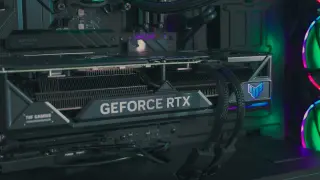
The PS5 Pro remains Sony’s top-performing console, but Nvidia’s RTX 5060 Ti is the closest Nvidia analogue on PC—matching or even beating the PS5 Pro in many scenarios (especially with DLSS) and handling ray tracing similarly in titles like Alan Wake 2. While the PS5 Pro is strong, PC gaming offers more tweakability and higher potential frame rates via features like multi-frame generation, making the RTX 5060 Ti the best Nvidia match to the PS5 Pro.
Digital Foundry confirms the Zelda Ocarina of Time remake runs at 1080p and a smooth 60fps on Nintendo Switch 2, but the game does not use DLSS upscaling, suggesting an in-house or partner engine (with Monolith Soft among likely collaborators).
A fan-driven effort is porting NVIDIA’s DLSS Multi-Frame Generation to older GeForce RTX GPUs—Ada Lovelace, Ampere, and even Turing—via various backends and kernels. The Ada unlocks are the most advanced, with Ampere and Turing projects in early, experimental stages. Compatibility is inconsistent and potentially unstable, and NVIDIA’s drivers/runtime could disrupt or roll back these mods. All work remains unofficial and not guaranteed to work across games or systems.
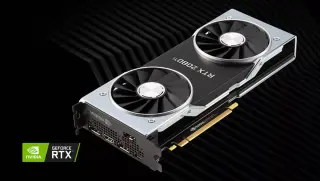
A modder has ported NVIDIA DLSS Frame Generation to GeForce RTX 20-series GPUs (Turing) using the nvngx_dlssg runtime. The test on an RTX 2060 Max-Q in The Witcher 3 shows 2x FG works, but 3x ghosts and 4x is unstable, with some users reporting lower performance than FSR FG on the same card. Official DLSS FG/MFG remains limited to newer generations (RTX 50-series and up), so this backport is experimental and not consistently reliable, raising questions about whether older GPUs could ever robustly support Frame Generation.
A GitHub mod named DLSSG SM86 enables Nvidia's Multi Frame Generation (MFG) on RTX 30-series GPUs, a feature officially limited to RTX 50-series. The mod works by adding two extra files to a game's executable folder, exposing 2x, 3x and 4x MFG options and showing frame-rate gains in demos like Cyberpunk 2077 on an RTX 3080. Nvidia does not endorse the modification, highlighting questions about official support for older cards—especially with a large RTX 3060 user base.
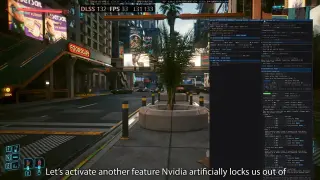
Modders have ported NVIDIA's DLSS Multi-Frame Generation to RTX 30-series (Ampere) GPUs via a proxy backend called DLSSG SM86, enabling 2x and 4x Frame Gen modes by using a bundled DLSSG 310.1 runtime alongside games without touching game files. Tests on an RTX 3080 Ti with driver 591.86 on Windows report large FPS gains (e.g., Black Myth: Wukong from ~50 to 150 FPS; Cyberpunk 2077 from ~35 to ~100 FPS in 2x/4x modes), but formal frametime/long-duration stability tests are not yet complete. NVIDIA previously limited Frame Generation to RTX 50-series due to flip metering, and modders continue exploring older hardware with mixed results.
Arm’s Mali G2-Ultra NX introduces an AI-powered graphics accelerator for Android that enables DLSS‑like upscaling, frame generation, and denoising, potentially delivering higher-res, smoother mobile games with less power use. Xiaomi’s 18 Fold with the Xring O3 chip kicks this off in China, and Arm says the tech will reach phones, tablets, and Chromebooks next year, with broader game support over time. Early titles will focus on super sampling, with frame generation due in 2027 and denoising soon after; real-world gains depend on game engine support and latency considerations, but the aim is a mainstream, AI-assisted rendering boost across devices.
An Unreal Engine 5 RPG with a day-night cycle, The Blood of Dawnwalker is benchmarked on Steam Deck and other Windows handhelds. It supports DLSS/FSR/XeSS (no TSR) and offers limited frame generation; the review covers the out-of-box experience, device-wide performance, and optimized settings for each handheld, concluding it's playable on several devices with careful tuning, though minimum specs are demanding and performance varies by hardware.
Day-One Update 1.003 for The Blood of Dawnwalker improves launch performance across PS5 Pro, PS5, Xbox Series X/S, and PC with frame-generation tech and DLSS/FSR options; consoles target 60fps (Pro) / 40fps (Balanced) / 30fps (Quality). The patch is mainly performance-focused and isn’t a fix-all; a follow-up bug-fix patch and small free DLCs are planned post-release. Note: FSR frame generation can crash on ultrawide/non-16:9 setups (DLSS recommended), may cause flicker if FPS exceeds refresh rate, and changes require restarting the game.
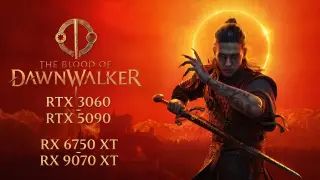
A comprehensive hardware benchmark of The Blood of Dawnwalker, testing GPUs from RTX 3060 to 5090 and RX 6750 XT to 9070 XT at 1080p–4K with DLSS/FSR/XeSS, detailing the required 64-bit OS, 16 GB RAM, and 60 GB SSD, and showing how CPU/GPU pairings impact FPS, VRAM and RAM usage under Ultra vs Minimum settings using Unreal Engine 5 (Nanite, Lumen, Chaos).
Shift Up confirms Stellar Blade for Nintendo Switch 2 aims for 60 FPS in both docked and handheld modes, with docked upscaling to 1080p and handheld at 720p. The team uses Nvidia DLSS for upscaling and AMD’s FSR 3.1 frame interpolation to reach the 60 FPS target, ensuring consistent latency. The Complete Edition is set to launch on Switch 2 in 2026.
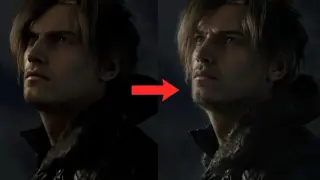
A leaked DLSS 5 build (circulated via modders, reportedly from NBA 2K27 beta) shows neural rendering being applied to games like Control, Cyberpunk 2077, and The Last of Us Part II, with noticeable visual shifts and performance drops—Control reportedly falling from ~70–90 fps to ~35–50 fps on mid/high‑end GPUs. Nvidia has said DLSS 5’s AI filter is still being refined and that it doesn’t yet perfectly align with the rendering pipeline, suggesting this is an early, non‑final prototype used for testing and branding concerns remain.
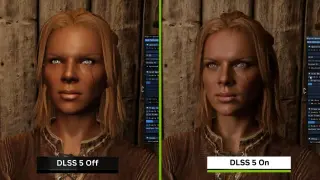
An unofficial DLSS 5 neural rendering DLL, surfaced in an early NBA 2K27 build, has been modded into The Elder Scrolls V: Skyrim, delivering dramatically improved character faces and lighting in side‑by‑side comparisons; the mod uses pre‑release DLSS‑NR code from another game, so final DLSS 5 behavior and artistic implications remain uncertain.
This GPU-heavy Unreal Engine 5 title offers little visual payoff from most standard settings beyond Ultra, and the key gains come from targeted upscaling. The article notes unusually smooth shader compilation but mixed CPU performance, with VRR helping only if the CPU/memory bottlenecks aren’t extreme. A recommended optimized profile uses DLSS Super Resolution on RTX GPUs (TSR for AMD/Intel) and keeps View Distance, Post-Processing, Textures, and Foliage largely at Ultra for image quality, while dialing down Effects, Anti-Aliasing, Global Illumination, Shading, and Hair to balance visuals and fps. In testing, this profile delivered about an 18% average FPS gain and 13% better 1%/0.1% lows versus Ultra at 1440p, though further gains rely on upscaling/frame generation rather than traditional quality sliders. HDR, FoV, DLAA, and XeSS are missing or subpar, limiting options for non-NVIDIA GPUs. Final takeaway: pair the optimized settings with DLSS on RTX GPUs for smoother gameplay, while AMD/Intel users stick to TSR and expect CPU/memory bottlenecks on higher canvases. Finally, if you crave significant performance boosts beyond this, you’ll need to lower internal resolution via dlss/tsr rather than rely on conventional settings.