Merck and Daiichi Sankyo voluntarily withdrew their accelerated approval application for the antibody-drug conjugate ifinatamab deruxtecan (I-DXd) in small cell lung cancer after the FDA deemed the data insufficient. This setback delays revenue from a $4 billion partnership and impacts competitors like Amgen and GSK.
At its June 2026 meeting, the CHMP recommended six medicines for approval (Aujemflu influenza vaccine for adults 50+, Hopledo for Parkinson’s, Onswik for type 2 diabetes) and two biosimilars (Denosumab Ascend, Nylaspeg); Daybu passed re-examination with a restricted Rett syndrome indication. It issued negative opinions for Tacquell, Yartemlea and Xervyteg. The CHMP also endorsed extensions of indication for 12 medicines (including Imvanex to ages 2+, and Datroway, Jaypirca, Leqvio, MenQuadfi, Opzelura, Orladeyo, Rezolsta, Rinvoq, Stelara, Symtuza, Tecvayli). Withdrawals were made for DuoResp Spiromax and BiResp Spiromax extensions. Start of referral on Rifadin due to excipient concerns; Tavneos’ marketing authorisation was revoked after review. Other updates include Fluenz can be administered by non-healthcare professionals under supervision, Ixchiq extension to high-risk 12+, and including Mounjaro data in product information without a new indication. CHMP statistics noted 6 positive opinions on new medicines, 3 negative opinions, 13 positive opinions on extensions, and 0 withdrawals for new medicines this year.
EMA’s CHMP in May 2026 recommended eight new medicines (including Jascayd for IPF/PPF), three hybrid medicines, and a positive biosimilar opinion for Vislyfa; it issued a negative opinion for Deqtynet, approved extensions of indications for several medicines, and withdrew initial authorisation applications for Orblid and Veblocema. The committee also endorsed Wegovy’s extension to a daily oral tablet and published accompanying updates and statistics (eight positive opinions on new medicines, one negative, and eighteen positive opinions on extensions in 2026).
Over the past year the FDA has denied or discouraged at least eight drug applications, including UniQure’s Huntington’s gene therapy and Regenxbio’s Hunter syndrome, and even reversed course on Moderna’s flu vaccine review, prompting investors to doubt whether the agency’s rare-disease flexibility will endure and to worry about the fate of other pipeline drugs; upcoming decisions (e.g., Denali Therapeutics) will test whether current standards remain consistent amid broader regulatory uncertainty.
An experimental cell therapy for a rare post-transplant blood cancer, developed by Atara Biotherapeutics and Pierre Fabre, was on track for FDA approval after internal reviewers recommended clearance, but the agency unexpectedly rejected it last month, citing deficient clinical data. Anonymous former agency sources say the decision may reflect leadership changes, marking a sharp reversal that disrupts a treatment expected to help roughly 500 patients in the US each year with a grim prognosis.
The FDA's National Priority Voucher program aims to speed drug approvals, but critics warn it bypasses standard scientific and regulatory safeguards, raising concerns about who signs off on decisions and whether political pressure is affecting timelines amid staff upheaval and safety worries.
The FDA is embroiled in controversy following allegations against top regulator Tidmarsh, who criticized Aurinia's lupus drug voclosporin, leading to his resignation and concerns over the agency's credibility amid claims of misconduct and mismanagement.
George Tidmarsh, head of the FDA's Center for Drug Evaluation and Research, resigned amid ethics concerns and a lawsuit alleging bribery and false statements, following his administrative leave after raising issues about a drug approval program and questioning a drug's safety.
The FDA has issued its first nine priority review vouchers to expedite the approval process for certain drugs and therapies, including Regeneron's gene therapy for hearing loss, with the aim of reducing approval times from 10-12 months to 1-2 months, focusing on public health priorities and affordability.
The FDA announced the first nine recipients of the Commissioner’s National Priority Review vouchers, which expedite drug reviews for products aligned with national health priorities. Notably, EMD Serono received a voucher after agreeing to lower prices for its fertility drugs, including Pergoveris, in a move highlighted by President Trump. The program aims to incentivize companies to develop and provide access to important medications.
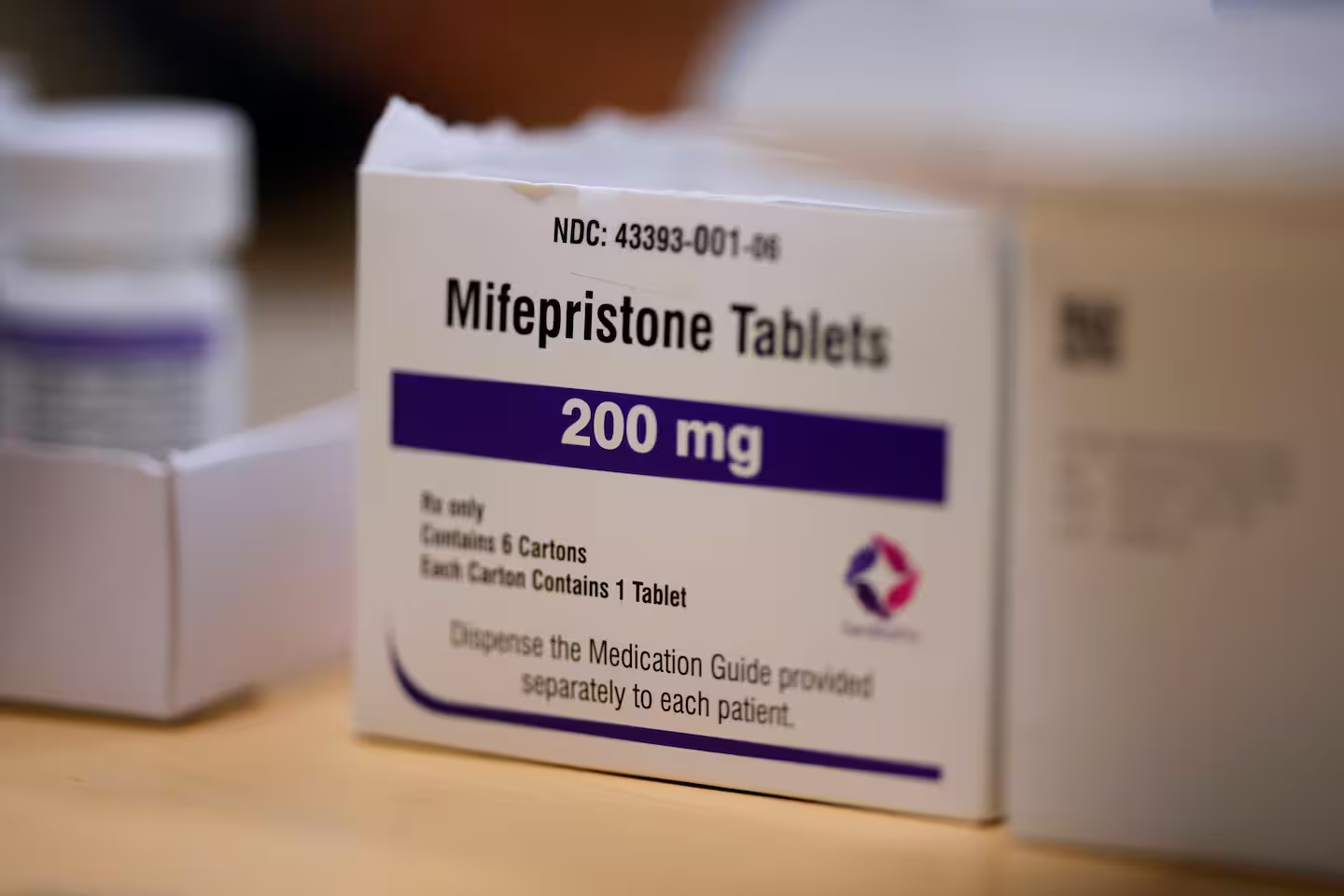
The Trump administration approved a new generic version of the abortion pill mifepristone, sparking outrage among abortion opponents who criticize the administration's handling of drug approvals.
The FDA unexpectedly approved the old chemotherapy drug leucovorin as a treatment for some individuals with autism, deviating from its usual rigorous review process, which has raised concerns among experts about the potential for hype and the narrowing of the drug's scope.
Under the Trump administration, the FDA is moving to phase out the practice of consulting outside experts for drug reviews, citing efficiency, but critics argue this reduces transparency and public oversight, potentially impacting the rigor and accountability of drug approval processes.
Under the Trump administration, the FDA is moving to eliminate the practice of consulting outside experts for drug reviews, arguing it saves time and resources, but critics say it reduces transparency and public trust in drug approval decisions. The agency plans to rely more on complete response letters and internal reviews, sparking concerns about the loss of public and expert input in the regulatory process.
AstraZeneca plans to seek regulatory approval for its experimental blood pressure drug, baxdrostat, by the end of the year, aiming for potential approval in 2026 in the US and EU. The drug targets the hormone aldosterone and has shown promising results in reducing systolic blood pressure, with peak sales expected to exceed $5 billion. A small percentage of patients experienced hyperkalaemia.