Tag

Energy Savings

All articles tagged with #energy savings

Smart Savings: Nest Thermostat Falls to $79
technology5 days ago

Smart Savings: Nest Thermostat Falls to $79

The Verge reports Google’s Nest Thermostat is on sale for $79 at Amazon, its best price of the year. The affordable smart thermostat offers remote control via the Google Home app, scheduling, and voice control with Google Assistant, Alexa, or Matter. It can auto-adjust when you’re away, includes Savings Finder for ongoing savings, and monitors the HVAC system with a Nest Renew option to shift usage to cleaner/cheaper electricity. As a 2020 entry-level model, it lacks some premium features of the Nest Learning Thermostat (such as automatic learning and dedicated room sensors), but remains a solid, budget-friendly way to manage temperature and reduce energy bills.

Rising AI Power Demands Threaten to Boost Electricity Costs
energy9 months ago

Rising AI Power Demands Threaten to Boost Electricity Costs

Electric bills in the US are rising across 41 states due to increased demand from data centers and aging infrastructure, with costs expected to continue climbing. While some energy-saving measures and switching providers can help reduce bills, the overall increase is driven by large-scale developments like AI data centers, making it challenging for consumers to significantly lower their costs. Long-term solutions such as solar panels and electric heat pumps are recommended but may not provide immediate relief for all.

Unplugging 7 Hidden Power-Hungry Gadgets Cut My Electricity Bill
home-energy-savings10 months ago

Unplugging 7 Hidden Power-Hungry Gadgets Cut My Electricity Bill

Unplugging household gadgets like TVs, gaming consoles, kitchen devices, and smart home devices when not in use can significantly reduce energy consumption and save up to $200 annually, especially by avoiding standby power and phantom loads. Practical tips include turning off unused devices, using smart plugs, and optimizing home insulation and lighting to cut costs during hot summer months.

"Effortless Tips to Slash Your Winter Heating Bill by 20%"
home-improvement2 years ago

"Effortless Tips to Slash Your Winter Heating Bill by 20%"

With winter approaching, experts recommend weatherizing your home to save up to 20% on heating bills. Simple steps like sealing cracks, gaps around doors and windows, and using weatherstripping and caulking can significantly reduce energy loss. While these small repairs are effective, investing in bigger projects like upgrading insulation, replacing old doors and windows, and installing more efficient HVAC systems will provide long-term energy-saving benefits.

"Energy-Saving Hacks: Winter-proofing Your Home with Leak Fixes"
home-improvement2 years ago

"Energy-Saving Hacks: Winter-proofing Your Home with Leak Fixes"

With winter approaching, experts recommend weatherizing your home to save up to 20% on heating bills. Simple steps like sealing cracks, gaps around doors and windows, and using weatherstripping and caulking can significantly reduce energy loss. A visual inspection or professional energy audit can help identify problem areas. While these small repairs are effective, investing in bigger projects like upgrading insulation, replacing old doors and windows, and installing efficient HVAC systems will provide long-term energy-saving benefits.

Germany Implements Mandatory Energy Savings Measures and Slashes Electricity Tax to Boost Heat Pump Uptake
energy2 years ago

Germany Implements Mandatory Energy Savings Measures and Slashes Electricity Tax to Boost Heat Pump Uptake

Germany has passed a new law, The Energy Efficiency Act, which makes energy savings measures mandatory across all economic sectors, including public buildings, industry, and data centers. The aim is to reduce energy consumption by 26.5% by 2030 compared to 2008. While the law requires companies to develop energy-saving plans, it does not include binding measures. Germany's aggressive green initiatives also include a goal for renewable energy to generate over 50% of the country's electricity this year, with a target of 80% by 2030. However, there are concerns that Germany may not reach its emissions reduction target of 65% by 2030 compared to 1990.

Measuring the True Efficiency of Blue LEDs: Absolute vs. Relative Comparison.
technology3 years ago

Measuring the True Efficiency of Blue LEDs: Absolute vs. Relative Comparison.

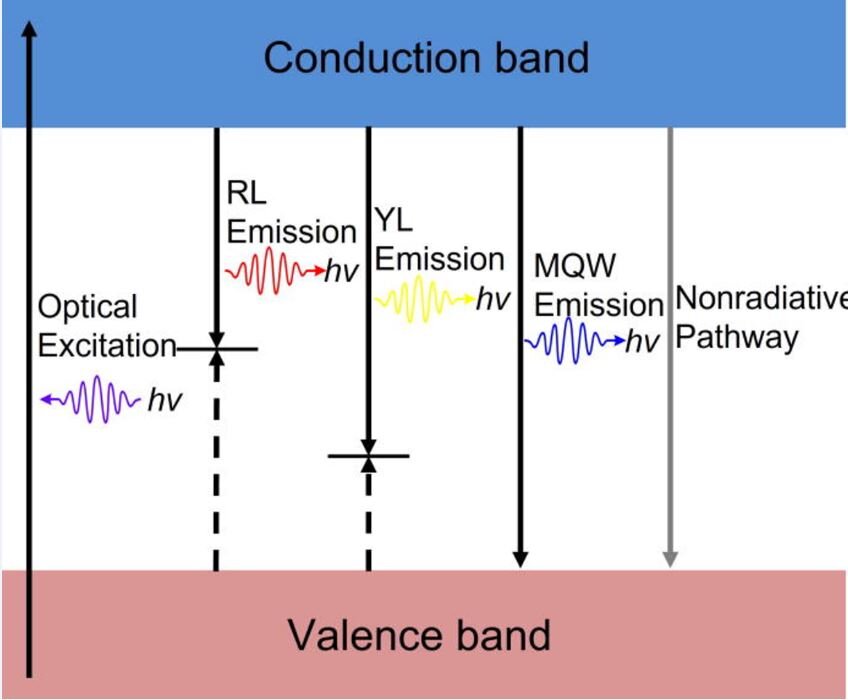
The assumption that the internal quantum efficiency (IQE) of blue light-emitting diodes (LEDs) is always 100% is wrong, according to a new study from University of Illinois Urbana-Champaign Electrical and Computer Engineering researchers. The IQE of an LED can be as low as 27.5%. To meet the efficiency standards laid out by the DOE, it will be increasingly important to properly quantify the efficiency of LEDs.

Revolutionary Atomic Breakthrough to Transform Petroleum Refining.
science-and-technology3 years ago

Revolutionary Atomic Breakthrough to Transform Petroleum Refining.

Chemical engineers at the University of Wisconsin-Madison have developed a model of how catalytic reactions work at the atomic scale, which could allow engineers and chemists to develop more efficient catalysts and tune industrial processes, potentially with enormous energy savings. The team used powerful modeling techniques to simulate catalytic reactions at the atomic scale, looking at reactions involving transition metal catalysts in nanoparticle form. The understanding could have major ramifications for industry, including petroleum refining, pharmaceuticals, plastics, food additives, fertilizers, green fuels, and industrial chemicals.

Revolutionary Catalysis Discovery Promises Huge Energy Efficiency Gains
science-and-technology3 years ago

Revolutionary Catalysis Discovery Promises Huge Energy Efficiency Gains

Chemical engineers from the University of Wisconsin-Madison have developed a model that explains how catalytic reactions work at the atomic level, potentially leading to more efficient catalysts, optimized industrial processes, and significant energy savings. Catalysis plays a crucial role in producing 90% of the products we use daily, and just three catalytic reactions use close to 10% of the world's energy. The researchers used powerful modeling techniques to simulate catalytic reactions at the atomic scale and found that the energy provided for many catalytic processes to take place is enough to break bonds and allow single metal atoms to pop loose and start traveling on the surface of the catalyst, forming small metal clusters that serve as sites for chemical reactions to take place much easier than the original rigid surface of the catalyst.

Government initiatives aim to promote energy efficiency and renewable energy adoption.
energy3 years ago

Government initiatives aim to promote energy efficiency and renewable energy adoption.

The US Department of Energy is investing $18.7 million in colleges and universities to help small manufacturers identify ways to cut costs by reducing waste and saving energy. The program, called Industrial Assessment Centers (IACs), will provide assessments that typically identify more than $130,000 in potential annual savings for small manufacturers. The assessments look at waste reduction, energy savings, improved productivity, and competitiveness. The Bipartisan Infrastructure Law includes $400 million in grants available to small manufacturers to make the necessary efficiency-enhancing and greenhouse gas-reducing investments.

"Revolutionizing Energy Efficiency and Carbon Control through Atomic-Scale Catalysis and Equations"
science-and-technology3 years ago

"Revolutionizing Energy Efficiency and Carbon Control through Atomic-Scale Catalysis and Equations"

Chemical engineers at the University of Wisconsin-Madison have developed a breakthrough model of how catalytic reactions work at the atomic scale, which could allow engineers and chemists to develop more efficient catalysts and tune industrial processes, potentially with enormous energy savings. The researchers used powerful modelling techniques to simulate catalytic reactions at the atomic scale, looking at reactions involving transition metal catalysts in nanoparticle form. The new framework challenges the foundation of how researchers understand catalysis and how it takes place, and may apply to other non-metal catalysts as well.