Ukraine seeks rapid EU membership as a security guarantee, but accession is a lengthy, obstacle-filled process with economic and governance hurdles; negotiators are weighing options such as phased benefits and limiting Kyiv’s veto on key decisions.
EU officials warn that Ukraine’s slower reform pace could endanger about €5 billion in EU funds after 11 reforms were missed in late 2025, with more at risk in early 2026. The slowdown is blamed on parliamentary gridlock, government–parliament communication gaps, and wartime constraints, affecting reforms across energy, local authorities, deregulation, and state aid, including the crucial anti-corruption court. Compounding pressures, Ukraine also stalled IMF conditions linked to an $8.2 billion loan, underscoring the need for clearer EU guidance and better coordination to preserve reform momentum and support for EU membership.
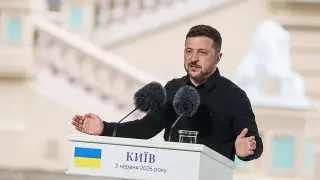
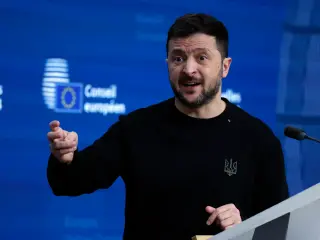
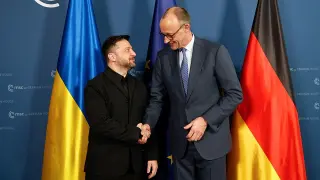
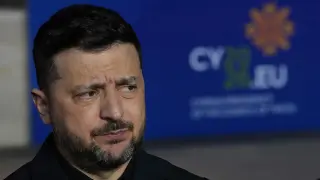
Zelenskyy said a U.S. security guarantees document for Ukraine is 100% ready to sign, with a signing date to be set before it goes to the U.S. Congress and Ukrainian parliament for ratification. The update followed trilateral talks in Abu Dhabi among Ukraine, the United States, and Russia aimed at ending the invasion, and Zelenskyy pressed for Ukraine to join the European Union by 2027 while insisting Ukraine’s territorial integrity must be respected. Negotiators will reconvene in the UAE on Feb. 1 for the next round, though no final framework on the Zaporizhzhia Nuclear Power Plant has been agreed.
Moldovan President Maia Sandu told a British podcast she would vote for Moldova’s reunification with Romania if the issue were decided by referendum, arguing the small country struggles to survive as a democracy and must resist Russia; she cautioned that public support is not strong, with polls showing about two-thirds opposed to reunification, and she framed EU membership as a more realistic goal, noting Moldova’s 2024 referendum narrowly approved EU accession and her reelection as a pro-European leader.
Bulgaria has officially adopted the euro, with the Bulgarian central bank's governor joining the ECB Governing Council. While the transition is underway, Bulgarians can still use levs until June 30, with public opinion divided on the move. Bulgaria has been an EU member since 2007 and sees benefits from membership.
U.S. officials report that Ukraine and Russia are close to reaching a peace agreement, with Ukraine dropping NATO membership ambitions and Russia open to EU accession, though final territorial and security guarantees are still being negotiated, and key issues remain unresolved.
Ukraine faces significant challenges on multiple fronts, including ongoing battles, energy infrastructure attacks, and political issues affecting its EU accession process, amid complex international relations involving the US, China, and Russia, which complicate prospects for peace and support.
Ukraine's Deputy Prime Minister Taras Kachka discussed the country's progress towards EU accession, hindered by Hungary, and the potential use of frozen Russian assets to cover its budget deficit, with a decision expected at the EU Council meeting in December. Ukraine aims to complete accession negotiations by 2028, facing political challenges, while also seeking financial support through a proposed reparations loan funded by Russian assets.
Moldova's parliamentary election is a pivotal moment, with voters divided between pro-European and pro-Russian factions amid concerns of foreign interference, cyberattacks, and disinformation campaigns, reflecting broader East-West tensions and Moldova's strategic importance.
Moldova is holding a crucial election that will determine its prospects for continuing its bid to join the European Union, highlighting the country's political importance and the ongoing EU integration process.
Moldova's upcoming election is heavily influenced by fears of Russian interference, including vote-buying, disinformation, and plots for unrest, as the country shifts towards EU integration and faces pressure from Russia to maintain influence.
Russia has a detailed plan to interfere in Moldova's upcoming elections to prevent pro-European candidate Maia Sandu from winning, involving disinformation, vote manipulation, and support for pro-Russian factions, with the goal of keeping Moldova aligned with Moscow rather than the EU.
Albania introduced an AI-generated government 'minister' named Diella in parliament to promote transparency and innovation, as part of its efforts to join the EU by 2030. The initiative received mixed reactions, with government officials praising its potential to improve efficiency and fight corruption, while opposition lawmakers criticized it as a possible tool for hiding graft. Diella, developed with Microsoft, is intended to assist with public service inquiries and symbolize technological progress.
Norway is holding a closely contested election between the Labour-led government and a center-right coalition, with key issues including taxation, wealth tax, and EU membership, amid international concerns over foreign policy and ethical investments.
Hungary's government announced that 95% of participants in a disputed referendum oppose Ukraine's EU accession, a result criticized for low turnout and potential manipulation, and used by Prime Minister Viktor Orban to justify delaying Ukraine's EU membership amid broader concerns over Hungary's democratic standards and Orban's pro-Russian stance.