First Lady Melania Trump announced the reunion of nine children with their families, a move described as part of her ongoing humanitarian and peacekeeping efforts in the Russia-Ukraine conflict. This development follows previous evacuations and ceasefire negotiations involving Ukrainian and Russian civilians.
Western intelligence agencies warn that Russia could launch a nuclear-armed satellite, identified as Sputnik-S, into orbit within 60 days. The satellite, reportedly stored near Moscow, would violate the 1967 Outer Space Treaty. A detonation in orbit could disable thousands of satellites, disrupting global communications, navigation, and military operations. US and German officials assess that countering such a weapon once deployed is currently impossible.
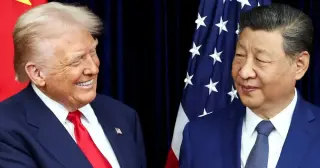
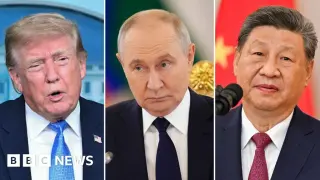
US President Donald Trump, Chinese President Xi Jinping, and Russian President Vladimir Putin are set to hold their first-ever trilateral meeting on November 19 in Shenzhen, China, on the sidelines of the Asia-Pacific Economic Cooperation (APEC) summit. The White House confirmed that discussions will center on nuclear non-proliferation and the ongoing conflict in Iran, though officials indicate no immediate agreements are expected. The meeting occurs against a backdrop of significant global turbulence, including the expiration of the New START treaty, US-China trade tensions, and the US-Israeli war on Iran. While the Kremlin describes the gathering as 'extremely significant,' analysts suggest the event may serve more as a symbolic photo-opportunity than a substantive diplomatic breakthrough.
US President Donald Trump, Chinese President Xi Jinping, and Russian President Vladimir Putin are scheduled to hold the first-ever trilateral meeting in Shenzhen, China, next week on the sidelines of the APEC summit. The talks will focus on nuclear non-proliferation and the war in Iran, but officials indicate no immediate agreements are expected. Ukraine is not on the agenda, and the meeting is viewed as a symbolic starting point for future dialogue.
On the second day of peace talks in Abu Dhabi, the Russian delegation refused to discuss a ceasefire or territorial concessions, instead insisting on returning to its 2021 security guarantee proposals. While Ukraine proposed halting strikes on energy infrastructure and a maritime truce, Moscow cited a lack of authority to agree. US envoys Jared Kushner and Steve Witkoff plan to meet Vladimir Putin on November 12 to press for broader European involvement, though Kremlin spokesman Dmitry Peskov criticized Europe for failing to present a unified front. Participants described the talks as having 'good momentum' despite the impasse on immediate military pauses.
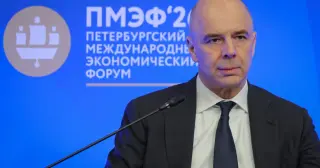
The G20 finance ministers’ meeting in Asheville, North Carolina, opened with diplomatic friction after the U.S. invited Russia’s finance minister, Anton Siluanov, marking his first in-person attendance since the 2022 invasion of Ukraine. European leaders, led by German Vice Chancellor Lars Klingbeil, protested the move, demanding Siluanov be excluded from the official group photo. Simultaneously, the U.S. and Iran exchanged fire for the first time in a month, targeting Larak Island and bases in Jordan and the UAE, signaling that the conflict remains unresolved despite previous ceasefires. The summit also addressed rising global inflation, U.S. debt exceeding $40 trillion, and efforts to isolate Iran economically through new sanctions.
Ukraine’s Parliamentary Commissioner for Human Rights, Dmytro Lubinets, announced that Russian forces have executed at least 345 surrendered Ukrainian soldiers and killed 375 citizens in captivity. Lubinets described a systematic pattern of torture, including the use of a specialized combat brigade formed from coerced prisoners. While Ukrainian authorities document these abuses as war crimes, the UN reports over 16,000 civilians are currently held by Russia, highlighting the scale of the detention crisis.
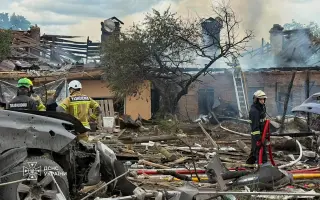
Four children were among 12 people killed when attacks hit resorts in Zaporizhzhia, and three more were killed in Sumy when a Russian drone struck a civilian facility, bringing the day’s death toll to 15 as fighting continues between Russia and Ukraine.
ISW’s July 23, 2026 assessment finds no confirmed battlefield ground advances by Russian or Ukrainian forces on July 22–23. Ukrainian long-range strikes targeted Russian energy and logistics assets across multiple regions, causing fires at facilities in Ulyanovsk, Voronezh, and Bashkortostan and affecting operations at the Caspian Pipeline Consortium, with some impact on shipping in the Black Sea region. Russia conducted a broad drone/missile campaign against Ukraine, including Crimea-area energy targets. On the ground, Russian offensives in northern Sumy, Kharkiv, Oskil, Slovyansk, Pokrovsk, and Oleksandrivka directions did not gain territory, while Ukrainian forces continued counterattacks and drone-enabled reconnaissance. In the south, Russian attempts near Zaporizhzhia and Kherson yielded no progress; power outages persisted in occupied Kherson, and Ukrainian strikes continued against energy infrastructure in occupied Crimea. Belarus announced a fall conscription cycle; Zelensky reiterated willingness for peace talks with a possible trilateral meeting in Fall 2026, while Rubio rejected any Alaska Summit deal ending the war.
ISW’s July 22 assessment stresses Moscow’s persistence in maximalist war aims—no territorial concessions and a push to complete Ukrainian capitulation—while battlefield gains lag and Donetsk capture by 2026 remains unlikely. The Kremlin signals mobilization prep through a new Duma bill and Rosgvardia provisions, even as public support for mobilization is precarious; Putin touts modest GDP growth amid fuel shortages, inflation, and energy disruptions. Ukraine counters with long-range strikes on logistics and energy targets, and Kyiv appoints Ihor Skybyuk as chief of the General Staff. On the ground, Russian forces push in Kharkiv, Donetsk, and Zaporizhzhia sectors but with contested gains and signs of propaganda efforts including AI-altered footage. Belarus shows no imminent threat, while Ukrainian strikes and airspace constraints around Moscow reflect a war still costly and stalemated in many sectors.
In an interview with Fox News, Trump says he believes Putin is ready to reach a peace deal to end the Ukraine war, even as Moscow warns Western troops could be targeted; the report also notes ongoing fighting, drone defenses, and Western efforts to bolster Ukraine’s military and energy resilience with measures like Patriot missiles.
Ukrainian air defenses repelled a large Russian assault, shooting down five Iskander-M/S-400 missiles, two Kh-59/69 missiles, and 108 drones. The attack originated from multiple directions, including Bryansk and Crimea airspace, with debris found at several sites and the threat persisting into July 14 as Kyiv issued air-raid alerts.
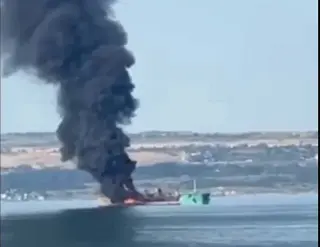
Russia temporarily halted shipping on the Don-Azov Channel and closed the Kerch Strait after Ukrainian tanker strikes, with no lift date announced; the move affects the Sea of Azov corridor that handles a significant portion of Russia’s wheat exports and highlights ongoing disruption to Black Sea grain trade amid continuing attacks on shipping and fuel facilities.
ISW reports that Russia launched its fourth large-scale missile-and-drone attack on Ukraine since June 1, overnight July 5–6, with Kyiv heavily targeted and dozens killed or wounded. Russia fired about 419 missiles and drones, including 29 ballistic missiles and 18 strike drones; Ukraine shot down 326 drones and 37 missiles, but ballistic missiles still caused major destruction in Kyiv and other locations. Ukraine lacks sufficient Patriot interceptors and urged Western air-defense support for the NATO summit, with deliveries contracted but not arriving until 2027. Separately, Ukraine conducted its deepest long-range drone strike to date against Russia’s Omsk oil refinery. ISW characterizes the strikes as part of Russia’s Phase Zero strategy to deter Western backing and test NATO resolve, as Moscow also expands operations near NATO assets and intensifies its oil-energy targeting across Ukraine and occupied territories.
ISW’s July 3 assessment says Putin’s claim of seizing Kostyantynivka is contradicted by public evidence of only limited gains; Moscow’s briefings appear part of a cognitive warfare effort to show rapid frontline progress. The report notes warnings from the United States about potential Kremlin provocations against NATO states, including Poland, and broader Baltic concerns. Putin’s approval and trust have fallen sharply amid battlefield setbacks and a domestic fuel crisis, as Russia seeks to alleviate shortages through imports and relaxed gasoline standards. On the battlefield, Ukrainian strikes and Russian drone/ missile campaigns continued, but there were no confirmed major Russian advances on July 2–3, aside from contested claims and possible AI-assisted propaganda footage. The update also cites sporadic incidents (e.g., an explosion in Kursk) and ongoing Ukrainian operations against energy and logistics targets in occupied Ukraine.