A federal judge ruled that FEMA cannot withhold 20% of counterterrorism grants from local governments that refuse to adopt specific election administration changes, marking another setback for the Trump administration's efforts to influence voting rules.
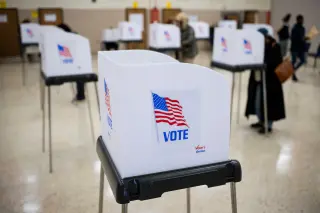
A federal judge ruled that the Trump administration cannot withhold 20% of counterterrorism grants from local governments that refuse to adopt specific election administration changes. Judge Amir Ali determined that FEMA exceeded its authority by linking anti-terrorism funding to routine voting procedures, such as manual ballot audits and citizenship verification. The decision benefits plaintiffs in Texas, Ohio, and Tennessee, marking another judicial setback for federal attempts to influence election rules ahead of the 2026 midterms.
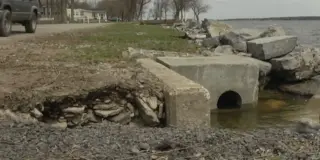
After seven years, the town of Lyme, NY was approved $156,000 in FEMA post-disaster funding to reimburse repairs from the 2019 storms that damaged shoreline and left two roads unusable; the aid will cover expenses already paid by the town and will enable the backlog of paving projects to proceed.
A federal judge ruled that the Trump administration overstepped its authority by ordering cuts to FEMA’s temporary reservists, blocking moves to shrink the agency’s workforce and its control over disaster response; the decision upholds FEMA’s independence post-Katrina, with a separate ruling on potential remedies expected next month.
A federal judge ruled that the Trump administration unlawfully ordered a 50% reduction in FEMA staff, calling the DHS-crafted plan arbitrary and likely to impede FEMA’s disaster-response duties, with relief discussions ordered.
Colorado photographer Michael Rieger, a FEMA disaster photographer, captured the first widely seen images from Ground Zero after 9/11; his work is now showcased at the CU Denver Experience Gallery in Remember the Love: Resilience After 9/11, with the editing computer now in the Smithsonian Institution.
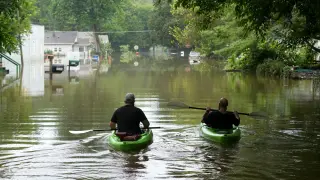
Severe flooding across Indiana has left at least seven dead, forced evacuations and business closures, and prompted a presidential emergency declaration to activate FEMA aid as recovery begins.
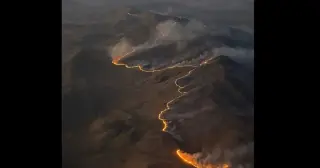
Nearly 100,000 acres are burning across three wildfires in northern Washoe County (Bug Fire merging with Fred Mountain and Stallion). Containment is at 0%, and evacuations and warning zones continue to expand across Spanish Springs, Nixon, Wadsworth, Cold Springs and neighboring areas. FEMA approved a Fire Management Assistance Grant for the Stallion Fire to cover up to 75% of eligible costs. Evacuation centers are open at Evelyn Mount Community Center and the Reno-Sparks Livestock Events Center, with large-animal shelter space limited; road closures persist on Red Rock Road and Lemmon Drive, while U.S. 395 remains open. Firefighting includes multiple air tankers, helicopters and ground crews; weather remains hot, dry and windy with potential thunderstorms.
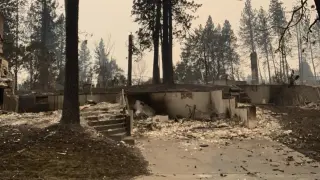
Three Spokane-area wildfires—Old Trails, Autumn Lane and Fairview—have burned over 10,000 acres with 0% containment amid heat approaching the 90s, very low humidity and gusty winds, prompting air-quality alerts and a federal emergency declaration to bolster firefighting resources as crews strengthen containment lines and mop up hotspots; a man has been charged in the Old Trails Fire and survivors describe widespread destruction.
Trump overruled FEMA and denied disaster aid for four Democratic-led states after NOAA and FEMA validated damage from the February blizzard, leaving about $227 million in aid on the table; Rhode Island, Massachusetts, New Jersey (and New York in dispute) had met the thresholds, but the White House defended the decisions as nonpolitical, a stance critics say reflects partisan timing. Several governors have appealed the denial, highlighting a historically partisan tilt in FEMA disaster funding under his administration.
A coalition of 25 Democratic attorneys general led by California’s Rob Bonta filed a federal lawsuit in Rhode Island alleging DHS and FEMA unlawfully conditioned more than $740 million in disaster-preparedness and counter-terrorism grants to push the White House’s political priorities, including voter-citizenship verification and post-election audits, and threatened to withhold funds or cancel grants for not aligning with agency goals, targeting ICE cooperation; the suit follows earlier challenges to similar grant terms, while FEMA defends the measures as protecting election security and infrastructure.
Facing a string of court defeats blocking his efforts to tighten voting rules, the Trump administration is pivoting to intimidation and leverage: the DOJ threatens criminal prosecutions over potential noncitizen voting and will dispatch federal election observers to Democratic-leaning areas, while FEMA ties grant funding to compliance with election-security conditions including expanded use of the SAVE database. The moves face ongoing legal challenges and constitutional questions, with state officials resisting federal overreach even as some Republicans push a SAVE Act at the federal level.
President Donald Trump denied about $227 million in FEMA disaster-aid requests for New York, New Jersey, Massachusetts and Rhode Island for a February snowstorm, even as he approved aid for several Republican-led states days earlier. Democrats accuse the move of politicizing emergency decisions, noting past POLITICO reporting of a pattern favoring GOP-led states. FEMA says aid requires genuinely extraordinary damage and says it has returned to a more rigorous review process amid broader pushes to tighten disaster declarations.
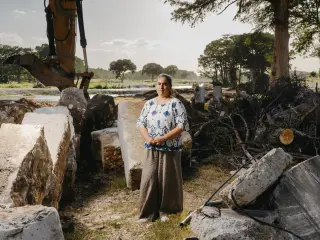
A year after historic floods devastated the Guadalupe River region, survivors across Hunt, Kerrville and surrounding towns face economic hardship, altered landscapes, and ongoing grief as camps reopen in renovated forms or stay shuttered, while state investigations and FEMA processes complicate recovery.
The Atlantic hurricane season is underway and FEMA is operating with staffing shortages, raising concerns about the agency’s ability to coordinate evacuations, relief, and recovery efforts across state and local partners as powerful storms threaten affected communities.