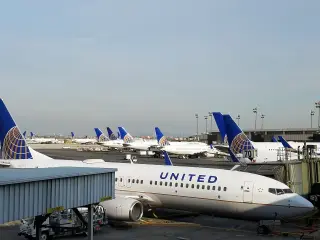
The Department of Transportation’s November report shows United Airlines is now the worst carrier for checked bags, while Delta’s cancellation rate has nearly doubled. American Airlines significantly reduced involuntary denied boardings, and Southwest’s on-time performance dropped due to boarding changes.
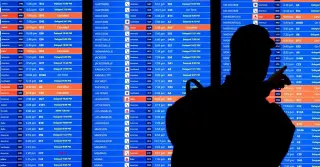
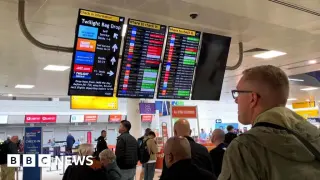
A nationwide Federal Aviation Administration ground stop triggered by a telecommunications failure on November 13 continues to disrupt travel through November 15. While flights resumed Saturday, thousands of cancellations and delays persist as airlines clear backlogs. Transportation Secretary Sean Duffy blamed contractor L3Harris for potential errors during a copper-to-fiber switch, though officials confirmed no cyberattack occurred. Travelers in Dallas and other hubs report overnight airport stays, missed connections, and significant delays, with full recovery expected by Sunday.
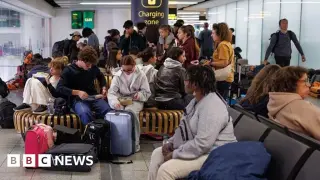
The aftermath of a rare nationwide ground stop continues to disrupt US air travel, with thousands of flights canceled on Saturday. Officials attribute the Friday halt to aging infrastructure being overloaded by new technology, while airlines work to reposition crews and aircraft. Passengers face significant delays, and the government is demanding billions in funding to modernize the system.
The Federal Aviation Administration (FAA) lifted a nationwide ground stop at 8:15 p.m. ET on Friday, Nov. 13, 2026, after a five-hour halt caused by overloaded air traffic control infrastructure. While airspace reopened, more than 8,200 flights were canceled on Friday, and over 3,300 are canceled for Saturday. Transportation Secretary Sean Duffy blamed aging technology and requested $50 billion in emergency funding, while officials ruled out a cyberattack. Disruptions are expected to persist for days, affecting Thanksgiving travel and international routes.
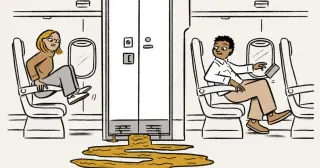
A couple from Colorado is disputing Turkish Airlines' refusal to reimburse a $512 hotel stay after a flight from Denver to Istanbul was canceled due to an overflowing toilet. The airline labeled the incident 'force majeure,' a term typically reserved for uncontrollable events like weather, while the couple argues it was a mechanical failure within the carrier's control. Despite submitting receipts twice, the passenger received no response from the airline.
A powerful early-season nor'easter has battered the US Northeast, causing one death, widespread coastal flooding, and significant travel disruptions. The storm, which features hurricane-like characteristics, has knocked out power for over 100,000 customers and forced the cancellation of major events.
A powerful nor'easter is disrupting air travel across the Northeast, with Boston's Logan Airport seeing 260 cancellations and 191 delays by Saturday evening. Major airlines, including JetBlue, United, American, and Delta, are waiving change fees and fare differences for flights in the region through the middle of next week to accommodate weather-related disruptions.
A connectivity failure at the Prestwick air traffic control centre on September 21 caused the cancellation of at least 200 flights across the UK, marking the second major disruption in two weeks. Airlines and the government are demanding accountability, with Ryanair and Wizz Air calling for the resignation of NATS chief Martin Rolfe. The Civil Aviation Authority has ruled that passengers are unlikely to receive compensation due to 'extraordinary circumstances.'
Typhoon Dujuan has battered eastern Japan, prompting mandatory evacuations for nearly 2 million people and canceling approximately 400 flights. The storm, the 25th of the year, caused record rainfall, power outages for over 50,000 households, and severe flooding, particularly in Chiba and the Izu Islands.
A software defect lasting a single millisecond caused a major UK air traffic control outage in September, leading to over 2,000 flight cancellations and widespread passenger disruption. The National Air Traffic Service (Nats) confirmed the error produced corrupted data, forcing controllers to restrict airspace to maintain safety. Although the system was restarted by late afternoon, the backlog took days to clear. Transport Secretary Heidi Alexander called the incident unacceptable, while Airlines UK demanded compensation for costs incurred. Passengers reported being stranded overseas and facing unexpected expenses, with many unable to claim compensation due to the 'extraordinary circumstances' classification.
A flight plan submitted by a UK military aircraft triggered a critical failure in National Air Traffic Services (NATS) systems on Tuesday, grounding thousands of flights across Britain. The outage, which lasted several hours, caused over 2,000 cancellations and delays, with Heathrow and Gatwick severely impacted. Transport Secretary Heidi Alexander has summoned NATS chief executive Martin Rolfe, whose position is now under threat. Airlines are furious, citing a similar 2023 incident where NATS promised such failures would not recur. A full system reboot was required to restore operations, but recovery remains slow, with some flights delayed by up to 10 hours.
A technical failure in the UK's air traffic control system on Tuesday caused over 2,000 flight cancellations, leaving thousands of passengers stranded and facing significant financial losses. While airlines refunded flight costs, many travelers lost money on non-refundable hotel bookings and excursions, with no compensation available due to the incident being outside airline control. An independent review by the Civil Aviation Authority is underway.
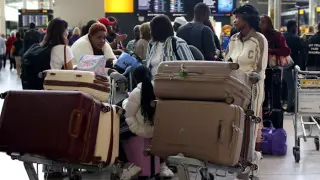
A technical failure in the UK’s air traffic control system caused the cancellation of over 2,000 flights across two days, primarily affecting Heathrow, Gatwick, and Manchester. The outage, which began on Tuesday, left tens of thousands of passengers stranded and disrupted international routes. While National Air Traffic Services (NATS) resolved the issue within hours, the recovery process has led to a significant backlog. The incident has reignited debate over the reliability of UK aviation infrastructure, with budget airlines demanding leadership changes and the government ordering an independent investigation.
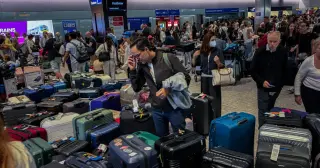
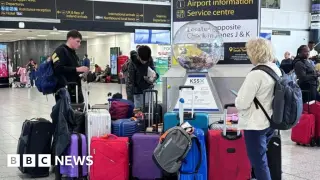
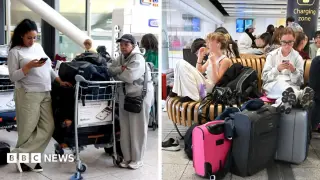
A technical failure at UK air traffic control provider NATS caused over 2,000 flight cancellations across two days, leaving hundreds of thousands of passengers stranded at major airports including Heathrow and Gatwick. While the core system issue was resolved, knock-on effects caused severe delays, baggage chaos, and overnight sleepovers for travelers. NATS chief Martin Rolfe apologized and met with Transport Secretary Heidi Alexander, who ordered a full investigation. Airlines like Ryanair demanded Rolfe's resignation, citing repeated failures, while NATS defended its systems as 'fit for purpose.'
A technical failure at UK air traffic control provider NATS on Tuesday, September 8, triggered the cancellation of over 1,000 flights and disrupted travel for an estimated 330,000 passengers. The outage, centered at the Swanwick site in Hampshire, caused chaos at major hubs like Heathrow, where nearly half of scheduled departures were canceled. Although engineers resolved the immediate issue, knock-on effects persisted into Wednesday, with Cirium data showing 347 additional flights canceled. Transport Secretary Heidi Alexander apologized to the public and ordered a full investigation, while the government expressed confidence in NATS CEO Martin Rolfe, despite calls for his resignation from opposition MPs and airline trade bodies.