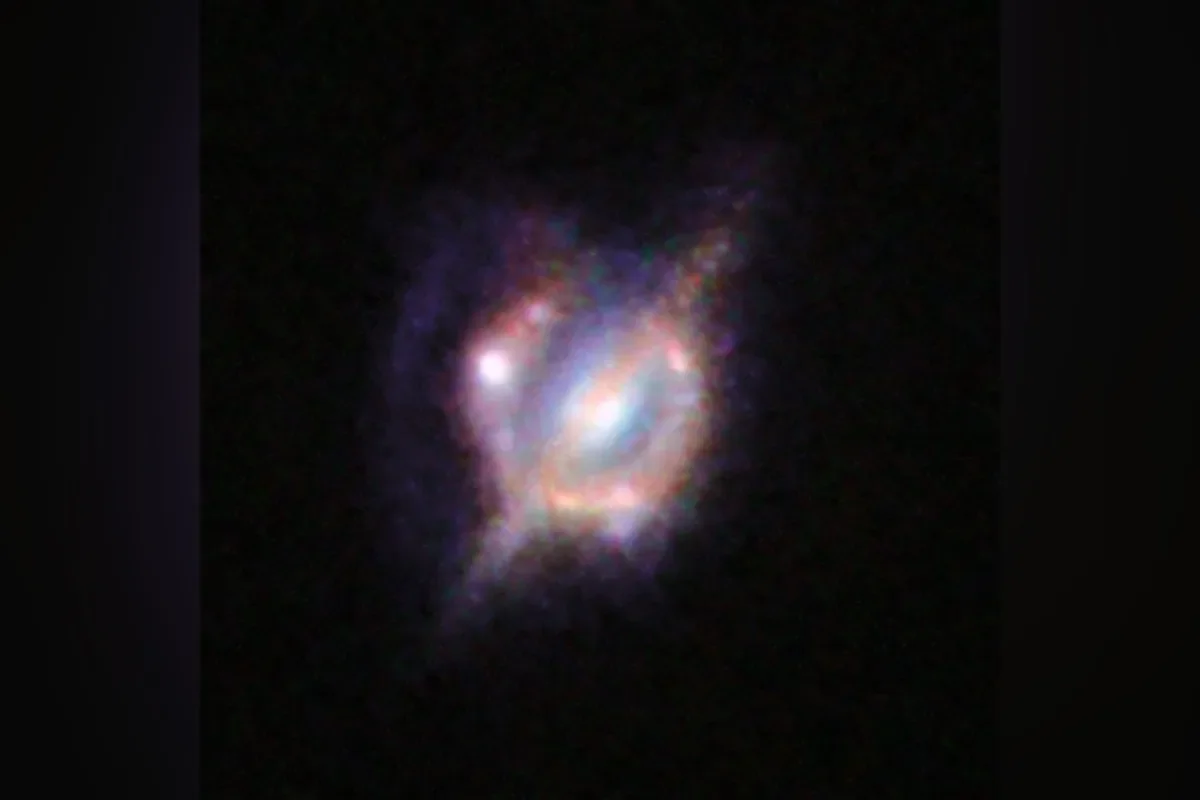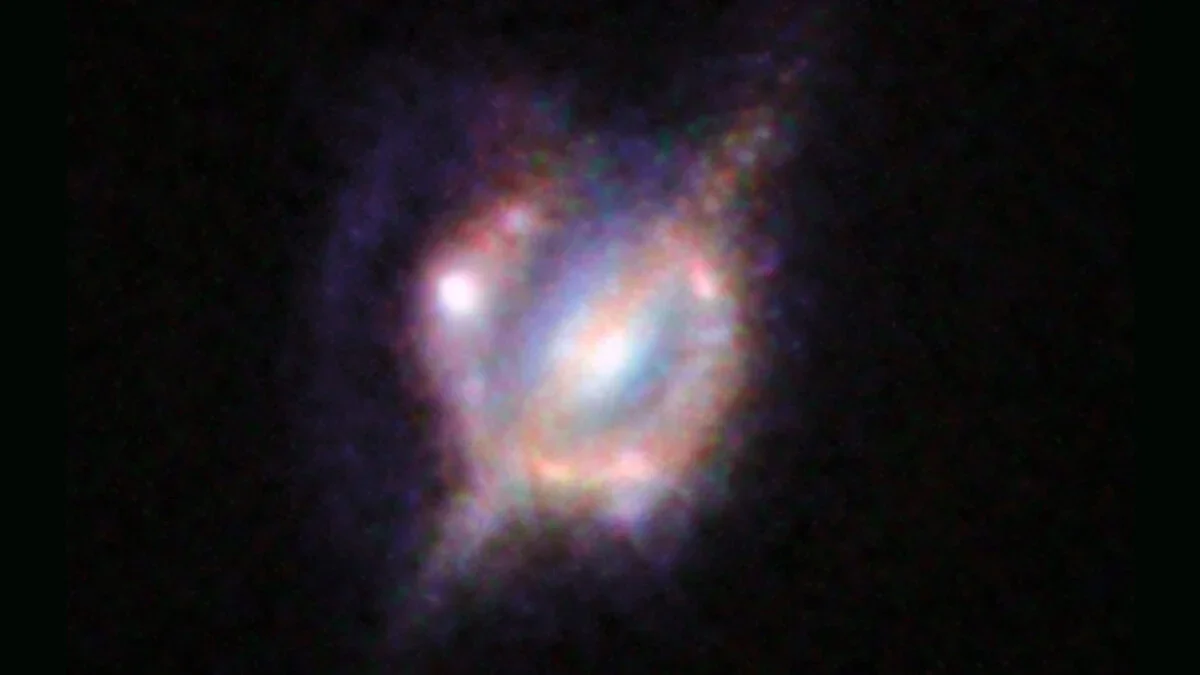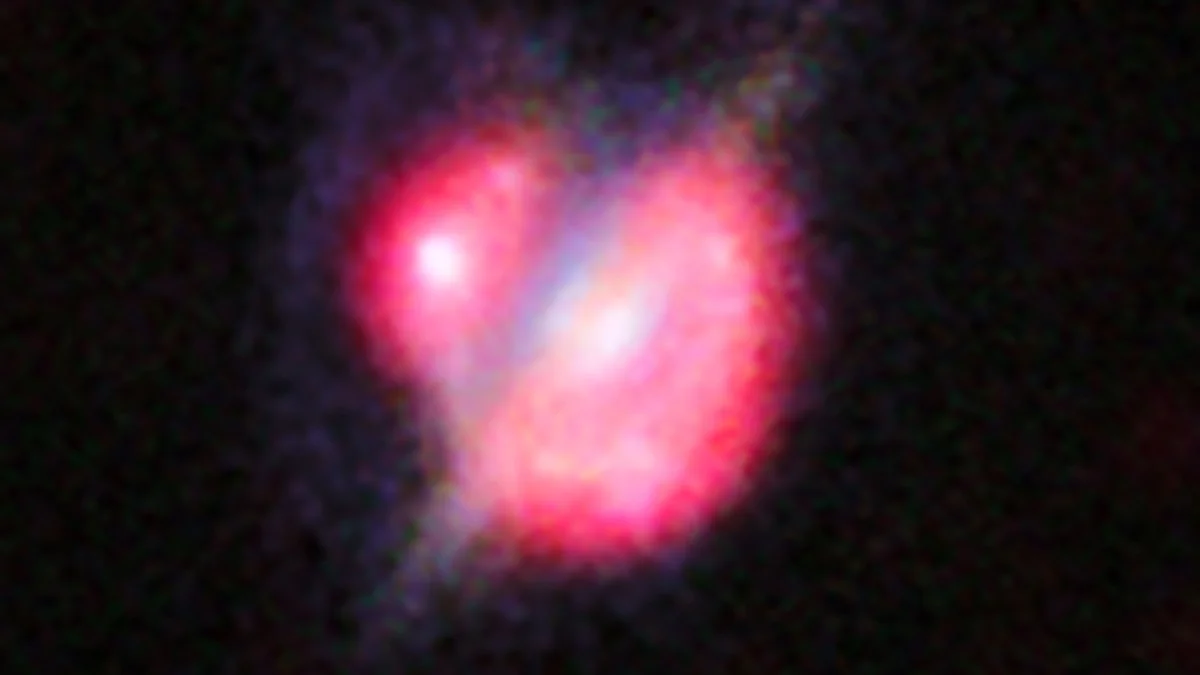
Distant Galaxy Collision Yields Brightest Gigamaser Yet
Astronomers using the MeerKAT radio telescope have detected the brightest and most distant hydroxyl gigamaser, produced when gas in colliding galaxies stimulates hydroxyl molecules to emit intense microwaves. The signal, traveling about 7.8–8 billion light-years, is magnified by a foreground galaxy acting as a gravitational lens, making it appear exceptionally bright. The discovery advances study of high-redshift OH megamasers and galaxy mergers and is published (preprint available) in Monthly Notices of the Royal Astronomical Society Letters.