Tag

Galaxy Merger

All articles tagged with #galaxy merger

JWST marks four years with infrared portrait of Centaurus A's tumultuous core
space4 days ago

JWST marks four years with infrared portrait of Centaurus A's tumultuous core

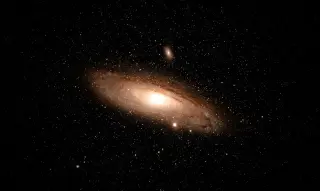
NASA’s James Webb Space Telescope marks its fourth anniversary with a stunning infrared image of Centaurus A, a nearby galaxy shaped by a two‑billion‑year merger. JWST’s infrared vision through dust reveals millions of stars and details of the galaxy’s active center, including jet-driven gas flows and a warped, star-forming disk tied to its supermassive black hole, illustrating how AGN activity can sculpt galactic structure and advancing our understanding of galaxy evolution.

JWST Reveals Six-Galaxy Clash Driving a Giant Galaxy's Birth
space16 days ago

JWST Reveals Six-Galaxy Clash Driving a Giant Galaxy's Birth

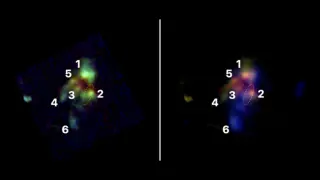
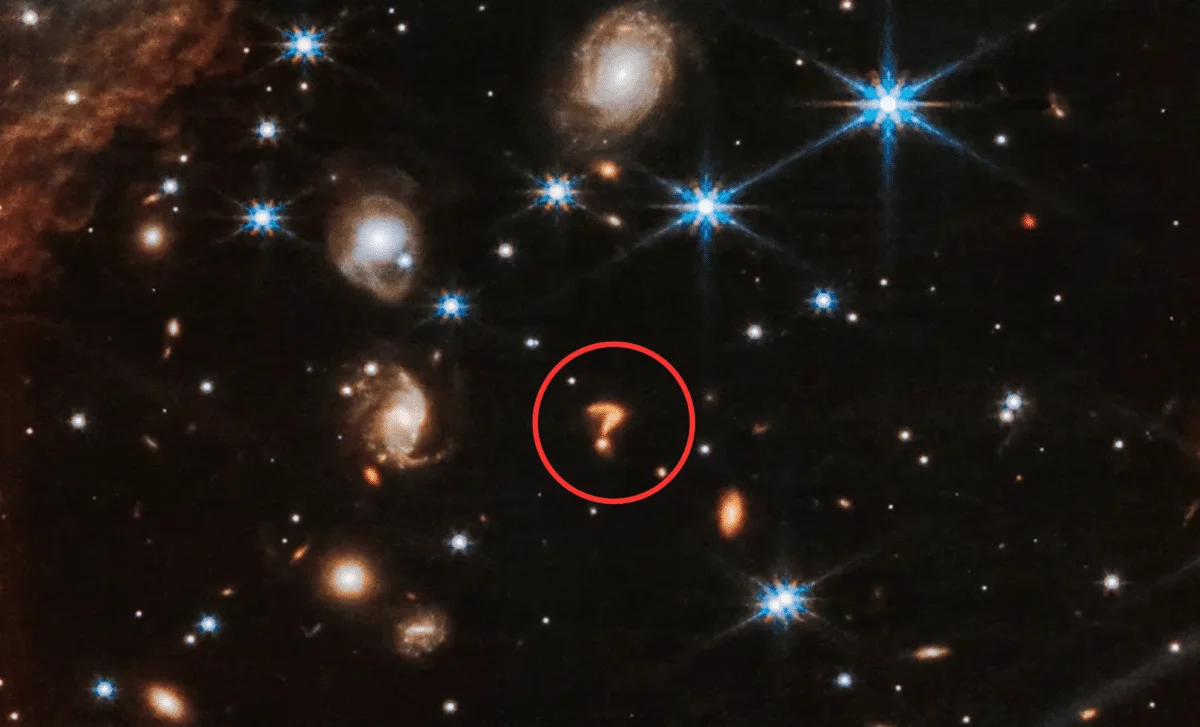
NASA/ESA/CSA’s James Webb Space Telescope imaging shows a chaotic merger of at least six galaxies (TGSSJ1530+1049) at redshift ~4, about 12 billion years ago, in the early universe. The tightly packed system is expected to fuse into a colossal elliptical at the center of a future galaxy cluster, while a developing supermassive black hole powers radio jets, offering a rare glimpse into how massive galaxies and black holes grow together in the universe’s youth.

Webb Spots Galaxy-Quenching Wind in Distant Merger
science18 days ago

Webb Spots Galaxy-Quenching Wind in Distant Merger

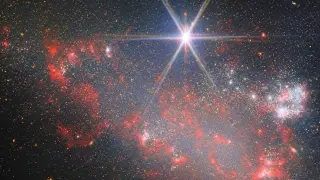
Using the James Webb Space Telescope, scientists observe the distant galaxy merger CRISTAL-02 and find a powerful outflow of gas—a galactic wind—that's removing fuel faster than stars can form, potentially quenching future star formation; the wind is likely driven by merger-triggered starbursts and supernovae (with a possible role for a central black hole), offering insight into early galaxy growth and illustrating a space-weather-like phenomenon in the cosmos.

Hidden Clues in the Milky Way: Remnant of a Small Galaxy Unearthed
space1 month ago

Hidden Clues in the Milky Way: Remnant of a Small Galaxy Unearthed

Astronomers have identified a group of 20 ancient, very metal-poor stars in the Milky Way's disk with mixed prograde and retrograde orbits and nearly identical chemistry, suggesting they are remnants from a long-ago dwarf galaxy dubbed Loki, potentially swallowed about 10 billion years ago; while not definitive, the finding supports the view that the Milky Way grew through mergers, a conclusion increasingly supported by Gaia data and galactic archaeology.

Cosmic Tug-of-War: Antennae Galaxies Dazzle in Merging Dance
space3 months ago

Cosmic Tug-of-War: Antennae Galaxies Dazzle in Merging Dance

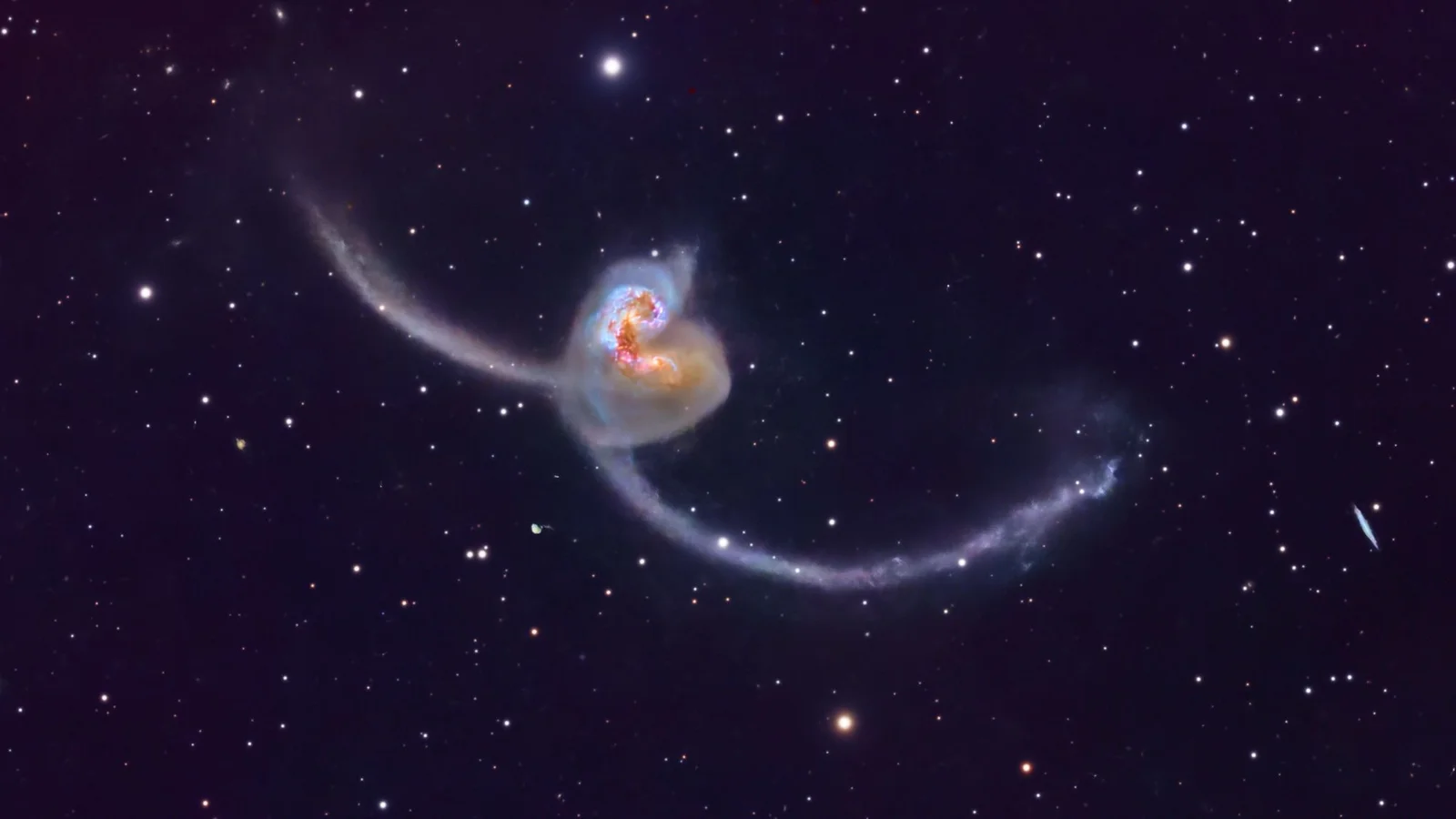
Astrophotographer Greg Meyer captured a near-21-hour deep-space image of the Antennae Galaxies (NGC 4038/NGC 4039) in Corvus as they violently merge into a single elliptical galaxy, revealing orange-yellow cores, tangled dust, and sweeping tidal tails that fuel bursts of star formation; shot with a Sky-Watcher Esprit 120 at Starfront Observatory in Texas, the photo highlights the dramatic gravitational tug-of-war and the likely dispersion of most newly formed star clusters over time.

Gigamaser Beacon Detected From 8 Billion Light-Years Away by MeerKAT
science3 months ago

Gigamaser Beacon Detected From 8 Billion Light-Years Away by MeerKAT

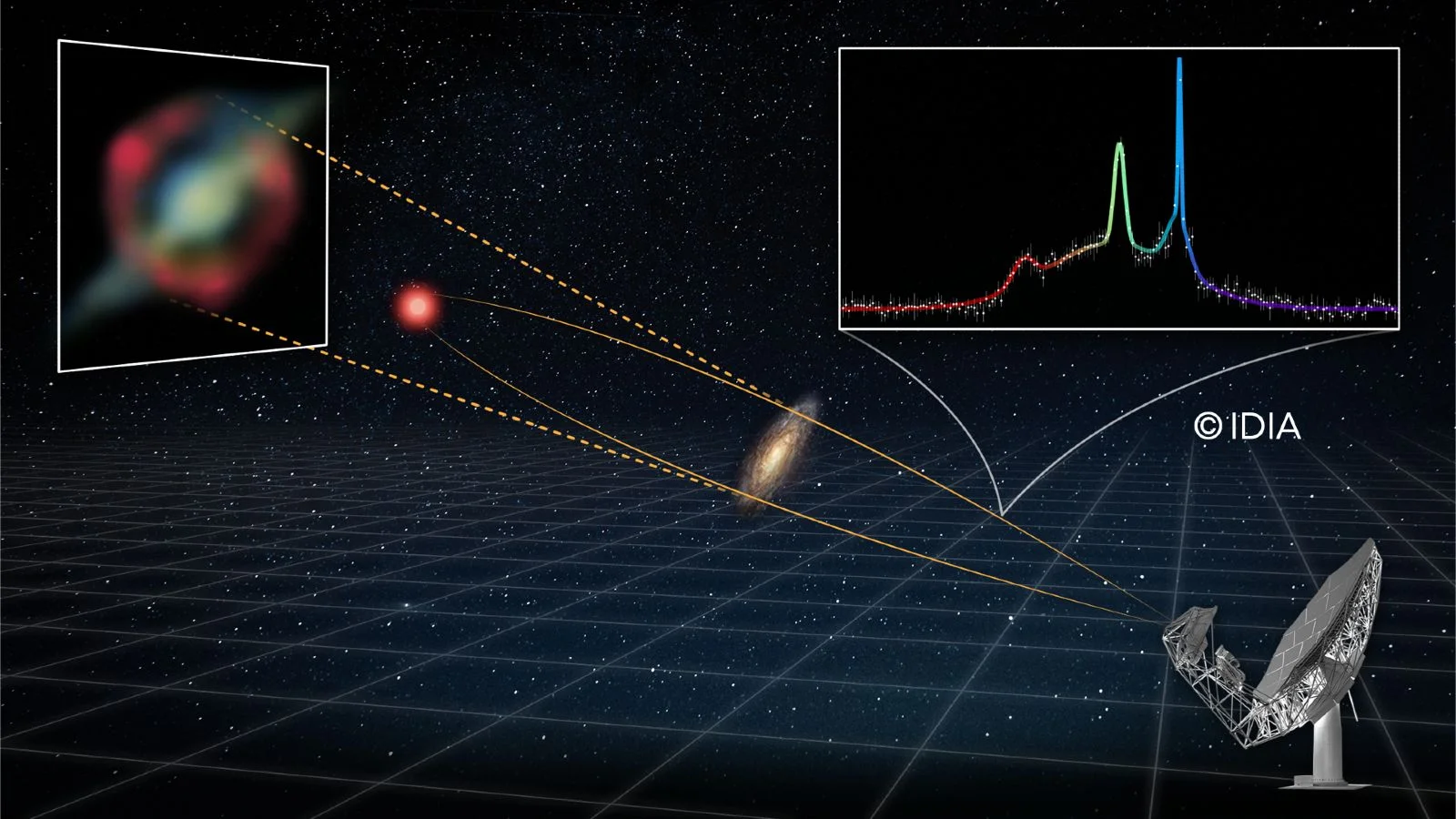
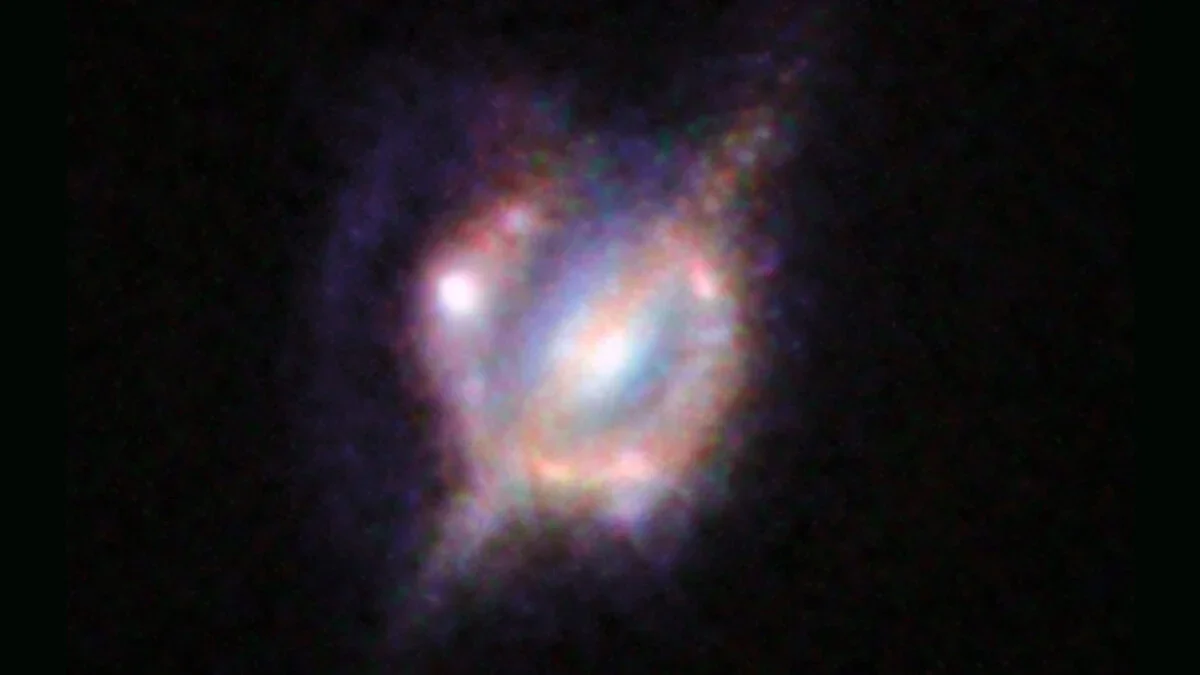
Astronomers using the MeerKAT radio telescope detected a bright, narrow 18-centimeter hydroxyl emission line from the distant galaxy system HATLAS J142935.3-002836 at z=1.027 (about 8 billion light-years away). The signal is amplified by a foreground galaxy’s gravitational lensing and the background merger’s dense, energized gas, pushing it toward megamaser/gigamaser levels. The rapid detection in a few hours demonstrates MeerKAT’s capability to find distant hydroxyl emitters in wide surveys.

Cosmic laser beacon: brightest megamaser seen from 8 billion light-years away via gravitational lensing
space4 months ago

Cosmic laser beacon: brightest megamaser seen from 8 billion light-years away via gravitational lensing

Astronomers using the MeerKAT radio telescope have detected the brightest and most distant hydroxyl megamaser from a galaxy merger about 8 billion light-years away. The signal, amplified by gravitational lensing, may qualify as a gigamaser and provides a rare beacon to study how ancient galaxies form and evolve; scientists hope to find many more such megamasers to map the cosmos’s history.

Gigamaser: The Universe’s Brightest Microwave Laser Detected in Deep Space
space-and-spaceflight4 months ago

Gigamaser: The Universe’s Brightest Microwave Laser Detected in Deep Space

Astronomers using the MeerKAT radio telescope spotted an extremely bright hydroxyl maser in the distant galaxy merger H-ATLAS J142935.3–002836, whose signal was amplified by an unrelated foreground galaxy acting as a gravitational lens, yielding the first gigamaser—about 100,000 times the luminosity of a star—and enabling new ways to probe cosmic evolution from billions of light-years away.

Scientists Discover First Active Triple Black Hole System in Galaxy Merger
science6 months ago

Scientists Discover First Active Triple Black Hole System in Galaxy Merger

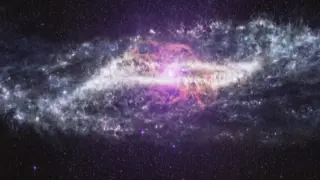
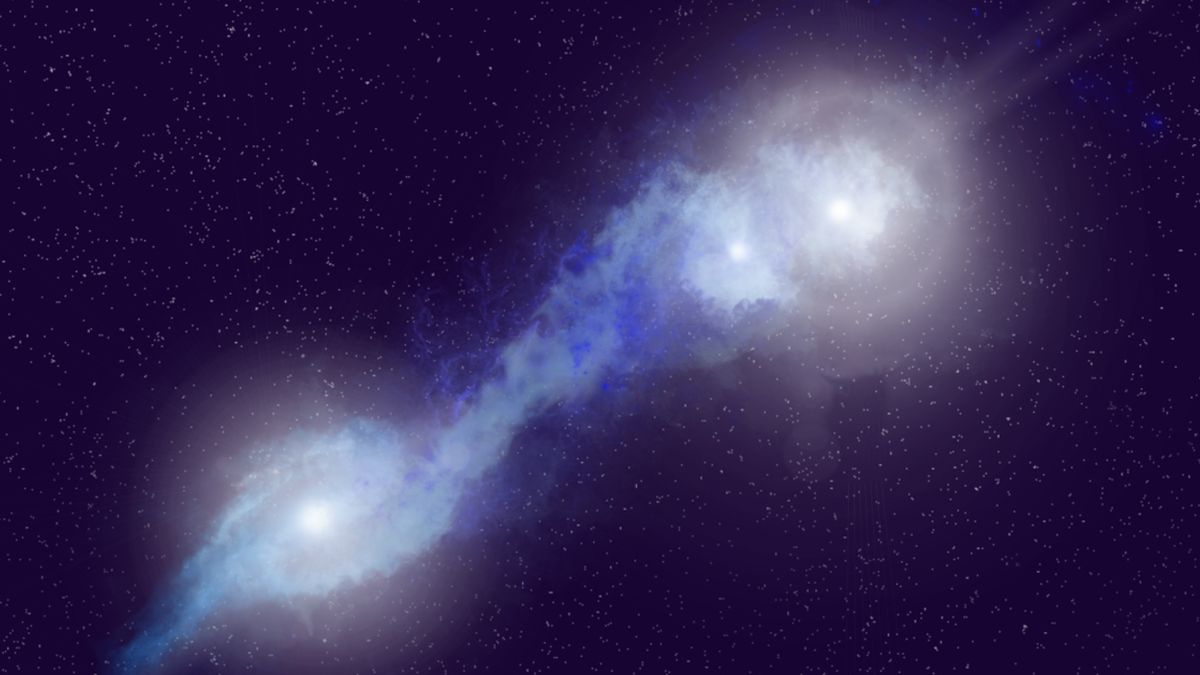
Astronomers have confirmed the first known system where three galaxies, each hosting active supermassive black holes, are merging, providing new insights into galaxy and black hole evolution through high-resolution radio imaging. The system, located 1.2 billion light-years away, shows all three black holes actively feeding and launching jets, a rare and significant discovery that advances our understanding of cosmic growth processes.