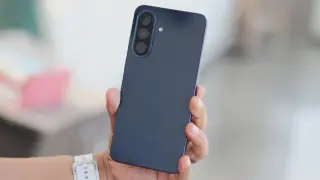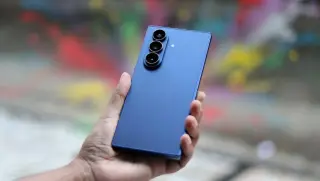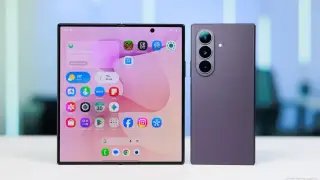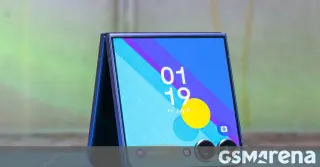
Official-looking renders of Samsung's Galaxy Z Fold 8 and Z Flip 8 have leaked without watermarks, showing a lavender Fold 8 and pink Flip 8; the leaks hint at three foldables this year and an Unpacked event in London on July 22.
Pricing leaks peg the Galaxy Z Fold 8 Ultra at $2,099 in the US and the standard Fold 8 at $1,899 for 256GB, with higher storage options likely costing more. A Samsung store in Korea reportedly displayed the device ahead of Samsung’s July Unpacked event in London, signaling an imminent official reveal and confirming the new foldable lineup is arriving soon.
The Android Authority piece highlights six Samsung Galaxy MMI dial codes that reveal hidden phone tools: *#06# for IMEI (two IMEIs on dual‑SIM), *67 or *31# to hide caller ID, *#0808# to view and set USB connection modes, *#2663# to access a touchscreen firmware and Wi‑Fi refresh menu, *#9900# to delete old system logs, and *#0*# to run a hardware diagnostics suite for speakers, touch, sensors, and more. It also notes you must disable One UI Auto Blocker for many codes to work (it re-enables after 30 minutes on newer versions) and that carrier-locked devices may see “connection problem” errors due to carrier restrictions.
European pricing for Samsung's next-gen wearables leaked ahead of the Galaxy Unpacked event: Galaxy Watch 9 40mm Bluetooth €409 and Bluetooth+4G €459; 40mm variants, and 44mm €439 (Bluetooth) / €489 (Bluetooth+4G), each €30 higher than the Galaxy Watch 8. The Galaxy Watch Ultra 2 (47mm) is listed at €749 for Bluetooth+4G, €50 more than before, with no non-LTE option. Release is expected August 6, 2026, with pre-orders starting July 22 around 3 PM French time (2 PM UK). Leak source Billbil-kun, with corroboration from Winfuture.
Samsung’s Galaxy Z Flip 8 is expected to debut at the London Unpacked on July 22, featuring a slimmer, crease-reduced design, a 4,300 mAh battery, 12GB of RAM and 256GB of storage, with the US version using the Snapdragon 8 Elite Gen 5 and international models likely with the Exynos 2600. It’s planned around a 4.1-inch cover display and 6.9-inch main display, and rumors peg the starting price around $1,200; a Flip 8 FE variant remains uncertain and launch timing could shift with August 7 as a possible date in some leaks.
A leak suggests Samsung’s Galaxy Z Fold8 Ultra could borrow camera features from the Galaxy S26 Ultra, including video LUTs for color grading, better low-light performance, and enhanced image processing, plus dual-camera recording from front and rear cameras; however, major hardware upgrades aren’t expected. The foldable is believed to keep a 200MP main sensor, a 10MP periscope telephoto (3x), and a 50MP ultrawide, with an unveiling set for July 22 alongside the Galaxy Z Fold8 and Z Flip8.
Samsung teased the Galaxy Z Fold 8 lineup with a Spider-Man promo ahead of its July 22 Unpacked reveal, hinting at a wider foldable design and updated camera layouts across the Fold 8 family, with early looks fueling anticipation.
A credible leak suggests Samsung may discontinue the Galaxy Z Flip lineup after the Galaxy Z Flip8, driven by rising RAM/component costs and a shrinking Western market for clamshell foldables, with a brief pause more likely than an outright end.
Google Messages is testing a new sharing flow that lets you send a message or photo to multiple contacts more easily by choosing 'Send to a group' or 'Send separately' and creating a group on the fly; if the recipients are already in a chat, it opens that chat instead. The feature appears in server-side tests and isn't widely available yet, as Google continues to migrate users from Samsung Messages.
Google is testing a cloud-free automatic PC backup feature for Android via Quick Share on Windows PCs, backing up selected photos and videos daily over Wi‑Fi to the same Google Account. Samsung Galaxy phones reportedly aren’t supported, likely to avoid overlap with Samsung’s Smart Switch, which currently doesn’t offer automatic backups.
Renders leaked ahead of Samsung’s July 22 Unpacked show reveal three Galaxy Z Flip 8 colorways—Cream, Graphite, and Pink—with Mint rumored as a possible exclusive; the Flip 8 reportedly sticks to the Flip 7’s design and camera setup, signaling only modest changes as Samsung readies a broader foldable lineup and new Watch models alongside AI features.
Ahead of Samsung's July 22 Unpacked in London, renders and rumors surface for the Galaxy Z Fold8, Fold8 Ultra, Flip8, Watch9, and Watch Ultra2. Specs leaked include Fold8 with a 5.5-inch cover and 7.6-inch main display, ~200 g weight, 4.5 mm unfolded/9.7 mm folded thickness, Snapdragon 8 Elite Gen 5, 12 GB RAM, up to 1 TB storage, and a 4,800 mAh battery; Fold8 Ultra reportedly keeps the foldable design with a 5,000 mAh battery, 45 W charging, and a 200 MP main camera plus 10 MP tele and 50 MP ultrawide. Flip8 offerings include Cream/Graphite/Pink (Mint exclusive), Exynos 2600 in some markets, ~180 g weight, 4,300 mAh battery, with cameras unchanged from the previous model; Watch Ultra2 is a 47 mm size available in two shown colors, while Watch9 comes in 40 mm and 44 mm with Cream/Graphite/Green; all devices are said to be pricier than their predecessors.
Samsung has scheduled July 22 Unpacked in London to unveil foldables like the Galaxy Z Fold 8 and Z Flip 8, plus a new Galaxy Watch lineup and possibly Galaxy Glasses. Ahead of the show, Samsung is offering a $30 preorder credit and a chance to win one of ten $500 Samsung.com gift cards, with live coverage planned from Samsung and ZDNET.
Germany pricing shows increases across Samsung's foldables: Galaxy Z Fold 8 starts at €1,999 for 256GB, €2,199 for 512GB, and €2,599 for 1TB; Galaxy Z Fold 8 Ultra starts at €2,199 (a €100 increase) with €2,399 for 512GB and €2,799 for 1TB (+€180, +€280); Galaxy Z Flip 8 is €1,299 for 256GB (+€100) and €1,499 for 512GB (+€180). These are German prices and may not map to US pricing; a memory-chip shortage is cited as a driver of higher costs.
Samsung reported a Q2 operating profit of 89.4 trillion won (about $58.4 billion) and revenue of 171 trillion won, driven by strong AI memory demand, but AI memory and broader chip stocks nonetheless fell in Korea and the US as investors lagged behind the rally and questioned whether the AI infrastructure boom was already priced in. Major declines hit Samsung, SK hynix, Micron, Western Digital, Seagate, and Sandisk, with Nvidia, AMD, Marvell, Intel, Lam Research, Applied Materials, and ASML also trading lower.