Apple’s Siri AI in iOS 27 is praised for its transparent, tool-like interface but criticized for reliability issues and intrusive integration. While it offers strong on-device capabilities, it lags behind competitors in complex reasoning and multi-step tasks.
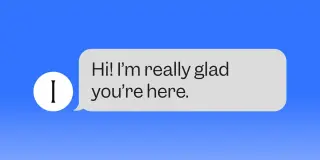
Noah Shinn’s Instinct AI has rapidly scaled to 100,000 users and a $2.5 billion valuation, directly challenging Meta’s Muse. The 23-year-old founder, a former AI researcher, leverages a messaging-first interface to execute real-world tasks like booking and scheduling. While Meta benefits from massive infrastructure, Instinct’s invite-only strategy and aggressive fundraising have positioned it as a primary competitor in the emerging AI agent market.
Snap has launched 'Specs Intelligence,' an anticipatory AI service designed to manage daily tasks across iPhone, Mac, and its new Specs AR glasses. The tool connects to user apps to provide proactive updates on travel, work, and personal goals without requiring explicit prompts. While available now in preview on iOS, the full experience is coming to Mac via a waitlist. The launch coincides with Snap’s push to position its $2,195 AR glasses as a serious computing platform rather than just a camera device, featuring partnerships with Nvidia, AWS, and Salesforce for enterprise use cases.
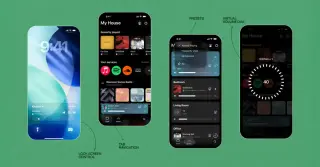
Sonos has rolled out the Sonos 27 app update for its S2 lineup, introducing a redesigned navigation, portable surrounds that let two compatible portable speakers act as rear surrounds with a soundbar, and early-access features like Headphone Linking for Ace Ultra headphones and Sonos 27 MCP to connect AI assistants such as ChatGPT and Claude; the update also previews future options including Sonos 27 Voice and Custom Agents, with feature availability varying by product.
Sonos 27 rolls out a redesigned app and a major OS update that enables control of your speaker system by any external AI via a public MCP protocol, adds Fabric sensor-based auto-configuration of speaker roles (including surround-like behavior), Ace Ultra headphone linking, and previews Sonos Custom Agents and a new Sonos voice assistant, along with tighter Apple integration (Shortcuts/Siri); rollout starts Sept. 8 for S2 devices with early access to AI features.
Apple’s iOS 27 upgrade sharpens Siri into a capable, practical assistant that clearly reminds users it’s an AI—unlike rivals like ChatGPT, Claude, and Gemini that lean into personality—making Siri a more honest, reliable tool.
The European Union, under the Digital Markets Act, orders Google to give rival AI assistants and search engines access to key Android and Google Search data and features. Android must allow comparable interoperability and data access for rivals, while Google Search data must be shared with competitors, including AI services that function as search tools. Google has until January 2027 to begin sharing search data and July 2027 to implement Android changes, with penalties up to 10% of worldwide turnover for non-compliance. The rulings aim to boost competition and innovation in the EU, potentially expanding options beyond Gemini, but Google warns the measures could threaten user privacy and security; regulators also signal how they may approach similar questions with other tech giants.
Smart glasses aren’t a single product but a spectrum: AI‑assisted audio glasses, waveguide display glasses, prism display glasses, and a handful of niche models; the piece explains how each type works, their trade‑offs (sound quality, privacy, battery life, and usability), and what’s ahead as wearables move toward standalone computing and more capable AR.
Microsoft unveiled Scout, an always-on AI agent integrated with Teams that can read messages, calendars, and email to automate tasks, resolve scheduling conflicts, and draft responses. Built atop OpenClaw, Scout is aimed at acting as a personal enterprise assistant with a limited rollout and a desktop app in testing, currently requiring a GitHub Copilot subscription for access. While it promises productivity gains, it introduces risks like prompt-injection and will require admin monitoring. Google’s Gemini Spark is a competing, enterprise-focused AI agent, marking a broader shift toward agent-first automation in white-collar work.
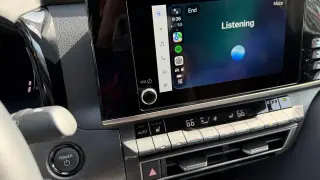
A ZDNET tester uses CarPlay to compare ChatGPT and Perplexity AI. ChatGPT excels in conversational tasks, storytelling, and calendar access, while Perplexity handles location-based tasks like driving directions and reminders. Siri remains best for music and basic hands-free calls. The takeaway: ChatGPT provides the stronger in-car chat experience, but both AIs offer useful capabilities and can be used together.
Tom’s Guide shows how a simple iPhone Shortcut can text Anthropic’s Claude and return Claude’s reply into Messages. By wiring a Personal Automation that triggers on a specific phrase, the workflow sends your message to Claude, gets a response, and pastes it back, enabling quick tasks like summarizing articles, brainstorming, drafting replies, or turning notes into to-do lists without leaving Messages. It’s a natural, fast way to use AI on the go, with a more fully automated API option available for power users.
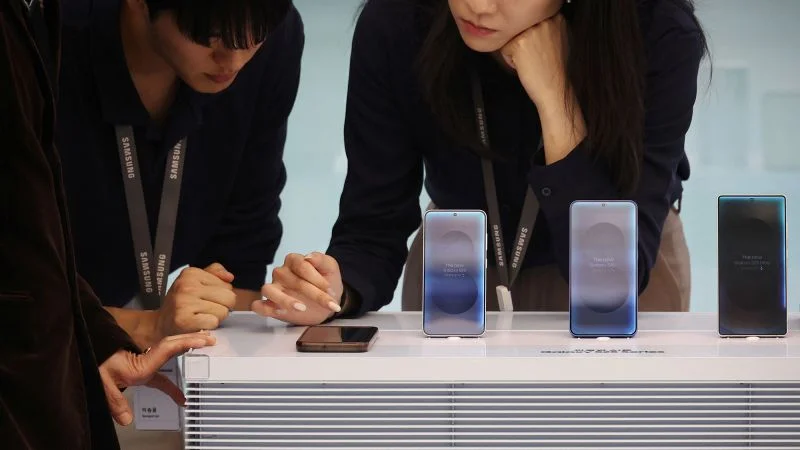
Samsung's Galaxy S26 lineup and Google's Gemini integration push AI from chatbots to proactive on-device assistants, enabling features like pre-emptive task handling and automated app actions. The shift points to a future where AI does more behind the scenes on phones, but whether consumers buy in depends on price, camera quality and overall practicality.
In an exclusive Tom’s Guide interview, Claude AI’s product lead explains Anthropic’s safety-first approach to building a powerful, interpretable AI that can act as a professional coworker. The discussion covers Claude’s emphasis on safety over hype, its browser-related capabilities, and how the company balances growth with guardrails to reduce risks like prompt injections, all while pursuing practical, work-focused use cases rather than flashy features.
Apple is developing a new version of Siri that will rely more on Google Gemini, indicating a shift in its AI assistant strategy to incorporate or depend more on Google's technology.
A study by the European Broadcasting Union and BBC found that nearly half of the responses from leading AI assistants contained significant issues, mainly sourcing errors and outdated information, raising concerns about their reliability in delivering news content.