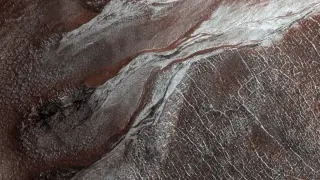
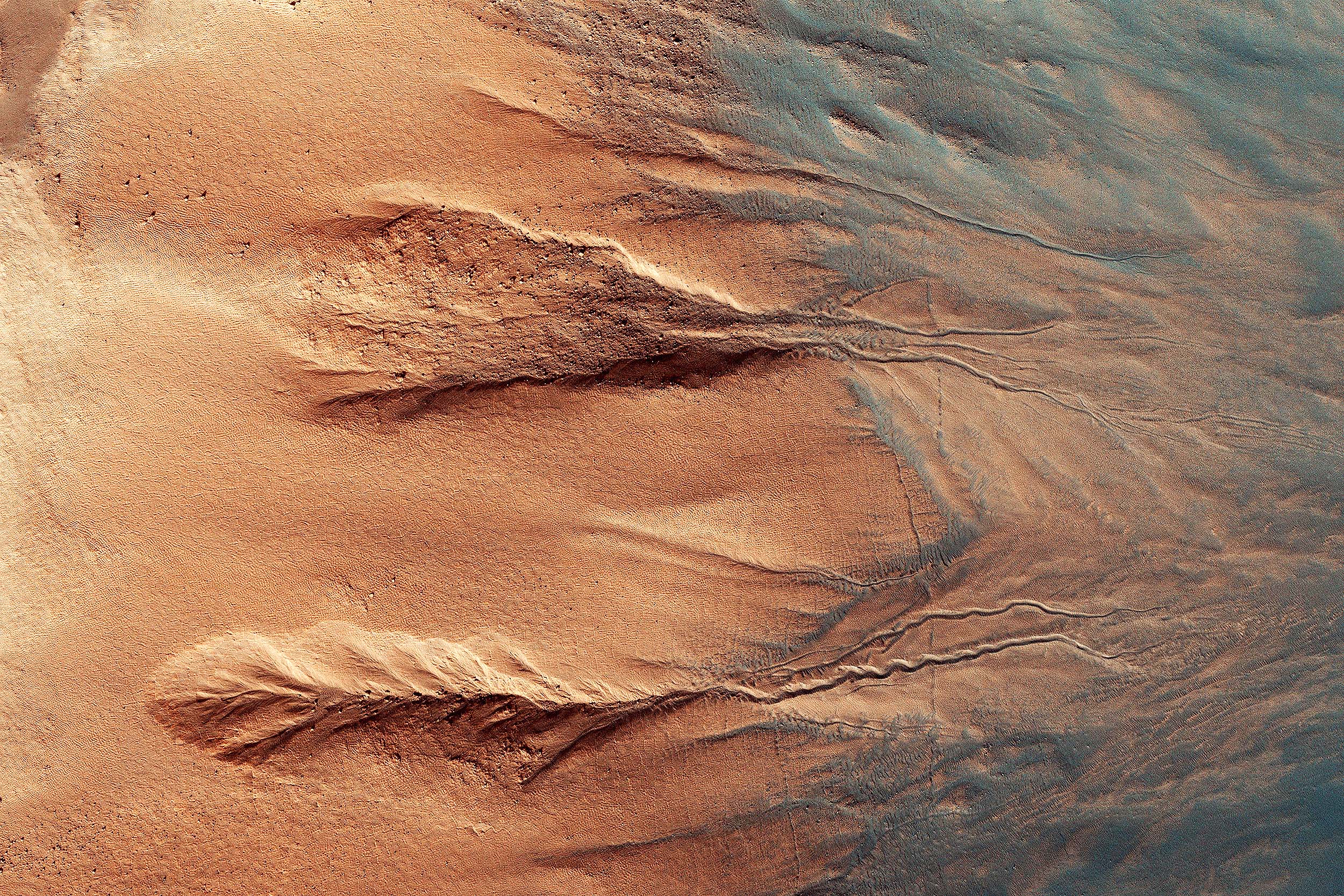
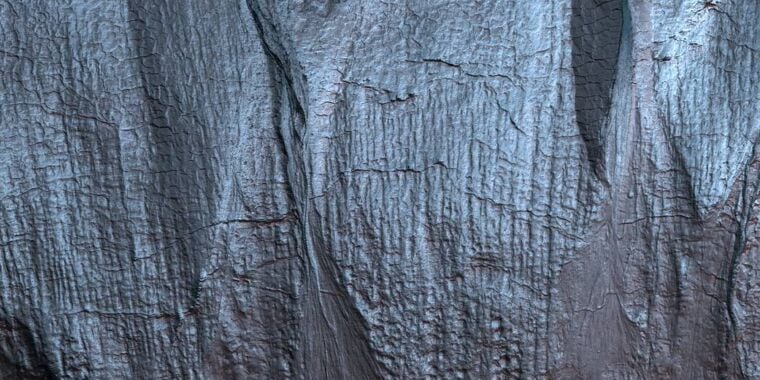
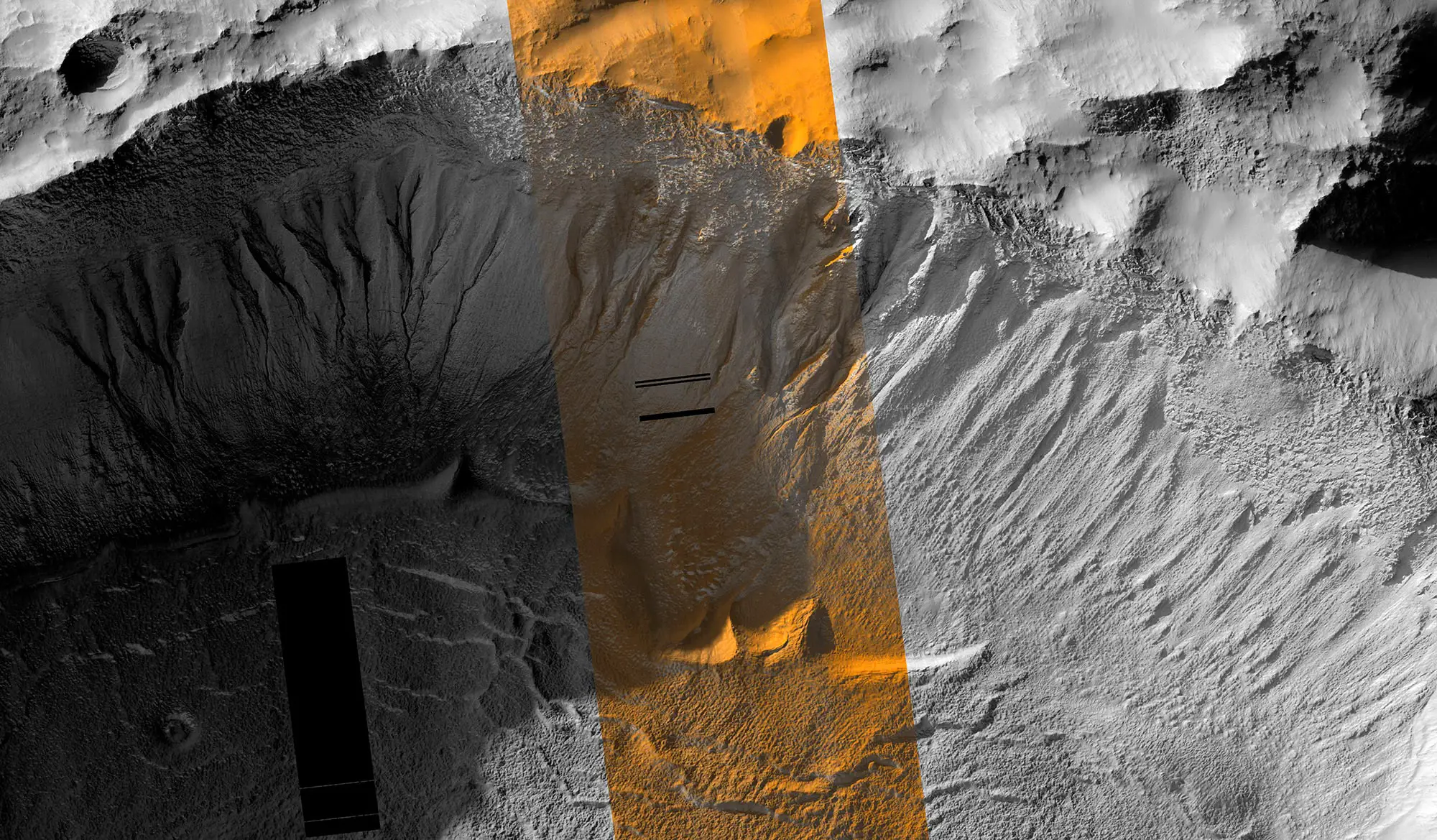
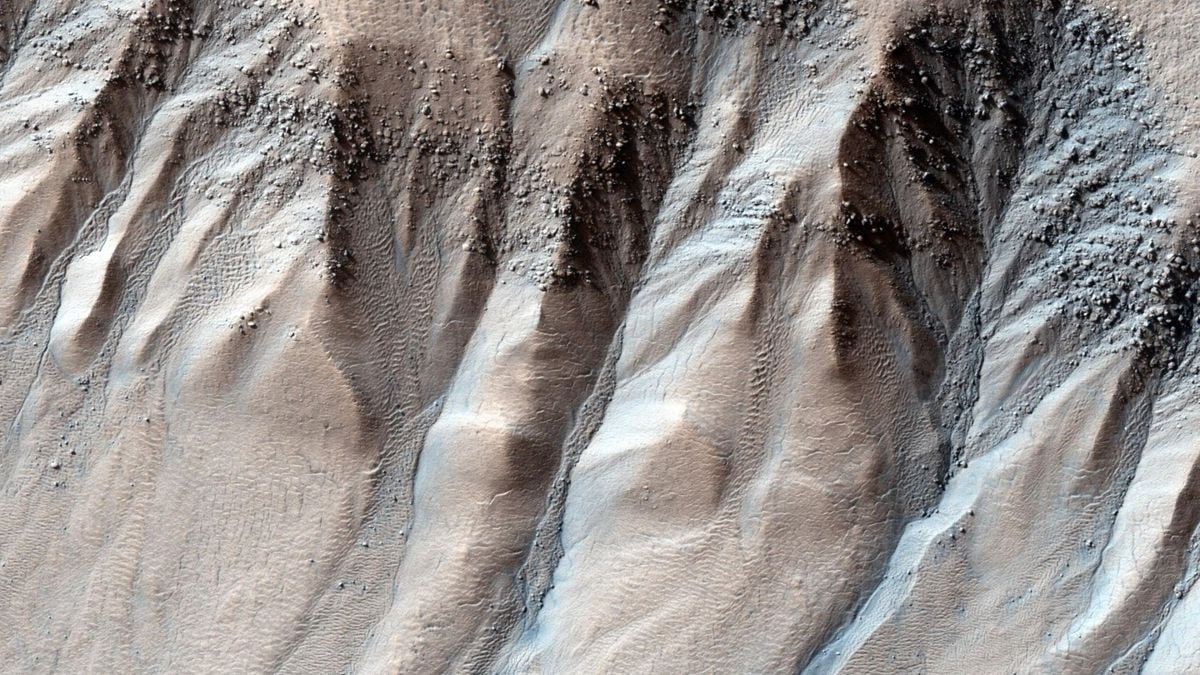
A new study using data from Mars Express and the Mars Reconnaissance Orbiter concludes that Martian gullies are not carved by liquid water or CO2 geysers, but by dry ice avalanches during seasonal sublimation.
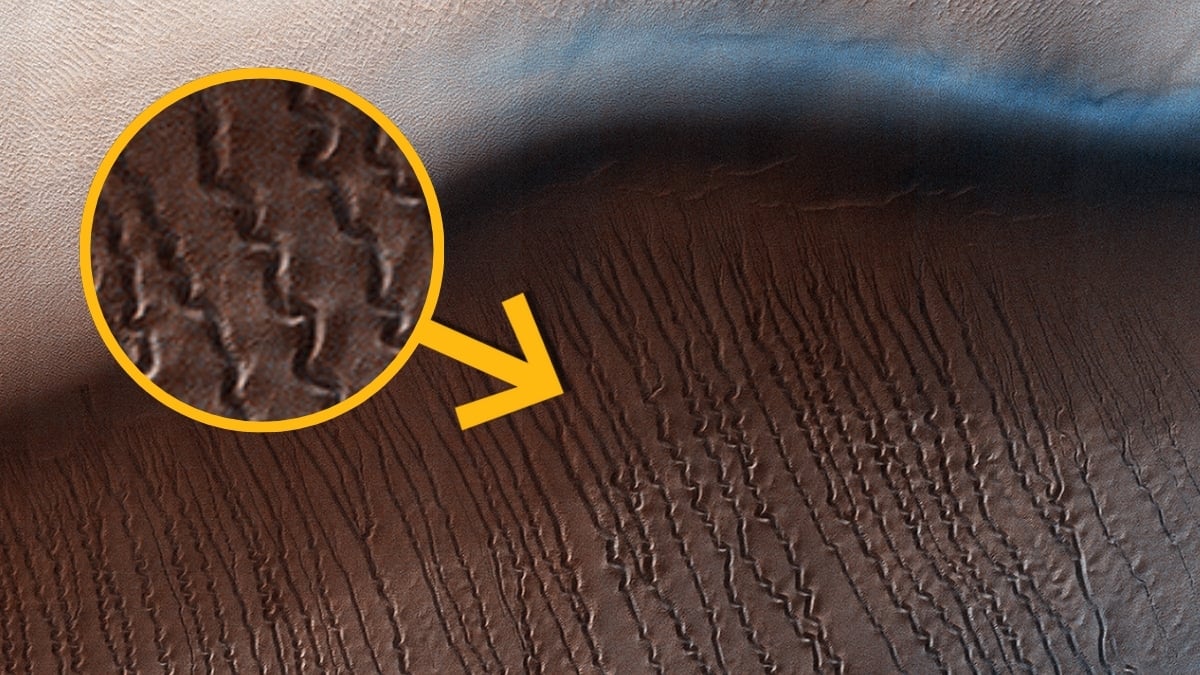
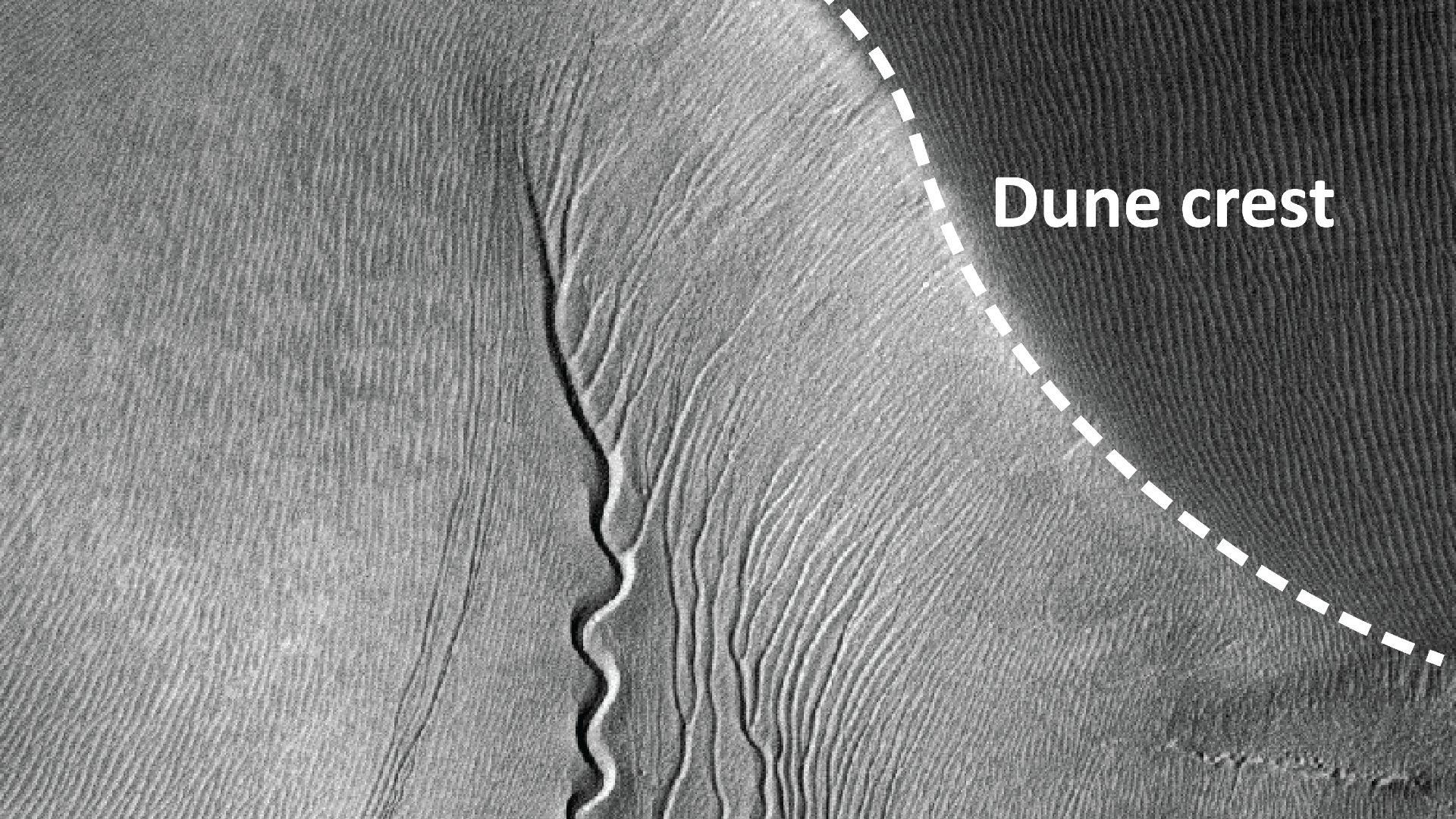
Experiments simulating Martian conditions reveal that the gullies and sinuous features on Mars' dunes are carved by the sublimation of dry ice, which burrows into the sand and ejects material, explaining their unique shapes and formation process.
Scientists have discovered that dry ice (CO₂ ice) sublimating and sliding down slopes on Mars can carve out gullies, offering an alternative explanation to water flow for these features and providing insights into Martian geology and climate processes.
A new study suggests that the mysterious gullies on Mars are carved by blocks of dry ice melting and sublimating during spring, which propels sand and creates winding trenches, offering a water-free explanation for these features and indicating Mars's ongoing geological activity.
New research suggests that gullies on Mars may have been shaped by the sublimation of carbon dioxide ice rather than just liquid water, potentially indicating that the planet's history of liquid water and habitability may have been shorter than previously thought. Lab experiments simulating Martian conditions demonstrated that CO2 sublimation can fluidize and sustain granular flows, raising questions about the duration of Mars' habitable period and its potential for supporting life.
Scientists from Brown University have conducted a study suggesting that gullies on Mars may have formed from periods of liquid meltwater resulting from melting ice on and beneath the planet's surface. By simulating conditions on Mars, the researchers found that when the planet tilts on its axis to 35 degrees, the atmosphere becomes dense enough for brief episodes of melting to occur at gully locations. This study fills in gaps in understanding how these gullies formed and raises questions about the potential for life on Mars.
Gullies on Mars may have formed when the planet was highly tilted on its side, causing shifts in climate that allowed water to flow down slopes and carve out ravines. Previous theories suggested carbon dioxide frost or past favorable climates as potential sources, but a new study suggests that a combination of melting ice, sublimating carbon dioxide, and high obliquity can explain the pattern of gullies seen on Mars. These findings have implications for the potential existence of life on Mars, as water is a key ingredient for life as we know it.