Spacetime’s Crystal Phase Unlocks Exact Path to Tiny Black Holes
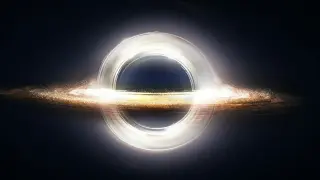
Physicists have derived the first exact analytic description of critical collapse — the boundary between dispersing spacetime and forming black holes — by solving Einstein–Klein-Gordon equations in the limit of infinitely many dimensions. The work suggests spacetime can self-organize into a delicate, crystal-like state that, with a tiny energy input, can become a black hole, offering a new analytical tool for gravitational physics while the challenge remains to translate these insights back to our four-dimensional universe.