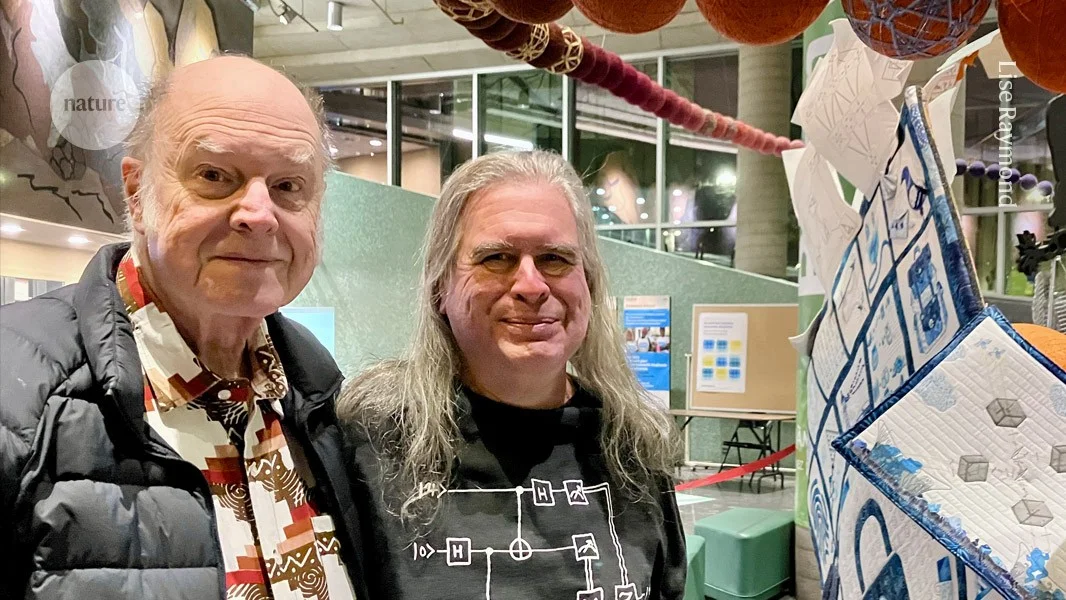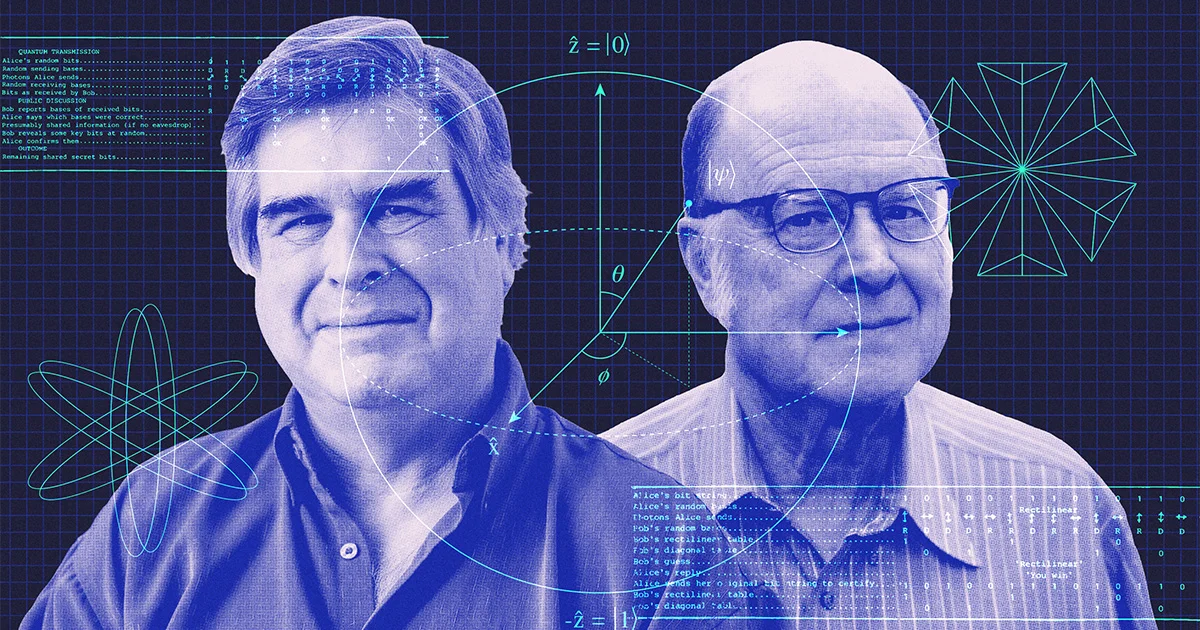
Brassard and Bennett win ACM’s Turing Award for founding quantum information science, including BB84 quantum key distribution and quantum teleportation, the first prize to honor quantum physics and its impact on secure communication and computing.
Charles Bennett and Gilles Brassard win the Turing Award for foundational work that launched quantum information science, notably the BB84 quantum key distribution protocol, and for connecting quantum physics to cryptography—sparking a global surge in quantum computing and secure communications.
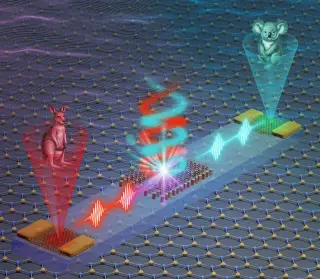
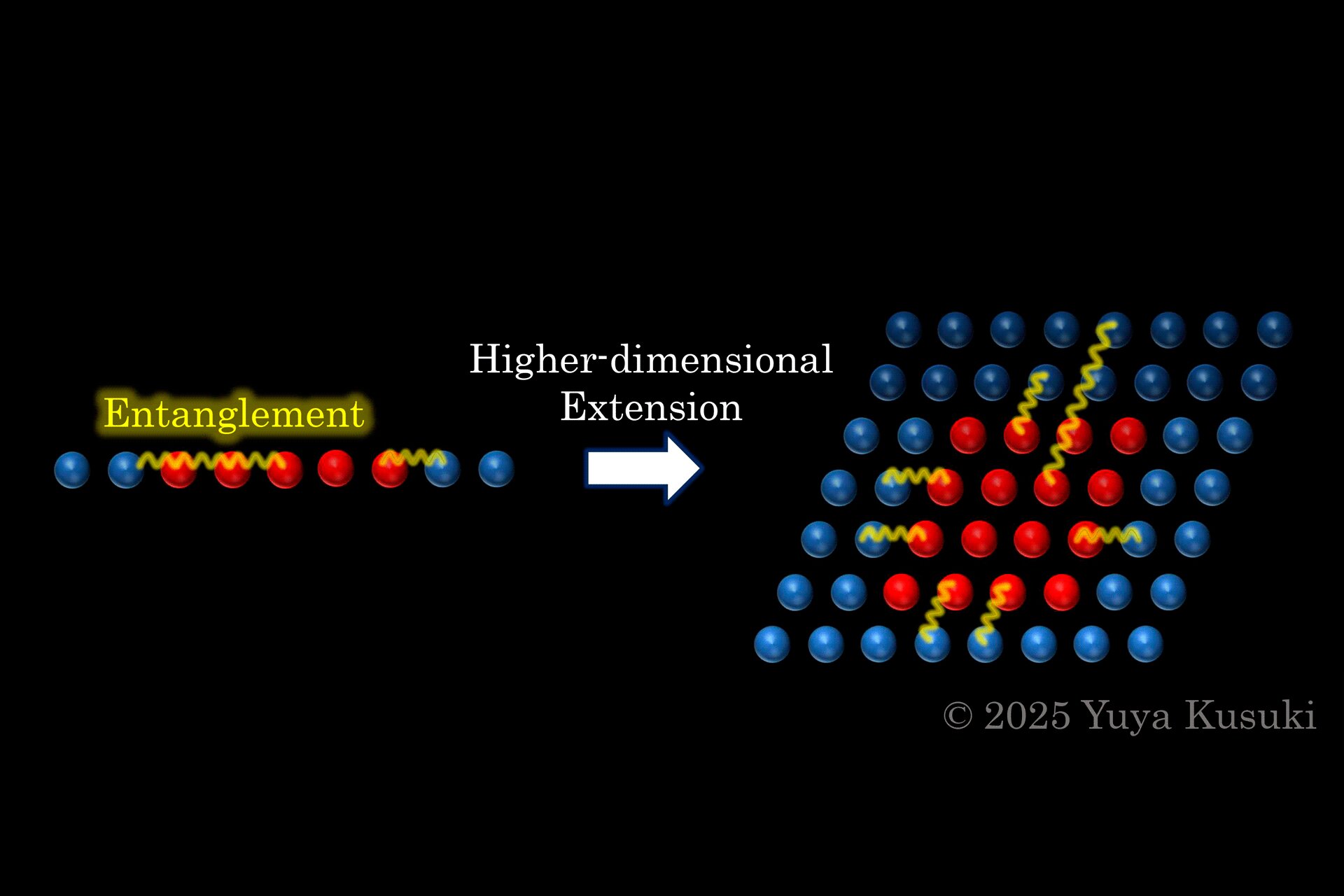
Physicists from the University of the Witwatersrand and Huzhou University report that entangled photons produced via spontaneous parametric downconversion harbor a rich, high-dimensional topological structure within their spatial degrees of freedom, specifically in orbital angular momentum. They observed a topology spanning 48 dimensions with over 17,000 distinct signatures, suggesting new ways to encode and protect quantum information against noise. Because OAM is inherently high-dimensional, the topology is also effectively limitless in practice, and these effects can be explored with standard quantum optics lab setups, offering a practical path toward more stable quantum technologies.
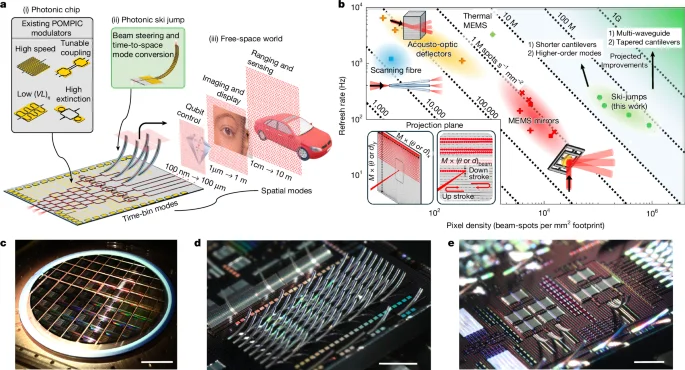
Researchers unveil a photonic ski-jump: a nanoscale waveguide monolithically integrated on a piezoelectric cantilever that curls out of a CMOS chip to emit a broadband, diffraction-limited beam. When driven near resonance, the device achieves 2D beam scanning with high efficiency, a footprint-efficient metric (up to 68.6 mega spots s–1 mm–2), and the potential to reach millions of pixels at 100 Hz from roughly a 1.5 mm footprint, outperforming MEMS by over 50×. Demonstrations include full-color image/video projection and resonant optical addressing of silicon-vacancy centers in diamond, with a 64-ski-jump array showing uniform curvature (<2% variation) and a pathway to gigaspot, kilohertz-rate scanning within a sub-5 cm diameter package. Fabricated in a CMOS-foundry, the platform promises scalable chip-to-world interfaces for LiDAR, displays, quantum information processing, and beyond, including on-chip modulation and cryogenic integration for quantum memories.
Researchers demonstrated a quantized transverse drift of light that mirrors the electronic quantum Hall effect, using a frequency-encoded photonic Chern insulator. The photon steps depend only on fundamental constants, potentially establishing an optical standard for ultra-precise measurements and strengthening quantum photonic technologies; the result, published in Physical Review X, could impact metrology and sensor development.
Henry Yuen is building a fully quantum complexity theory to analyze problems whose inputs and outputs are quantum, something traditional theory can’t capture. By recasting issues through the lens of Uhlmann’s theorem, his work shows several quantum-input problems—bit commitments, black-hole decoding, quantum data compression—are actually equivalent, suggesting a unified, quantum-only framework. The project seeks to map these relationships and assess whether quantum-input problems are logically independent from classical complexity, while also sharing Yuen’s personal journey and research philosophy.
New theoretical work shows that the indistinguishability of identical particles can produce detectable nonlocal correlations even in passive optical setups, suggesting a universal entanglement resource at the heart of quantum mechanics.
Researchers have demonstrated that quantum entanglement follows universal rules across all dimensions by applying thermal effective theory, expanding understanding beyond the traditional 1+1 dimensions and potentially impacting quantum computing, simulation, and quantum gravity research.
Researchers have developed a new understanding of entanglement manipulation by introducing an 'entanglement battery,' demonstrating that entanglement can be reversibly manipulated, akin to thermodynamic processes, which could lead to fundamental advances in quantum technology and theory.
Physicist Melvin Vopson proposes that gravity functions as an algorithm in a universe akin to a giant computer, supporting the idea that we live in a simulated reality, with recent discoveries of missing cosmic matter potentially backing this theory.
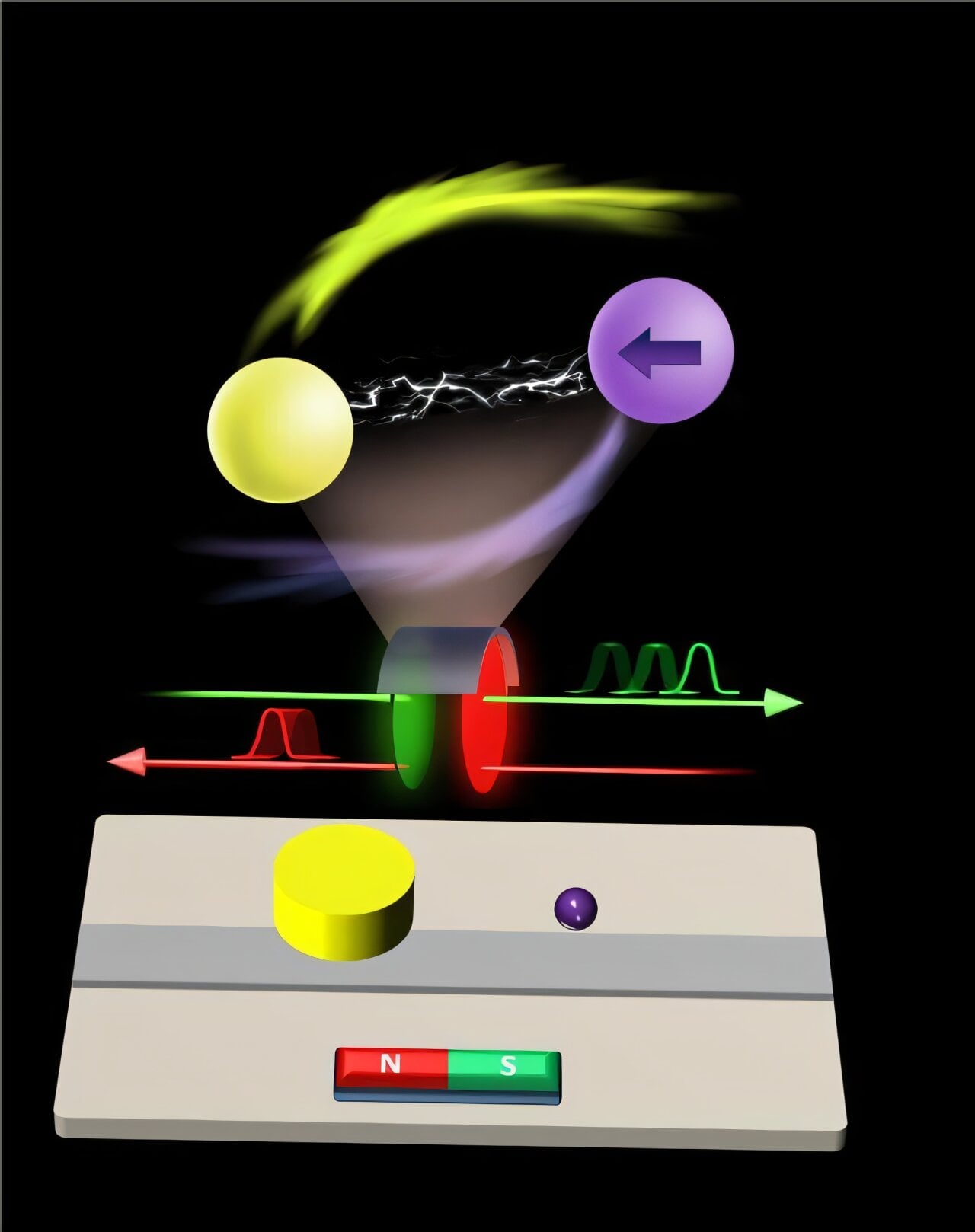
Researchers have demonstrated a novel cavity magnonics device that nonreciprocally controls the speed of light, allowing microwave pulses to travel at different speeds depending on direction, which could impact advanced communication and quantum technologies.
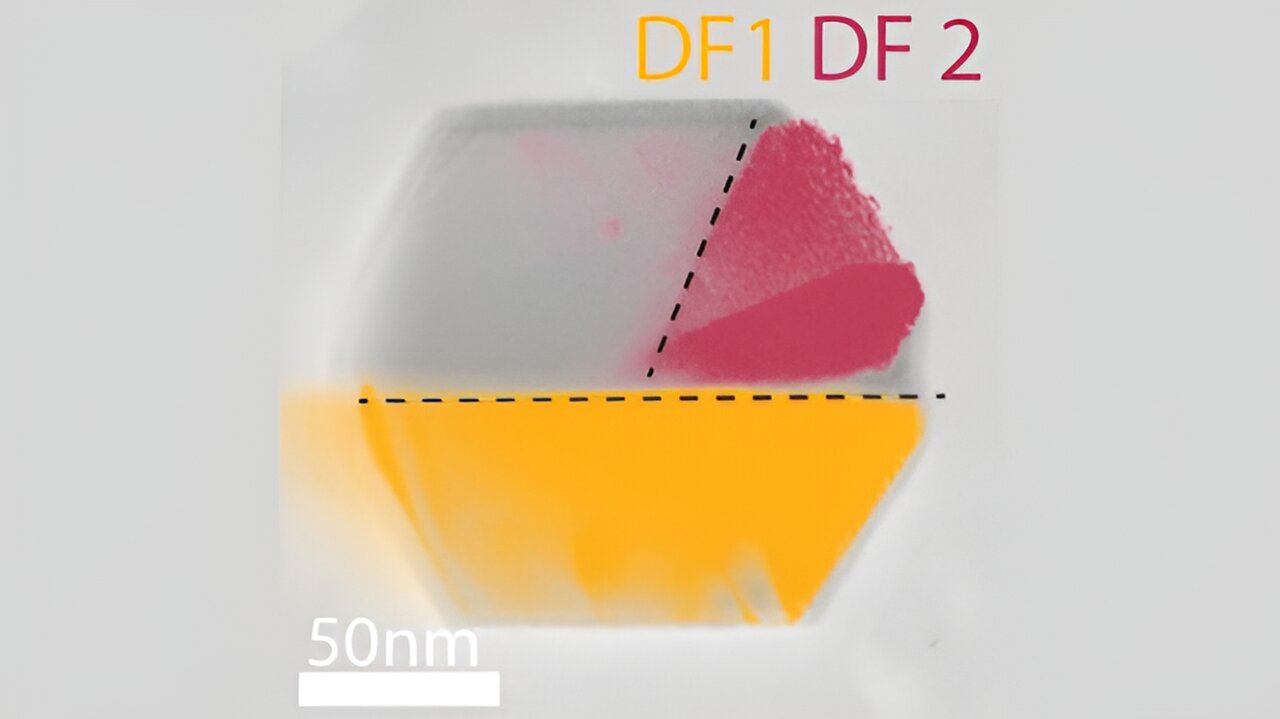
Researchers at Stanford University have used advanced microscopy to link the atomic structure of diamonds to the erratic signals from quantum bits embedded within. By examining the grain boundaries in nanodiamonds, they discovered that the internal structure significantly affects photon emission properties, providing new insights for improving quantum communication and sensing technologies.
Researchers have developed a system of atomic processing nodes that can produce, store, and retrieve quantum information, a crucial step towards creating a quantum-based network. This system involves a semiconductor quantum dot emitting single photons and a cloud of hot rubidium atoms serving as quantum memory, with a laser controlling the storage and release of photon states. While still in the prototype stage, this advancement could pave the way for stable quantum networks, addressing previous challenges in linking photon sources and processing nodes.
Researchers have successfully created a crucial connection for the development of a quantum internet by producing, storing, and retrieving quantum information for the first time. This achievement is a significant step towards enabling quantum networks for distributed computing and secure communication, with potential applications in optimizing financial risk, decrypting data, designing molecules, and studying materials. The breakthrough involves interfacing a quantum dot light source with an atomic quantum memory device, allowing for the transmission of quantum data over long distances using regular optical fibers. This development, led by a collaborative effort involving researchers from Imperial College London, the University of Southampton, and the Universities of Stuttgart and Wurzburg in Germany, represents a key advancement in the field of quantum networking.
Researchers have discovered that basic chemistry can scramble quantum information with surprising speed and efficiency, similar to the effects of black holes. Using a mathematical tool developed decades ago, the team found that quantum states of reacting particles become scrambled, especially in confined groups at low temperatures, on a subpicosecond time scale. This discovery could potentially lead to the fine-tuning of materials to control tunneling for innovative applications in fields such as electron conduction in quantum materials.