
Tag

Host Genetics

All articles tagged with #host genetics

Global vaginal microbiome atlas ties host genetics and ancestry to microbial diversity
genetics1 month ago

Global vaginal microbiome atlas ties host genetics and ancestry to microbial diversity

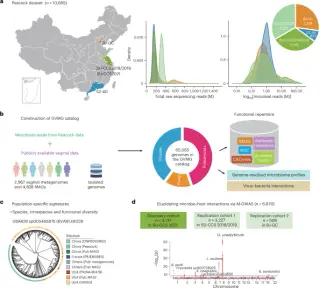
Researchers built the Global Vaginal Metagenome-Assembled Genomes (GVMG) catalog by integrating 10,665 Chinese metagenomes with 2,967 public datasets, recovering 65,055 genomes across bacteria, fungi and viruses and identifying 890 prokaryotic species. The study reveals substantial population-specific genomic variation and host–microbe associations, including seven host genetic loci (notably OPRK1) linked to vaginal microbes such as Ureaplasma urealyticum, and delineates 12 vaginal community state types, highlighting how host genetics and geography shape the vaginal microbiome. This work provides a comprehensive reference for future genotype–microbiome analyses and enables broader multi-kingdom insights into vaginal health.
Host genetics and daily rhythms shape the human DNA virome
science3 months ago

Host genetics and daily rhythms shape the human DNA virome

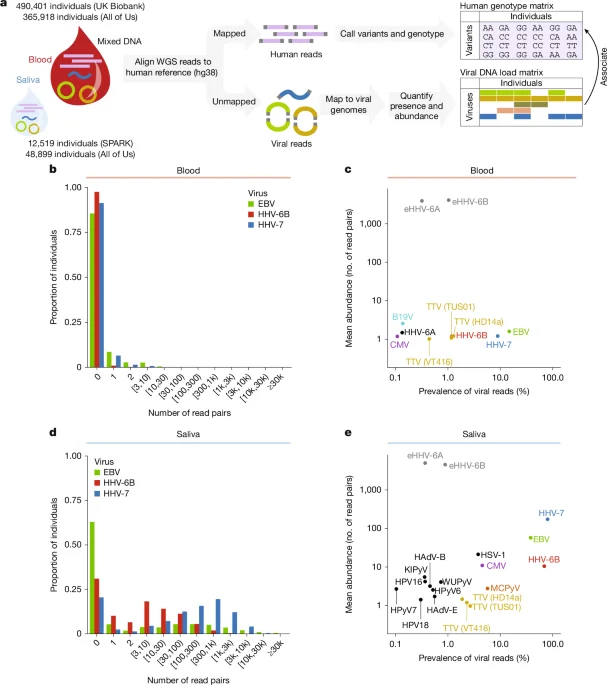
A massive multi-cohort study analyzed DNA viral load for 31 viruses in blood and saliva, finding that viral load varies with age, sex, time of day, and season, and is higher in men. Genome-wide associations implicate dozens of loci, especially in the MHC/HLA region, and genes like ERAP1/ERAP2 in shaping EBV, HHV-7, HHV-6B and other viral loads, with notable virus-specific effects and EBV subtype interactions. Saliva shows frequent lytic bursts for some herpesviruses, contrasting with blood. Mendelian randomization suggests higher EBV DNA load may causally increase Hodgkin’s lymphoma risk but not multiple sclerosis, highlighting a host-genome influence on the circulating DNA virome and its disease connections; the findings also reveal ancestry- and tissue-specific patterns and circadian/seasonal dynamics.

Host-gene signals point to gut physiology as main driver of microbiome diversity
science5 months ago

Host-gene signals point to gut physiology as main driver of microbiome diversity

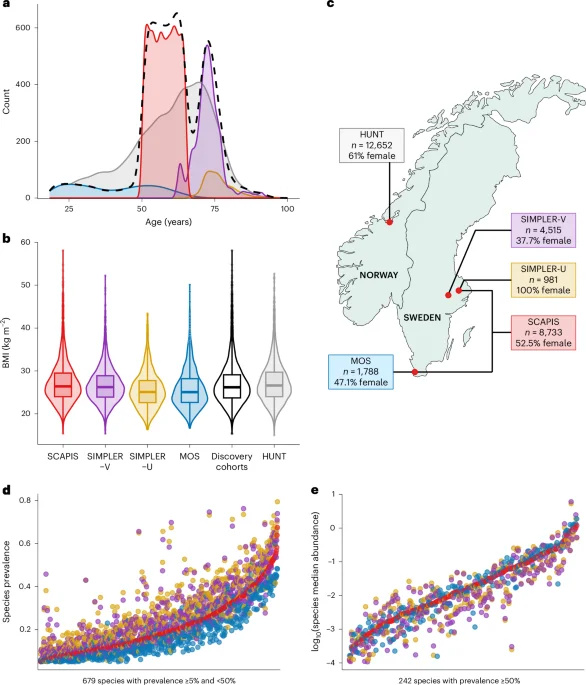
A large GWAS of harmonized gut metagenomic data from 16,017 Swedish adults with replication in 12,652 Norwegians identifies host genetic variants linked to microbiome richness and 149 species; the strongest signal at OR51E1–OR51E2 suggests enteroendocrine fatty acid sensing shapes microbial communities, with additional loci near mucin genes and bile-acid pathways. Mendelian randomization links some taxa to LDL cholesterol and BMI-related traits, underscoring gastrointestinal physiology as a key driver of microbiome variation. Limitations include European-ancestry focus and challenges in pinpointing causal genes.