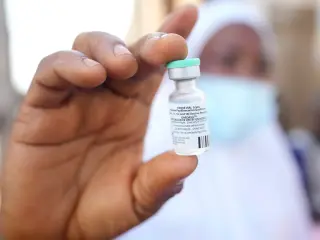
Fort Worth chef Jon Bonnell, now cancer-free after treatments for head and neck cancer, is urging widespread HPV vaccination, arguing that vaccinating one generation could nearly eliminate cervical cancer and substantially reduce head-and-neck cancers, with international examples from Australia and Europe cited as evidence.
A Florida schoolteacher learned her husband’s infidelity was linked to an HPV infection that led to vulvar cancer in 2019, followed by cervical cancer and later anal cancer. She has undergone surgeries, ongoing treatments, and now advocates HPV vaccination to prevent HPV-related cancers, highlighting the stigma and the need for awareness.
A Stamford Superior Court jury awarded $49 million to a Darien woman who claimed her gynecologist failed to follow standard monitoring for high-risk HPV, allowing cervical cancer to progress to late-stage metastatic disease; the verdict found the defendants negligent, with $39 million to the patient and $10 million to her husband, and Westmed indicated it will pursue post-trial motions and an appeal.
The U.S. FDA has cleared Waters’ at-home cervical cancer screening kit for use with an approved HPV test, enabling patients to self-collect samples at home and mail them to a laboratory. The kit, tested with BD’s Onclarity HPV assay, targets high-risk HPV types and aims to improve early detection and reduce cervical cancer deaths, with Waters planning nationwide availability by prescription and anticipated insurance coverage.
A Swedish nationwide study following nearly a million girls and young women for up to 18 years shows the HPV vaccine substantially lowers cervical cancer risk, especially when given before age 17, with protection persisting for at least 18 years and supporting gender-neutral vaccination programs.
New data from Cancer Research UK show UK cancer deaths between 2022–2024 fell to a record low (about 247 per 100,000), down from a 1989 peak of 355 per 100,000, a ~29% decline. The drop reflects sustained investment in research, prevention, and treatments, with major gains in stomach, lung, ovarian, breast, and prostate cancers. Cervical cancer deaths have fallen 75% since the 1970s largely due to national screening and the HPV vaccine. Screening programs (cervical, breast, colorectal, PSA testing) and advances like targeted therapies and immunotherapy have improved early detection and survival. However, total deaths may still rise as the population ages. Some cancers are increasing (skin, liver, kidney) and others remain stable, but experts forecast further decreases with continued investment and screening expansion.
Experts say some dreams can function as prodromal signals of illness, but most nightmares are harmless. The piece discusses how vivid, recurring dreams may reflect stress or emerging disease, highlighting Isabella Cavallo’s case in which dreams preceded an early cervical cancer diagnosis. It also notes REM sleep disorders can precede Parkinson's disease. While not a reliable predictor for individuals, noticing meaningful dream changes and discussing them with a doctor can prompt earlier testing and healthier lifestyle adjustments.
Cancer Research UK says UK cancer death rates fell 11% over the past decade to a historic low, with major declines in ovarian (19%), stomach (34%), and lung (22%) cancers, plus drops in breast (14%), cervical (11%), leukaemia (9%), and oesophageal cancer (12%). Cervical cancer deaths have been cut 75% since the 1970s thanks to HPV vaccination and screening. Some cancers rose, including gallbladder (29%), eye (26%), liver (14%), and kidney (5%), while population ageing means overall cancer deaths can still increase despite these gains.
After being told she had less than a year to live from stage 3 cervical cancer, Aricca Wallace joined a National Cancer Institute–Rutgers trial in 2012, where doctors engineered immune cells to attack her tumor; following surgery and treatment, her cancer became undetectable by December 2012 and she has remained cancer-free for over 13 years, now sharing her story to advocate for self-advocacy and awareness while researchers continue to refine cell-based therapies.
Israel is seeing more than 4,000 cancer diagnoses annually among people aged 18–44, with 19,612 cases from 2018–2022 (about 16% of all cancers). The majority are women, mainly cervical cancer, though there are no designated young-adult cancer clinics or dedicated rehabilitation/follow-up services. Geographic disparities in early diagnosis exist, and the country has uneven oncology clinic availability, prompting calls for dedicated clinics, coordinated care, and long-term follow-up for young survivors.
Alex Stewart, 28, was in labor with her second child when midwives found a lump that biopsies later confirmed as cervical cancer. Despite chemotherapy and radiation, the disease progressed to a terminal stage with an estimated six months to two years to live. She’s undergoing a second round of treatment while caring for her eight‑month‑old son Teddy and three‑year‑old Elsie, living with her parents for support as friends raise funds. She urges others to get HPV vaccination and regular Pap tests, and she aims to spend as much meaningful time with her children as possible while fighting the illness.
Nicole “Snooki” Polizzi revealed she has stage 1 cervical cancer (adenocarcinoma) after a cone biopsy, stressing that early detection makes it curable. She previously had abnormal Pap smears for years and faced a likely hysterectomy with possible lymph node removal. She urged fans to get Pap smears and not delay medical care.
Nicole “Snooki” Polizzi announced she has stage 1 cervical cancer (adenocarcinoma) after a cone biopsy, stressing that regular Pap smears caught the disease early. She plans a PET scan to check for spread and says the cancer is curable when detected early, encouraging others to get screened despite fears or discomfort.
A BMJ study in 3,068 Chinese women found that menstrual blood collected on a sanitary pad and strip could detect HPV and CIN2/3 with about 94.7% sensitivity, comparable to clinician-collected samples (≈92.1%), though specificity was lower. Negative predictive value and referral rates were similar between methods. The results suggest menstrual-blood testing could become a standardized, non-invasive alternative or supplement to cervical screening, but larger, more diverse trials are needed before clinical adoption.
A BMJ study of over 3,000 women suggests HPV testing using menstrual blood collected on mini-pads could nearly match clinician-taken samples in detecting cervical cancer and offers a more convenient at‑home option, potentially improving access and privacy. However, it is not yet ready to replace standard screening, being applicable only to those who menstruate, and requires further validation in diverse groups and with biopsy-confirmed outcomes.