Tag

Ice Core

All articles tagged with #ice core

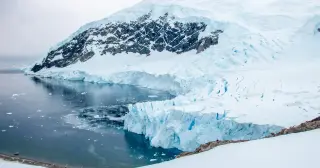
Antarctica's Deep Core Unlocks 1.2 Million Years of Climate History
science1 month ago

Antarctica's Deep Core Unlocks 1.2 Million Years of Climate History

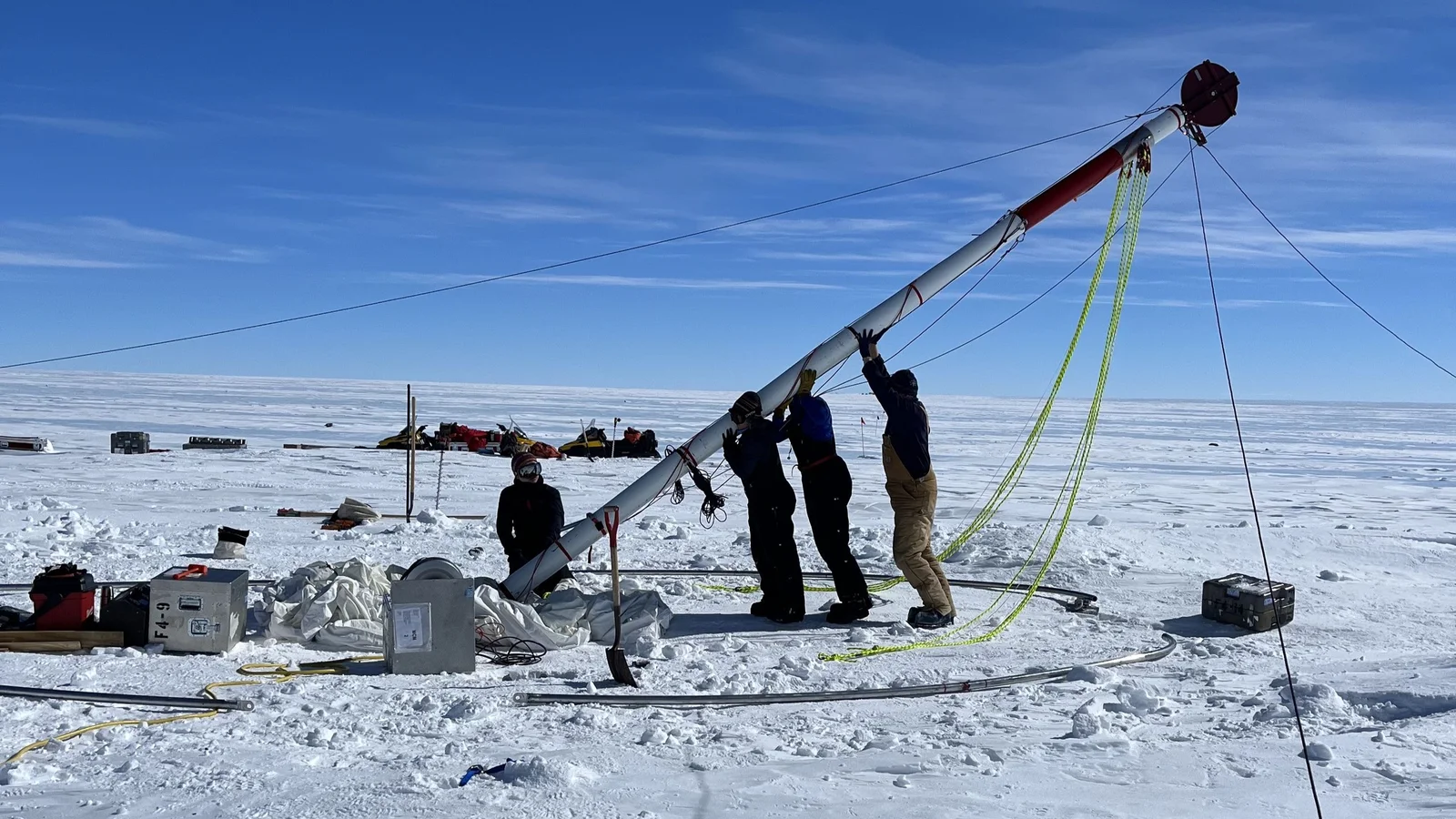
An international team at Little Dome C, East Antarctica, drilled 2.8 km to bedrock and retrieved an ice core with a continuous climate record dating back at least 1.2 million years, extending the EPICA archive. The trapped air bubbles provide direct samples of ancient atmosphere, crucial for understanding why Earth’s glacial cycles shifted during the Mid-Pleistocene Transition. Gas measurements, isotope data, and dating (including krypton-81) are being processed across labs, with some bottom ice possibly older but not perfectly in chronological order. The result is a direct atmosphere-to-temperature record that will help identify the drivers of the planet’s changing ice-age rhythm, beyond the influence of industrial emissions.

Alpine Ice Core Unlocks 2,000 Years of European Climate and Human Activity
science1 month ago

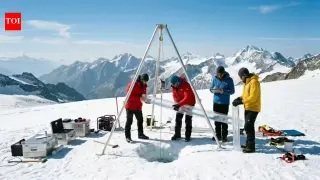
Alpine Ice Core Unlocks 2,000 Years of European Climate and Human Activity

An international team drilled a 33-foot ice core on the Weißseespitze glacier, retrieving a 2,000-year climate record (128–1641 CE) that shows medieval metal mining (lead, copper, silver, arsenic), widespread forest fires, mineral dust, and distant volcanic eruptions. The record reveals natural vs. human signals, including a warm, dry period around 950–1040 CE that boosted fires. Dating combined carbon methods with argon-39, with surface ice from 2019 already 400 years old. Rapid Alpine warming is melting the glacier and could erase this climate memory within 10–20 years unless more cores are saved from threatened peaks.

Antarctic Ice Core Extends Earth's Climate Record to 1.2 Million Years
science3 months ago

Antarctic Ice Core Extends Earth's Climate Record to 1.2 Million Years

Europe-wide researchers drilled a 2.8-km Antarctic ice core to produce the longest continuous climate record, about 1.2 million years, showing atmospheric CO2 closely tracking global temperatures across repeated cycles and offering new clues to why ice ages intensified during the Mid-Pleistocene transition. The Beyond EPICA findings—presented at the European Geosciences Union meeting—are early results, not yet peer‑reviewed, with more data to come from the ancient air bubbles trapped in the ice.

Ancient ice records reveal stable greenhouse gas levels over 3 million years
science5 months ago

Ancient ice records reveal stable greenhouse gas levels over 3 million years

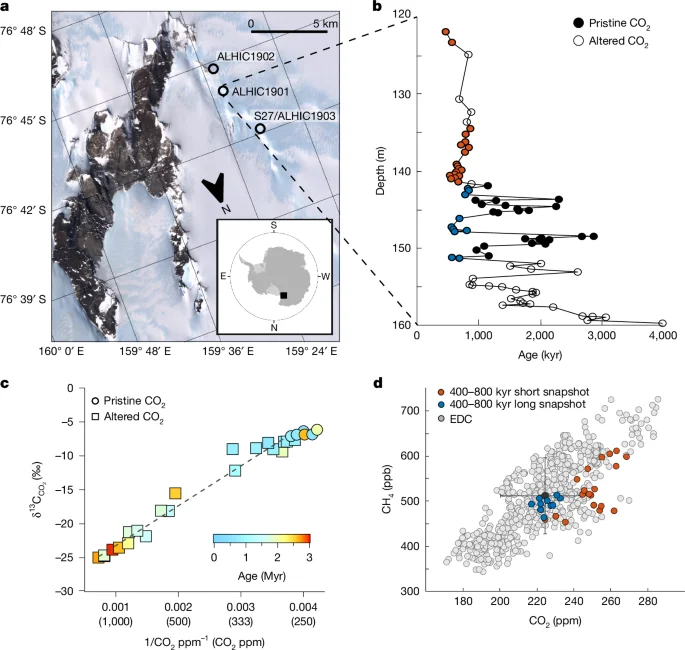
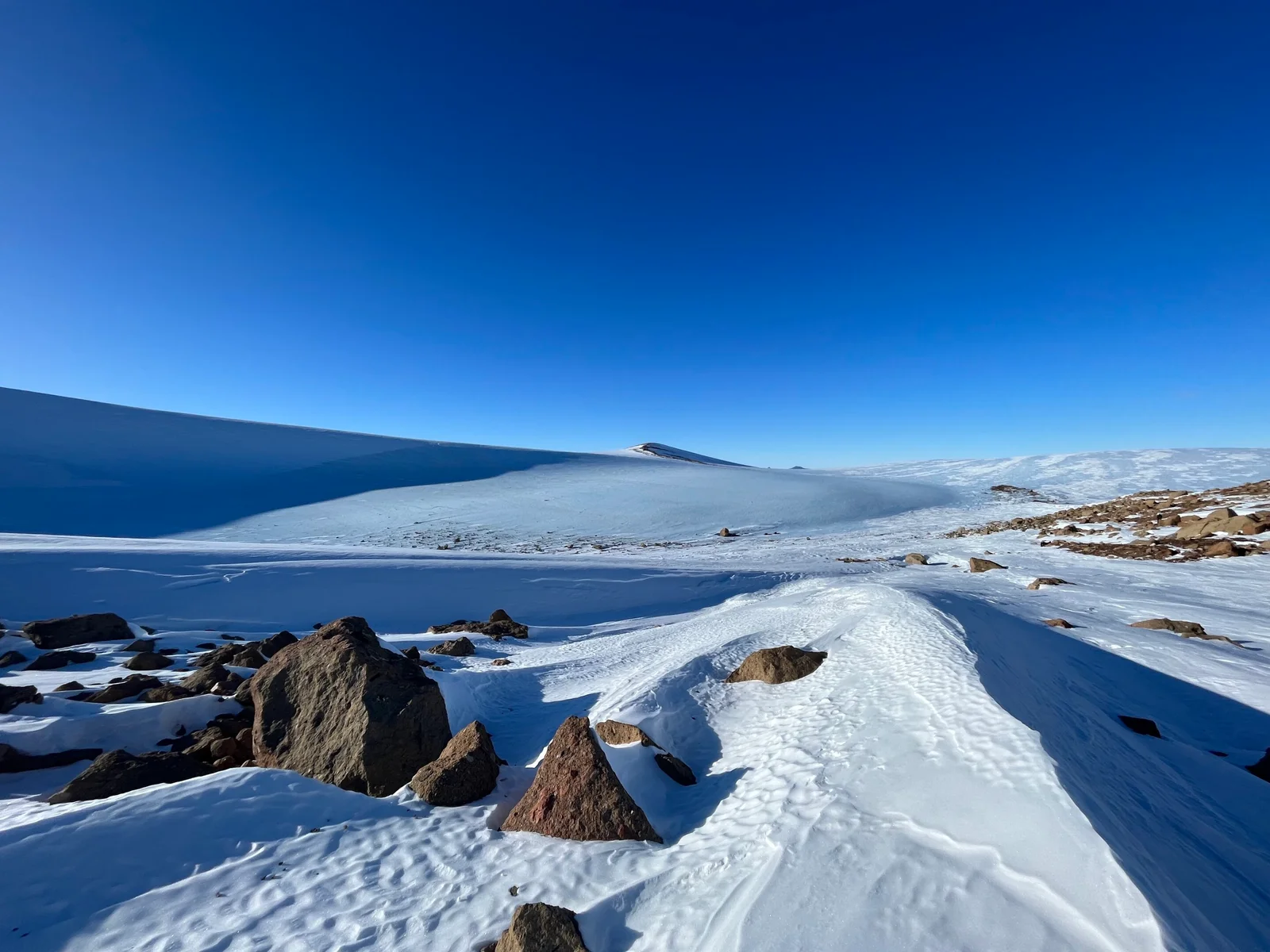
New shallow Allan Hills blue-ice cores extend greenhouse-gas records to about 3.1–0.5 million years ago. They show mean CH4 changing little over the period, with CO2 falling by ~20 ppm from 2.9 to 1.2 Ma and then staying stable within ±10 ppm through the mid‑Pleistocene Transition; respiration-corrected samples from 2.8–3.1 Ma yield CO2 of 250 ± 10 ppm, indistinguishable from the early Pleistocene. These results suggest long‑term stability of atmospheric CO2 and CH4 and demonstrate that ice-core gas measurements can be extended into the late Pliocene, providing snapshots of climate during a era of global cooling.

"Uncovering Antarctic Climate Secrets: Insights from 2,000-Foot Ice Core"
environment2 years ago

"Uncovering Antarctic Climate Secrets: Insights from 2,000-Foot Ice Core"

A 2,000-foot-long ice core from the West Antarctic Ice Sheet provides evidence of a sudden and dramatic shrinkage around 8,000 years ago, indicating the potential for rapid Antarctic ice melting and significant sea level rise. The study's findings highlight the vulnerability of the ice sheet to climate change and the catastrophic consequences of its rapid retreat. Scientists emphasize the urgent need to address climate change to avoid tipping points and improve the accuracy of models predicting future ice sheet responses.

Greenland's Past and Future: Ice Cores and Climate Change Concerns
climate-change3 years ago

Greenland's Past and Future: Ice Cores and Climate Change Concerns

A recently discovered ice core from Greenland suggests that a large part of the country was ice-free around 400,000 years ago, during a period of moderate warming similar to current temperatures. The study overturns previous assumptions and warns that Greenland's ice sheet may be more sensitive to human-caused climate change than previously understood, potentially leading to irreversible, rapid melting and devastating sea level rise. If the ice sheet were to melt completely, sea levels would rise by about 7 meters (23 feet), impacting billions of people living along coastlines. The loss of ice also accelerates global warming. The findings highlight the urgent need for radical action to reduce planet-heating pollution and protect the fragile Greenland ice sheet.